


Business Sectors
Business Sectors
Events
Contents
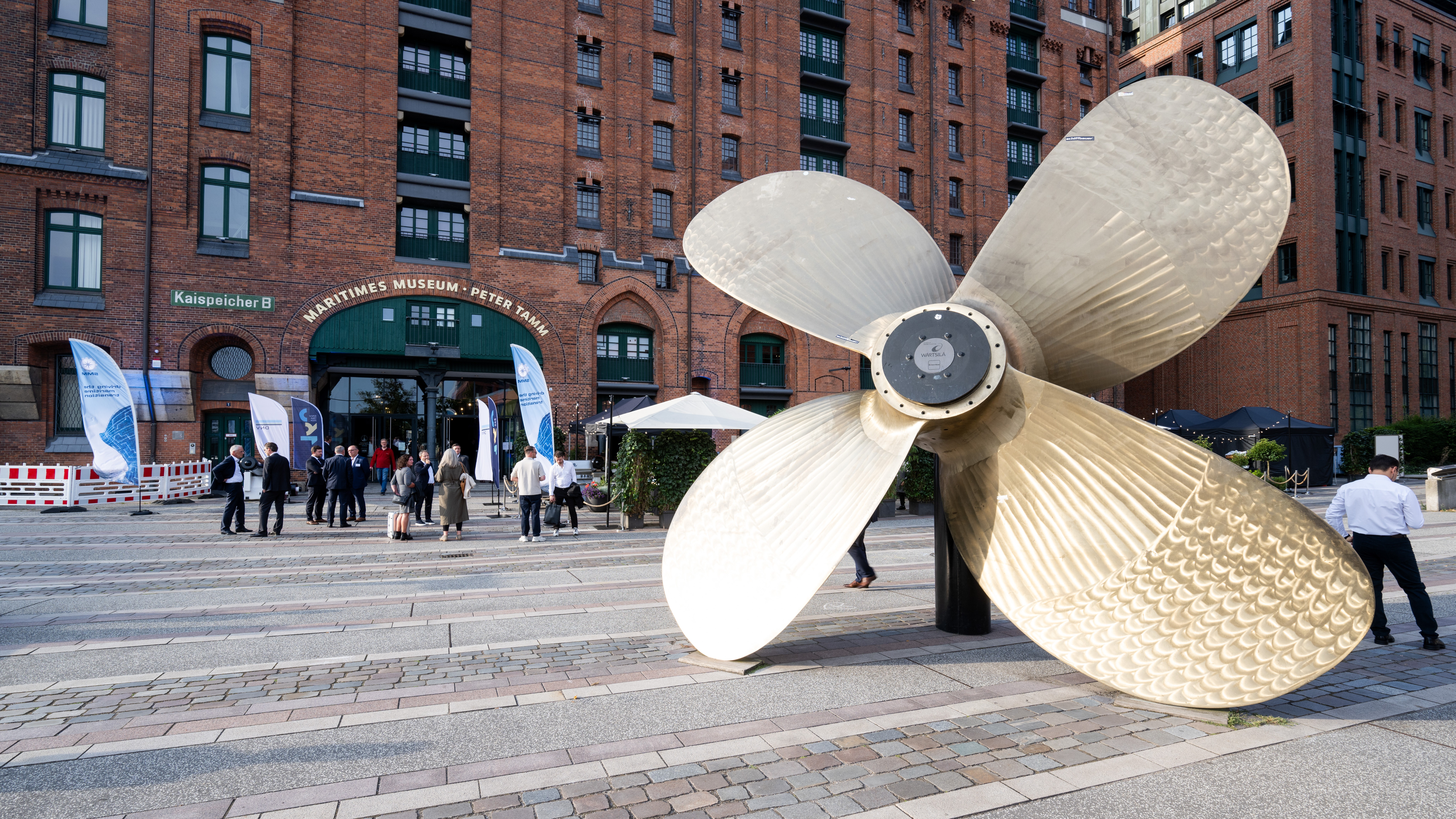
Orders for freight-only roro ferries reach record levels


The boom in all shipping sectors over the last two years often overlooks the convenient form of coastal freight transport provided by the roll-on/roll-off method and the invaluable role it plays in world commerce. Deepsea trade however is well acknowledged with new tonnage to match increasing shipments of mobile and heavy load machinery or for specialist new cars and truck transport.
In recent months there has been an increasing realisation of the need for more freight-only roro ferries to operate regular schedules on shortsea routes. Many owners hedge their bets by operating ropax types to earn payloads from both freight and passengers. Previously it has been difficult to persuade owners to order freight-only ferries owing to exigencies of trade and the fact that in some cases they would be operating in competition with ropax ferries on the same routes. Commercial needs now dictate a changing picture.
Concentration on freight-only ferry routes is dominated by European destinations. The drives for a cleaner environment, good reception facilities and longer rest periods for drivers as well as closer door-to-door service have become persuasive factors in owner thinking. The freight ferry traditionally enjoys a long life with many at the venerable age of 30 years or more still plying the seas. With ever tightening legislation and Solas 2010 hastening the demise of many ropax ferries, some owners have detected change in the industry and have been bold enough to see the freight-only roro ferry as a niche area to be exploited.
Green issues in relation to the ferry industry are gathering pace and these will continue to influence change in the transport of goods. With a burgeoning orderbook for all vessel types, owners worried by overtonnaging have decided to try their luck with shortsea freight ferries. This has thrown up new entrants to the business and also given a boost to European shipbuilding which has seen its traditional construction sectors disappear to the Far East. The market has demonstrated a need for small size freight ferries offering 1,000 to 4,000 lane-metres allowing transport for 100 to 400 trailers. North European and Baltic routes have always been well served but it is the increasing growth of Mediterranean traffic that gives rise to owner optimism aided by the closer ties between Turkey and the EU which has generated large volumes of trade to Italy.
The current newbuilding orderbook for unaccompanied freight roros designed for regular ferry schedules stands at a record 68 vessels. Trade is dominated by a handful of owners. The global orderbook is distributed among only 16 ownerships underlining multiple orders which yields welcome economy of scale for shipyards. Due to their specialist nature most established builders do not look for freight ferry construction as designs need to take port infrastructure into serious consideration with specialist berths and marshalling areas required to serve the new high technical grade ships. Freight-only roros are built for longevity since they are restricted to specified routes but the mantle has been taken up to compete for cargo against ropax vessels.
Scrapping of older vessels is coming but the question is when? Like other industry sectors the roro ferry trades are enjoying boom spells but the prospect of a shortage of bottoms in the near future has tempted the gamble on newbuildings. Private equity investors are behind much of the finance for new vessels which will be larger and offer more lane-metres of space over older units. This will cut voyage times but ferry port infrastructure dictates a limitation on cargo space. Currently 4,000 lane-metres is considered enough for economy of scale.
Italy’s Grimaldi group, well versed in deepsea roro trades, recognised the potential of coastal shortsea dedicated roro trade for some time. This culminated in the ordering of 15 purpose built units to serve the Mediterranean offering 3,800 to 4,000 lane-metres. The coastal routes will complement Grimaldi’s wide range of deepsea port calls and bring cargo closer to a door-to-door service for the customer. European builders are worried by the increasing competition from South Korea and China. The lead yard in Europe is Germany’s Flensburger which has concentrated on roro construction as its core base for the last 10 years, delivering rich dividends and employment currently stretching into 2013. Grimaldi wanted to build in Europe but was thwarted by lack of capacity availability. Its 15 vessels went to Hyundai Mipo with a price differential of 5-10 per cent over Europe. European builders are complaining of dubious practices and copying of their designs but it is difficult to prove this.
The success of the Egon Oldendorff-owned Flensburger shipyard resulted in a licensing agreement with Odense Lindo for construction of its designs in Denmark attracting four 3,663 lane-metre units from Epic Shipping and newcomer Pacific Basin. With a record order backlog there are still only a few yards prepared to take on this construction and only on a series basis. China has come to the rescue as berth space in Europe becomes very tight but refund guarantees are still a stumbling block. The latest success centred on Hudong-Zhonghua with four units for Levantina Trasporti for delivery between 2010 and 2012. This marks a breakthrough for this builder although China is never afraid to tackle any form of construction. Grimaldi’s success with other Chinese yards has also tempted Mediterranean owners. Iganazio Messina was thwarted however with Chinese enquiries and instead turned to another untried builder in Turkey – Gemak – for two vessels. These will be the first export roros built in the country.
Two ambitious moves are underway. The preference for so many new ships means that low sulphur emission machinery can be specified, but two units in a series of eight 525 lane-metre vessels for Norwegian ownership will adopt a revolutionary approach of LNG propulsion. The Norwegians are already to the forefront of technology in the coastal ferry sector with employment of LNG fuel on ropax vessels operating coastwise. Onboard storage and refuelling are the major obstacles to be overcome but LNG costs fall well below the current cost of normal bunkering fuel. The last two vessels ordered at Bharati for 2010 have been specified as total LNG sufficient. This trend will gather a slow pace in the goal for cleaner fuel but positive thinking is to be welcomed to lead the way.
The second move centres on Turkish roro player UN RoRo which has come from nowhere to be a leader in unaccompanied shortsea freight trade between Turkey and Italy. A massive newbuilding programme is underway utilising Flensburger designs but trade has grown so fast that the company has been forced to implement a lengthening programme for six of its vessels including two newbuildings which were too far advanced to change. Each vessel will receive an extra 960 metres of lane capacity lifting them to 4,700 lane-metres and classing them as the biggest available for shortsea voyages. The increase will allow 60 extra trailers and the move represents a huge leap of faith in unaccompanied vehicle trade between Turkey and Italy. Tenders will be invited and the work is expected to be undertaken in the Mediterranean. PST
Related to this Story
Events

Maritime Regulations Webinar Week
 16 Dec 2025
 GMT - ONLINE
Floating energy: successfully unlocking stranded gas using FLNGs and FSRUs
24 Feb 2026GMT - ONLINE
© 2026 Riviera Maritime Media Ltd.


