


Business Sectors
Business Sectors
Events
Contents
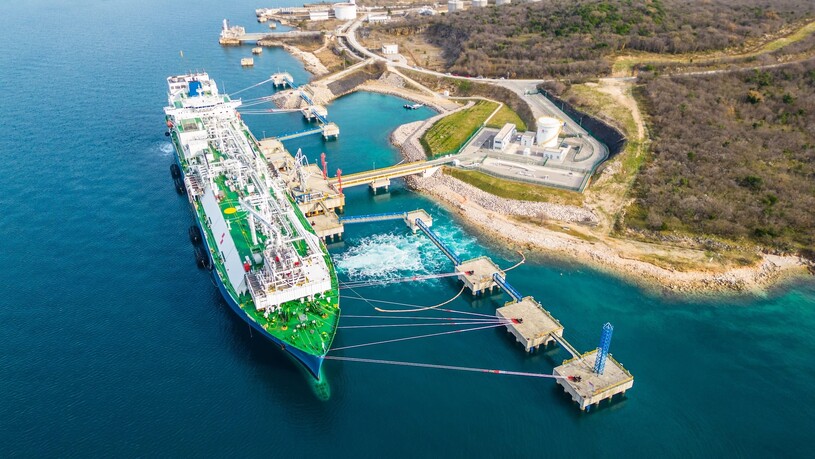
Singapore remains a magnet for tanker business


Singapore is one of the most vibrant areas in Asia for doing maritime business. A business-friendly environment, excellent geographical position for global working hours and the major inducement of tax breaks are too tempting for companies not to have representation in the Lion City. In contrast to Europe, Asian economies are now steadily recovering and it would appear the worst of the financial woes are over.
Many shipowners’ balance sheets are still in the red, though, and the one note of caution is the rapid rise of operating costs in Singapore. The truly national Singapore shipowning fraternity has taken the opportunity to expand tanker fleets through asset play and distress sale acquisitions. Adding to this is a growing number of shipowners domiciled with head office overseas that adopt Singapore flag registration. Often potential acquisitions are on their doorstep because Singapore is the arrest capital of Asia. Arrests are often for non payment of bunkers, and several such vessels have been abandoned by their owners upon the seizure of assets by banks.
Singapore has seen big growth in maritime infrastructure, with private equity firms, banks, brokers, insurers and legal companies all establishing key services, often at the expense of previous European operations. The power game is rapidly moving east and in the tanker business Europe has all but lost its once dominant position.
Singapore owners have quietly gone about their business of changing and upgrading tanker fleets to take maximum advantage of what now looks likely to be an improvement in wet business, particularly in the products trades. Older vessels have been sold for scrap at high prices of US$400-450 per ldt, while on the newbuilding scene full advantage has been taken of the enticingly low prices and eco-friendly designs on offer. Where modern secondhand tankers, especially from Japanese and Scandinavian owners, have circulated for sale, they have been snapped up at fire sale prices as more of the big fleet owners hit serious cash-flow problems and banks tighten their control.
A constant thorn in the side of shipowners is the rising cost of bunker fuel, which is likely to stay high for the foreseeable future. The only consolation is that all owners experience this globally and it is not unique to Singapore. Threatened competition from China has not really materialised, but the recession and higher operating costs of smaller bunkering tanker owners have led to bankruptcies. The latest casualty was product and bunker tanker operator Onsys Energy. Arrest warrants were served and liquidation was ordered by the Singapore Supreme Court. Six product carriers were operated in regional trades and are tempting purchases through enforced sale. They are modern units and will be eyed by competitors as bargain acquisitions. A question mark hangs over four newbuildings still thought to be on order.
Titan Ocean Pte, one of Singapore’s largest bunkering owners, also experienced a tough time after cancellation of a large number of newbuildings and sale of a shipyard in China. Chemoil, one of the fastest growing marine fuel oil companies, continues to expand its core activities of buying oil products and storing and selling them. In 2012 Glencore took an 89 per cent stake in Chemoil but is only involved at board level, preferring management to be left to the skills of Chemoil staff. Chemoil has set up renewable energy trading groups in Singapore for biodiesel and ethanol. The company only owns one Panamax tanker and a few bunker barges run out of Singapore by a subsidiary company, Link Maritime. More tanker purchases have not been ruled out and new ventures will be undertaken to stay ahead of the fiercely competitive game. But these will not necessarily happen in Singapore, as Chemoil has a strong presence in North America. Crude oil prices are likely to remain high, not helped by the volatility in the Middle East. But marine fuel providers like Chemoil have to invest heavily in hedge management and risk teams, which it now offers as a service to shipowners. Where there is now a chink of daylight for trading recovery in some sectors, high fuel costs could still tip weak balance sheets over the edge.
New companies often begin with the purchase of an arrested tanker in Singapore. The island’s efficiency and track record will not deter incoming investment, but costs in Singapore are rising sharply. That is a concern, as some of these costs must be passed on to clients. Shipowners are finding it difficult to secure financing, but Asian banks have come from nowhere to fill the void left by Europe-based banks. Salvation comes at a high price, though, and owners are increasingly turning to bond and equity markets for finance. Hong Kong is proving a strong player in these markets, but this form of finance is even more costly than bank loans. Even if presented with credible plans, potential investors remain wary of tankers due to the poor earnings prospects at the current time. Freight rates are improving but it is too early to say if this is a sustainable revival, while 2014 is still seen as the likely turning point. Current rates simply will not cover enough earnings to meet loan repayments. Furthermore, a long-term plan for earnings and stability is needed to convince potential investors, and the current market fails in this respect. Fortunes can quickly change, though, so experienced owners remain cautiously optimistic.
Pooling in Singapore is a strong calling card. Shared earnings with other pool members from guaranteed employment is not a bad deal in the current market situation, but pools continue to be volatile. If the market improves there is no binding obligation to stay in the pool and owners can just withdraw vessels. This is happening frequently with Singapore-based pools. One exception is Nova Tankers, which recently celebrated one year of operation. The five partners are Maersk Tankers, Mitsui OSK, Samco, Phoenix Tankers and Ocean Tankers. The whole fleet now totals 44 VLCCs and fears that this pool would artificially control rates have not been realised. Spearheaded by forward-thinking A.P. Moller, the objective was to offer shippers a thoroughly green eco-friendly fleet with the aim of stabilising rates. The latter has been achieved in a still dire market for VLCCs. Uppermost in fleet operations is cost reduction based on optimised bunker fuel costs and slow steaming. Singapore-domiciled Ocean Tankers and Phoenix Tankers currently contribute nine and two VLCCs respectively. All the vessels boast an average age of below four years with more newbuildings due to join the Nova family. The aim is a maximum fleet strength of 50 vessels.
The Sammy Ofer group has confirmed that more of its London operations will be transferred to Singapore in a restructuring exercise. The owner has maintained a strong presence in both cities through Zodiac Maritime and Tanker Pacific Management (TPM). Both companies have been active in newbuildings in recent months. Through this year, Tanker Pacific will take delivery of three LR1 product carriers from STX Shipbuilding. Last year Tanker Pacific Management invested US$120 million in four 51,000 dwt MR1s for delivery in 2014-15. Allocation to STX’s Dalian site produced savings of US$4 million per ship over construction in South Korea. TPM took control of three Aframax units on the secondhand market. One will be on a bareboat/hire purchase arrangement with purchase option.
Singapore’s maritime wealth originally started with container shipping but now the oil industry plays a major part alongside. The fast changing pace of Singapore for such a small island continues to impress. The petrochemical hub of Singapore, situated in Jurong Port, is now home to nearly 100 leading petroleum, petrochemical and tanker terminal owners. Ably supported by earnings from the Pulau Bukom refinery complex more tankers are handled every year from bunker to VLCC size. Bunker companies have been boosted by the demand for low sulphur fuel production. Throughput capacity for oil cargoes is guaranteed by multi berth discharge and loading facilities backed by a sophisticated logistics mechanism. Horizon Singapore Terminals is one company which plays its part in a global pricing mechanism for crude and refined products in Singapore and neighbouring regions.
ExxonMobil, Shell, Chevron and BP all engage in ship-to-ship operations off Karimun, Tanjong Pelapas and Pasir Gudang bordering Indonesia, Malaysia and the Singapore Strait. Lightering Masters are employed from Singapore companies with vast experience of such safety conscious operations as they must comply with strict legislation. The future could not be brighter for a booming maritime Singapore.
Wilmar International continues to grow its network
One of the biggest movers last year was Wilmar International, commonly known as Raffles Ship Management. Wilmar is one of Asia’s largest agricultural commodities traders, owning a vast network of palm oil plantations. Most or all of its recent tanker acquisitions and newbuilding business will support its vegetable oil trades. This is a major export business out of Singapore, although it was recently hit by international sanctions imposed on Iranian exports.
Seizing on a mix of newbuildings and immediate requirement secondhand purchases, Wilmar sprang some surprises. Vegetable oil trades have been flagged as a steady contributor to product carrier earnings, but now more owners seek to break into this trade. So it is important that Wilmar maintains its leading role. In terms of newbuildings, the surprise was the selection of Hyundai Vinashin to construct two 49,000 dwt medium range (MR1) tankers that will be of high specification. They are thought to be priced at around US$30 million each. The duo will mark the first ever tankers built at Hyundai Vinashin, marking a turning point in the slow recovery of Vietnam’s shipbuilding industry. Hyundai Mipo is joint owner of the shipbuilder and is an expert designer and constructor of MR1 tonnage, from which it has enjoyed huge success. This may be, then, a calculated gamble by Wilmar. Early deliveries in 2014 and the low price were key persuasive factors.
The Singapore trader also placed a contract with STX Shipbuilding for two more 52,000 dwt MR1s, but two originally attached options were not taken up. Deliveries are set for 2015 from the Korean builder’s Dalian site in China, at an estimated cost of US$32 million each. Secondhand purchases included one 40,000 dwt product carrier and four 10-20,000 dwt chemical tankers for a total investment of slightly over US$59 million. Three of these were distress sales, but they are a good fit for the company’s fleet portfolio.
Wilmar also formed a strategic partnership with US-domiciled Archer Daniels Midland for global fertiliser purchasing, distribution of sea transportation and tropical oils refining in Europe. Two bulk carriers from each company initially serve the partnership requirements, but Wilmar has also invested in five Kamsarmaxes and two Handysize bulk carriers. Wilmar’s investment in other sectors was further extended with an order at Shanghai Waigaoqiao Shipbuilding in China for four plus optional four 4,200 dwt bunkering tankers for delivery in 2013 at a cost of US$8 million apiece. This will mark Wilmar’s debut in bunkering. Singapore is the world’s busiest port for such business, but there have been problems of late with smaller independent companies going bankrupt. TST
Related to this Story

Events

Maritime Regulations Webinar Week
 16 Dec 2025
 GMT - ONLINE
Floating energy: successfully unlocking stranded gas using FLNGs and FSRUs
24 Feb 2026GMT - ONLINE
© 2026 Riviera Maritime Media Ltd.


