


Business Sectors
Business Sectors
Events
Contents

Register to read more articles.

OSV super cycle: “we are in it now”
Leading owners, shipbrokers and energy analysts see few newbuilds entering the market, keeping available global tonnage capacity tight and pushing OSV utilisation and day rates even higher


Leading vessel owners, brokers and energy analysts agree, there will be few OSV newbuilds ordered or entering the market, keeping global capacity tight and utilisation high and day rates strong in the near term.
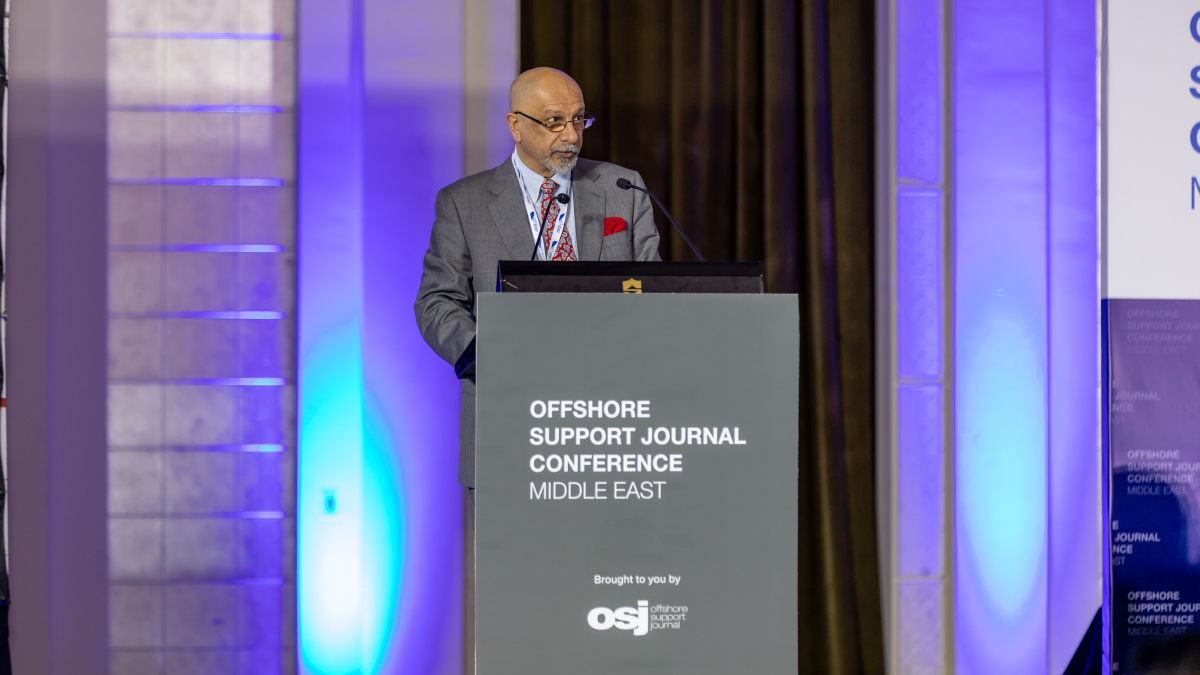
Synergy Offshore chief executive, Fazel Fazelbhoy, goes even further; he thinks market conditions are right for a prolonged upturn that could last to the end of the decade. “We are in a super cycle now, and I don’t see it subsiding for five to seven years,” Mr Fazelbhoy tells OSJ.
He says: “The Middle East is desperate for additional tonnage in terms of all classes of OSVs. The PSVs were the first to be sold out and now AHTSs are hard to come by. There simply isn’t enough tonnage available. Owners are desperately waiting for their legacy contracts to run out so they can re-fix their vessels at 50%, or more, higher rates.”
Mr Fazelbhoy has not seen much happening on the newbuild front in the Middle East — yet. “The next several years are going to be extremely busy,” he says. “The challenge is, where will the additional tonnage come from? It is clear shipbuilding must resume, and it will soon. Rates and utilisation are now nearing where they need to be to give a positive IRR of at least 15%. Financing is a key issue, but there are quite a few alternate financiers who are looking at the OSV market. The issue is that most of them are more interested in financing existing assets, rather than newbuilds. That is where the challenge is going to be,” Mr Fazelbhoy concludes.
One of the big players in the Middle East, ADNOC Logistics & Services, has bolstered its jackup barge fleet to 39 units with the addition of eight vessels.
The eight self-propelled vessels include two newbuilds, four secondhand vessels and two other newbuilds that have been chartered in. The eight self-propelled jackup barges were integrated into ADNOC L&S’s fleet through its subsidiary, Zakher Marine International (ZMI).
The Abu Dhabi-listed maritime logistics provider said the expansion comes at a time when jackup barge charter rates are “robust, due to high demand for offshore services”. Jackup barges are versatile shallow-draught vessels used to support offshore oil and gas and offshore wind.
“We are in a super cycle now”
One of the jackup barges added to the fleet will be deployed to Iraq, a new market for ADNOC L&S.
Astro Offshore, with offices in Dubai and Singapore, has been adding some newbuilds that were ordered prior to the downturn. It took delivery in March 2022 of the 65 m Astro Aquila from a Chinese shipbuilder. The keel for the vessel had been laid almost seven years earlier, in September 2015. Astro Offshore reported its Astro Aquila is being fitted with an active heave compensation (AHC) offshore crane, capable of lifting a maximum of 40 tonnes at its shortest reach and is also telescopic, with a maximum reach of 45 m.
“AHC has become quite common in other markets but not regularly found in the Middle East and is quite a step forward for our capability,” writes Astro Offshore in a social media post.
Astro Offshore reports it will add a second newbuild, 60 m Astro Athena.
Record returns at Solstad
Oslo-listed Solstad Offshore, which experienced its best quarter ever and record EBITDA for Q2 2023, continues to see high demand, longer charters and improved financial terms, according to Solstad Offshore chief executive, Lars Peder Solstad. One thing that Mr Solstad does not see: newbuild programmes for offshore oil and gas.
While noting there are “plenty of SOVs” under construction for the offshore wind market, Mr Solstad says there are “close to zero vessels being built” that can serve both the oil and gas and renewable energy markets. “This lack of new capacity in a market that continues to grow can easily make a strong market even stronger. As we see it, there will not be any meaningful capacity added in the coming years,” concludes Mr Solstad.
“Clients realise there is going to be a shortage of vessels, so they are interested in securing capacity,” adds Mr Solstad.
Shipbroker Fearnleys agrees. It sees a considerable expansion on the OSV supply side soon as “improbable” because of “rising newbuilding prices, lack of financing outside of offshore wind, tight yard capacity and extended construction time.” The shipbroker said: “[These] underlying factors suggest that the upcycle will be growing steadily, as opposed to a dramatic increase in investments”.
In past upcycles, OSV owners would have rushed to shipyards to sign newbuilding contracts to add capacity to their fleets, displacing older tonnage, inevitably leading to overbuilding and oversupply.
“Under normal market conditions, especially where credit is available, it is likely that industry players would move closer to supply additions in today’s market,” observes Fearnleys. “One key reason for this is the age and poor technical condition of the cold-stacked tonnage. As an example, the current official cold-stack supply of PSV tonnage suggests more than 250 units available globally, yet when analysing the fleet composition, almost 40% of the units are above the 25-year industry retirement age,” says the shipbroker.
“Underlying factors suggest the upcycle will be growing steadily”
Retirement is not in the cards for Solstad’s oldest vessel, the 1999-built CSV Normand Pioneer, which entered a long-term charter at “its highest rate ever” in Q2 2023, said Mr Solstad, where it will be on charter to PRIO to 2027 supporting its E&P activities in Brazilian waters — past its 25-year special survey. High-spec offshore vessels, including CSVs, ROV vessels, pipelayers and anchor handlers are hot commodities in the ultra-deepwater Brazilian market. Additionally, Solstad’s only PSV, Normand Carioca, will be converted to a well stimulation vessel for Equinor Brazil under a contract extension running until December 2027.
Solstad’s 37 other PSVs were sold to Big board-listed Tidewater, with the transaction closing after Q2 2023. The US$577M transaction lowered Solstad’s debt and positioned it as a player in the high-spec offshore oil and renewables market. On a pro forma basis without the PSV fleet, Solstad reported record quarterly revenue of Nrk1,914M (US$180M) for Q2 2023, up from Nrk 1,325M (US$124M) for the same period last year. Adjusted EBITDA for Q2 2023 was its highest ever at Nrk934M (US$88M), up from Nrk528M (US$50M) in Q2 2022.
Renewable energy was a strong driver of demand for Solstad’s CSVs, with the Oslo-listed owner generating 31% of EBITDA and participating in projects in Taiwan, the UK and France.


Related to this Story

Events

Maritime Regulations Webinar Week
 16 Dec 2025
 GMT - ONLINE
Floating energy: successfully unlocking stranded gas using FLNGs and FSRUs
24 Feb 2026GMT - ONLINE
© 2026 Riviera Maritime Media Ltd.


