


Business Sectors
Business Sectors
Events
Contents

Register to read more articles.
Ports increase capacity and sustainability for Asia-Europe trade
Keys focuses for ports serving Asia-Europe are greening the trade and boosting capacity for larger volumes and ships


Increasing capacity, sustainability and acquisitions are the main trends driving the European port market – which will have an impact on the Asia-Europe trade lane.
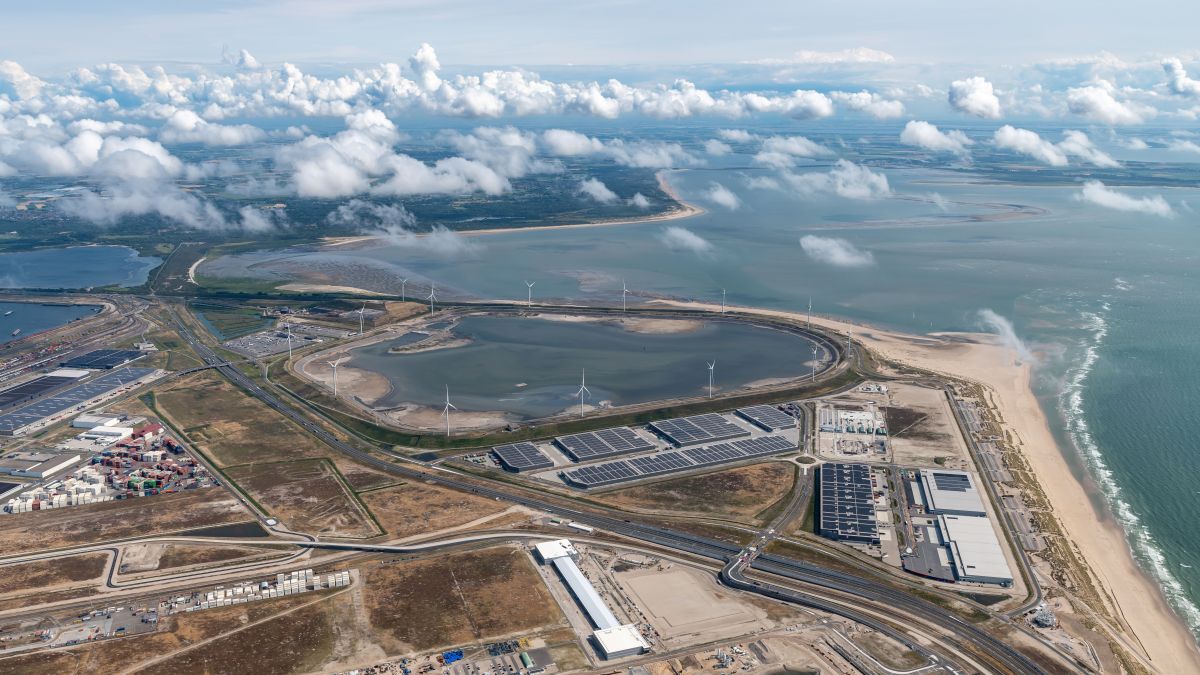
Port of Rotterdam Authority says the Asia–Europe trade is by far the most important trade for Rotterdam when it comes to containers, with more than 70% of the deepsea volume.
Port of Rotterdam Authority director containers Hans Nagtegaal says, “Rotterdam has a unique position within Europe to facilitate the large vessels which operate on these trades, without being restricted by draught, locks or river access. Rotterdam’s unique position makes it the gateway to the European hinterland.”
Port of Rotterdam needs 16M TEU of additional capacity in the HLH range by 2035, to accommodate expected growth. Mr Nagtegaal says, “This growth is caused by an increase in population, growth of GDP, increase in exports due to strong economic growth in emerging countries and an increase in transhipment rate in the HLH range.”
Rotterdam has made early investments in expanding capacity, which will lead to 8.3M TEU of additional terminal capacity.
Besides capacity, Mr Nagtegaal says Rotterdam’s competitive position depends on port performance in several areas: being able to handle volumes efficiently and reliably from and to the hinterland, allowing capacity in the hinterland chain to grow along with capacity on the sea side, facilitate ship visits cost-efficiently with port call optimisation and meeting customers’ needs in areas such as decarbonisation using sustainable supply chains.
Indeed, Mr Nagtegaal says the “major challenge is the sustainability of the whole logistic chain”.
Rotterdam is a frontrunner in this transition and has already launched many initiatives, from being involved in green shipping corridors, to providing shore-based power for container ships.
Rotterdam offers a wide range of fuels and aims to be “bunker port of the future”. The Port of Rotterdam is the first port in Europe where LNG bunkering was possible and the first port in the world where barge-to-ship methanol bunkering took place.
Mr Nagtegaal says, “In Rotterdam, several parties are working on a wide range of fuels so shipping companies can use the sustainable fuel that best suits them. We accelerate the use of sustainable fuels by facilitating safe storage and bunkering.”
Elsewhere, in November this year it was announced Ocean Network Express had acquired a 20% stake in Rotterdam World Gateway (RWG). RWG operates a highly automated container terminal in the Port of Rotterdam with an annual capacity of 2.6M TEU. ONE says in a statement, “A stake in RWG gives ONE long-term capacity and strengthens ONE’s position as a key hub in the region.”

Hamburg boosts trade with Asia
Port of Hamburg recently released its half-year volume results. In it, it notes that traditionally, China heads the top 10 list of trading partners, and with 1.1M TEU, the country retained first place in the first half year of 2023. Positive developments are also apparent in many parts of Asia. With a 9.3% rise in throughput on the same period of the previous year to 99,000 TEU, India achieved its best result for four years. Trade with Japan and Thailand has also increased.
One of the Hamburg companies actively implementing this trend is packaging and digitalisation specialist Deufol Group, also the owner of the Wallmann Terminal.
“The opportunities in foreign trade with North America and southeast Asia are obvious to us. We are working with great commitment on expanding our intermeshed HUB solutions and infrastructure internationally, especially in North America and southeast Asia. Our goal is to back up customers in running their project logistics more efficiently and sustainably,” says Deufol chief executive Dennis Hübner, adding “This positive trend is also reflected in the gratifying results on foreign trade with these regions. Deufol, including the Wallmann Terminal in Hamburg, is actively working on further promoting these developments, and on offering innovative and sustainable end-to-end solutions for global heavy-lift logistics.”
The trend towards ever-larger container ships is also persisting in the Port of Hamburg. 135 vessels in the largest, Megamax class called at Hamburg, representing a 15% growth.
Larger container ships with slot capacities of more than 10,000 TEU were also calling at the Port of Hamburg more frequently again. These calls increased by 6.2% on the same period of the previous year.
In addition, there was strong 31% growth for container ships of 8,000-9,999 TEU, and of 32% for traditional Panamax sizes of 4,000-5,999 TEU. “Many of these vessels will in future be able to use shore-based power in the Port of Hamburg, which is thus advancing along its course towards climate neutrality,” says Port of Hamburg.
Antwerp-Bruges: climate neutral plan
In its half-year volume results, Port of Antwerp-Bruges explains container volumes were falling around the world. “The Eurozone economy is under pressure from interest rates, which have risen sharply. Despite the drop in energy prices, the global economic situation also remains volatile and future indicators point to a continued economic downturn. As a result of this uncertain economic climate, containerised trade flows are falling around the world,” it says.
For Port of Antwerp-Bruges, this is reflected in a 6.5% drop in container throughput in terms of tonnage, and 6.8% in TEU, compared with the same period in 2022. Despite the decline in container throughput, Port of Antwerp-Bruges’ market share in the Hamburg-Le Havre range nevertheless grew by 1 percentage point, to 30.6%, in the first half of this year.
The port says, “To ensure Port of Antwerp-Bruges maintains its position as a world port, it must be possible for even the very largest container ships to continue calling at the port in the future. That means the draught upon arrival needs to be 16 m.”
In October, MSC Tessa broke a draught record at Deurganck Dock. The increase in the draught considerably increases the loading capacity of the ships.
The port also has an ambitious climate plan, with the aim of being climate neutral by 2050. In addition to greening its own fleet, Port of Antwerp-Bruges is working with companies in the sector on a wide range of solutions and projects such as hydrogen imports and carbon capture, usage and storage, or CO2 capture and transport, for which the Fluxys C-Grid joint venture was launched in September.
Riviera Maritime Media’s LNG Shipping & Terminals Conference will be held 14-15 November 2023 in London, UK. Use this link for further information and to register your interest




Related to this Story
Events

Maritime Regulations Webinar Week
 16 Dec 2025
 GMT - ONLINE

Floating energy: successfully unlocking stranded gas using FLNGs and FSRUs
24 Feb 2026GMT - ONLINE
© 2026 Riviera Maritime Media Ltd.


