


Business Sectors
Business Sectors
Events
Contents

Register to read more articles.
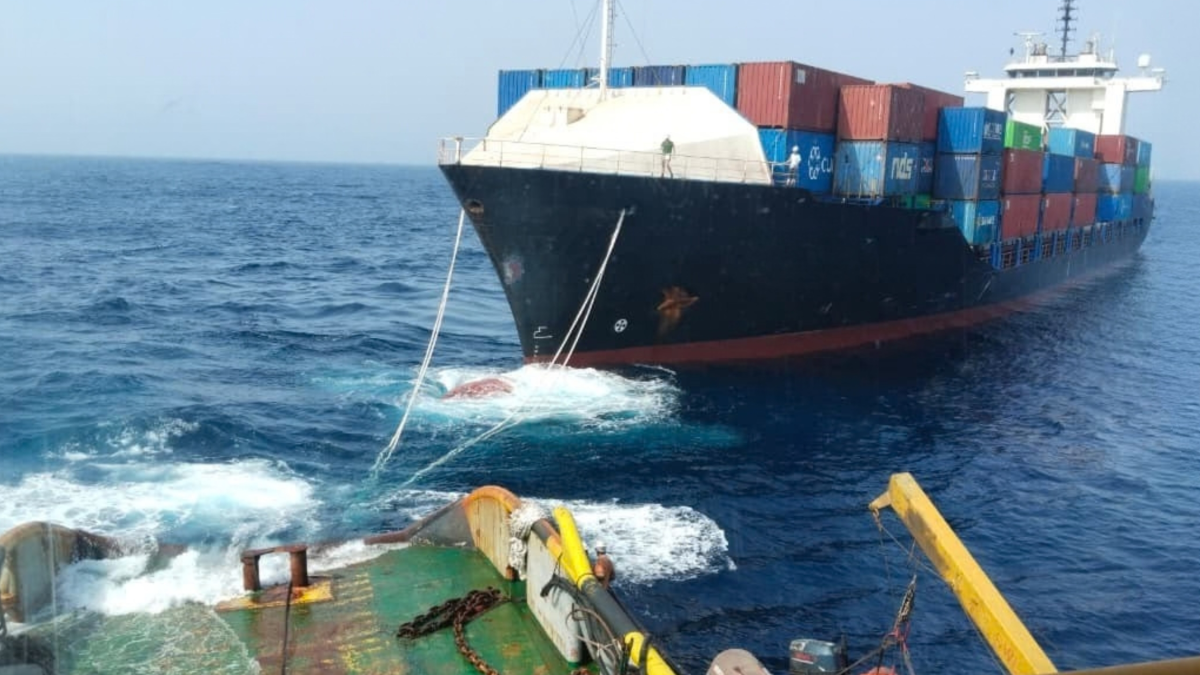
The multiple disciplines demanded for salvage as warzones expand
Maritime casualty response increasingly must bring together salvage, crisis management, emergency reaction, intelligence and security risk management as more projects will be in conflict zones


Modern salvage projects are complex and high-risk, with multiple challenges and issues to contend with involving various stakeholders and authorities, all with different expectations of what constitutes a successful outcome.
These challenges are amplified if the casualty is within a conflict zone and where there are considerable safety and environmental risks for salvors to overcome.
In these cases, the project is not just about hiring a tugboat and sending it to the casualty, said Vanguard Tech senior salvage manager and Americas lead, Matthew Cooke.
In September 2026, Vanguard was supporting several concurrent salvage and emergency towage cases in and around the Strait of Hormuz at a time of heightened risks, ship damage and geopolitical tensions between Iran and the US.
“When a vessel is disabled amid military activity, political tension, navigational restrictions or a rapidly changing security situation, the physical salvage operation is only one part of the problem,” Mr Cooke explained to International Tug & Salvage.
“The response increasingly brings together salvage, crisis management, emergency response, intelligence and security risk management.”
Ships damaged in the Strait of Hormuz and Persian Gulf show why casualty response can no longer be viewed only through a salvage lens.
“Security conditions can change during mobilisation,” said Mr Cooke. “Military activity can affect routeing; authorities may impose restrictions or movement windows; and ports may change their willingness to accept a casualty.”
Response teams should remain connected throughout the project and work with local and regional contacts that can coordinate with authorities. Tug master and casualty master also need to be updated, while salvage plans can change as conditions develop.
“Sometimes the instruction is to proceed; sometimes it is to hold; sometimes it is to move back and wait,” said Mr Cooke.
“If a tug or casualty master receives a radio call from an Iranian authority while operating in the area, he needs to know what to do next,” he explained.
“The response team needs to understand the context and guide the people at sea accordingly. That is crisis management as much as it is salvage.”
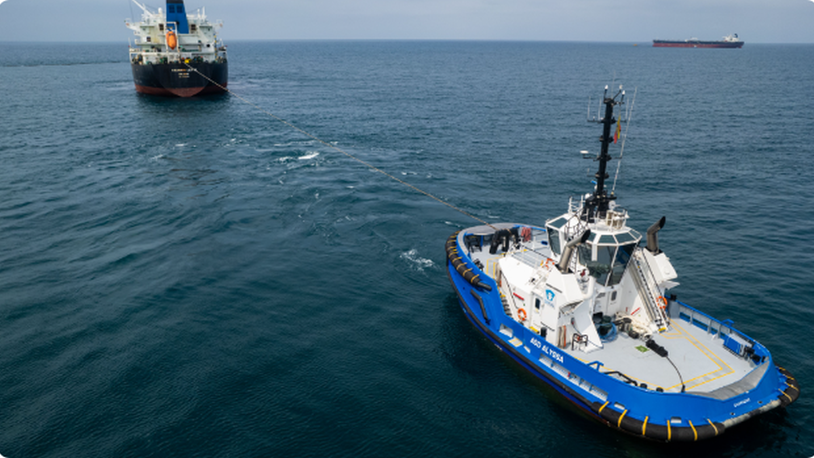
Identifying the right tugboat or multiple vessels to assist in the salvage project also comes with many variables and challenges.
There are many high-powered tugs capable of emergency towage stationed in the Middle East, but that does not mean there are plenty available to respond.
“Much of the industry relies on vessels of opportunity rather than dedicated response assets positioned close to every casualty,” said Mr Cooke. “An asset appearing available on paper and one that can genuinely respond are not the same thing.”
Salvors need to understand what the tug is capable of, whether it has the right towing equipment and is fuelled, crewed and provisioned; whether the crew is experienced and willing to respond; the clearances required before the tug can sail and what contractual arrangements are required.
“A tug 20 miles away but unable to sail for six hours may be less useful than one 80 miles away that is ready to move,” said Mr Cooke.
“When a vessel is damaged, abandoned or sitting in an exposed position, these are not academic questions,” he said. “The casualty, its crew, other stakeholders and potentially the marine environment may all depend on the response arriving quickly.”
Intelligence is key
Once a tug is identified and contracted, then it needs to arrive at the casualty ready to work and without incident. Between the tug’s outgoing location and the casualty there could be military activity, navigational restrictions, port conditions, threats to commercial shipping and nearby vessel movements, which can all change a response plan.
“Technology gives responders greater visibility,” said Mr Cooke. “Vessels can be monitored continuously, surrounding traffic assessed and unusual activity identified. Intelligence on the condition of the casualty can be passed to the owner and operational team as it develops,” he said.
Vanguard Tech director of intelligence and crisis response, Ellie Shafik, said data and intelligence must be connected to the operation
“Our role is to bring together what the client is seeing, what the operations team needs and what our analysts and wider intelligence network are telling us,” she said.
“That can shape decisions on whether a tug moves, when it moves, which route it takes or whether the operation needs to pause.”
When the tug reaches the casualty, its immediate objective is to rescue any stranded people and then to assess the damage, stabilise the situation and get the casualty somewhere safer.
A vessel arriving under tow may need to provide firefighting support, while the salvage could require patching, dewatering, air monitoring and cargo removal.
The team may need divers, specialist engineers and marine chemists. The casualty may also look very different by the time a tug reaches it, said Vanguard Tech director of the group’s fleet, Captain Asif Nawaz.
“In a complex casualty, we are working with two pictures at the same time. Intelligence tells us what the operating environment will allow, while the casualty assessment tells us what the vessel needs,” he said.
“The next generation of salvage will increasingly look like crisis management”
Once the casualty is stabilised, then another set of decisions begins. Can the vessel move under its own power, or are other tugs required? Where can repairs be carried out? Will the proposed port accept it?
“The salvage job is to bring the right assets, contractors and technical people together into a response that can genuinely be delivered,” said Capt Nawaz.
In the cases Vanguard handled in September, access to salvage personnel, marine chemists, firefighting capabilities and other specialist resources in and around Khor Fakkan, United Arab Emirates, were important. “Knowing who can mobilise, how quickly they can get there and whether you have confidence in them is what matters,” said Capt Nawaz.
The midnight test
Contracting should also keep pace with the operation. What begins as a tow can develop into a much larger salvage project.
“Different casualties require different commercial approaches,” said Mr Cooke. “BIMCO’s WRECKHIRE, for example, can provide flexibility where the scope is expected to develop,” he said.
Owners, insurers, salvors, lawyers and contractors may need to make commercial and operational decisions in parallel.
“If the contractual structure cannot adapt as quickly as the casualty, it can become another source of delay,” Mr Cooke added.
“Casualty response is often tested when the telephone rings at midnight,” he said. “At that point, the number of tugs or contractors on a database matter less than whether somebody can: establish what has happened; understand the vessel and the environment; identify assets that can mobilise; communicate with the people at sea; coordinate with authorities; and bring in the necessary technical expertise.”
Mr Cooke said recent cases show that delays rarely come from one major problem. “More often, time is lost at the joins between the parties involved,” he explained, “Salvage has always depended on collaboration.”
Salvage teams should be involved earlier in the response planning. Even before mobilisation, a remote assessment with the master or technical team can establish what the casualty needs and which resources may be suitable.
“The next generation of salvage will increasingly look like crisis management with a salvage capability at its core, rather than a salvage operating in isolation,” Mr Cooke said.
“The tug and salvage master still matter, while engineering judgement, seamanship and experience still matter enormously. But in a complex casualty, they are no longer the whole job,” he added.
“The real test is whether intelligence, communications, local knowledge, technical expertise, contractors, authorities and physical response assets can work as one operation when the situation demands it,” said Mr Cooke.




Related to this Story
Events

Maritime Regulations Webinar Week
 16 Dec 2025
 GMT - ONLINE

Floating energy: successfully unlocking stranded gas using FLNGs and FSRUs
24 Feb 2026GMT - ONLINE
© 2026 Riviera Maritime Media Ltd.


