


Business Sectors
Business Sectors
Events
Contents
Register to read more articles.
Transatlantic: dark clouds on the horizon
The reshuffled alliances, US tariffs and the proposed US Trade Representative port fees are creating uncertainty for carriers and shippers on the trade lane


The transatlantic trade is in a state of flux – not only dealing with the reshuffle of the major carrier alliances but also over the chopping and changing of US tariff and proposed port fees.
As of 10 April, the new US administration had suspended most reciprocal tariffs for its global trading partners, while retaining a 10% levy. However, Chinese exports to the US face 125% tariffs and American exports to China will be taxed at 84%, meaning the US-China trade war is in full flow.
BIMCO chief shipping analyst Niels Rasmussen warns the tariffs will primarily hurt US businesses and consumers, which will face increased costs on nearly 80% of imports. Mr Rasmussen also predicts the measures would contribute to rising inflation and slower economic growth in the US that could, in turn, affect global markets.
"Key US trading partners such as China, South Korea, Japan and the European Union have vowed to retaliate, further increasing the cost of global trade. Again, US businesses appear likely to suffer more than businesses and consumers in the countries that may retaliate," he says.
"From a shipping perspective, the container sector will be affected the most. Many tanker and dry bulk commodities have so far been exempted from the tariff increases but most goods shipped in containers will face import tariff increases. In a scenario where the tariff increases would result in zero growth in US container imports, it would reduce global container volume growth by 0.5 percentage points."
Homing in on the transatlantic trade, ACL chief executive Andrew Abbott elaborates on what the tariffs and other challenges might mean. “ACL has had an excellent start to the year in both directions, Liftings have been up over 2024, and rates have improved. However, we feel we have been seeing the calm before the storm.”
“Two things happened simultaneously. First, a lot of manufacturers did a fair amount of ’frontloading’, stocking the shelves with extra inventory in the face of tariff uncertainty. So, volumes were higher than normal. Secondly, more than half of the alliance members changed dance partners at the same time, leading to schedule disruptions and blank sailings as ships were deployed in and out. ACL was viewed as a reliable ’safe haven’ because we maintained our old schedule and blanked no sailings.”
But while the year-to-date picture has been good, Mr Abbott explains the new alliances have started to settle down, and some carriers have tried to compensate for their service problems by “throwing around some stupid rates”.
He expands, “I define stupid rates as those that do not even cover the cost of voyage stevedoring, considering so many containers move empty in the eastbound direction.”
“There are a lot of dark clouds on the horizon, and the last thing the transatlantic needs is a lot of excess capacity. On paper, it is running some 14% higher than what it was in December. Given the current outlook, unless that number is reduced via smaller-sized vessels, fewer strings or blanked sailings, the transatlantic will become a bloodbath again.”
As well as the alliance reshuffling issues, Mr Abbott highlights the issues of the US tariffs and the proposed US Trade Representative port fees.
“There is a great deal of uncertainty among every one of our customers in Europe and in the USA right now, with the distinct possibility of a lot less cargo volume moving in both directions. The prospect of high tariffs; high surcharges to cover the huge port fees; higher inland rates because of reduced carrier port coverage; and higher terminal costs because of increased congestion at the big ports, will simply push some US exporters and importers out of the market entirely. Carriers would have no choice but remove hardware.”
“Atlantic rates have been far lower than the rates from Asia since pre-Covid days, so there isn’t far to go before you reach negative territory.”
Looking back at 2024, he says US exports to Europe had the “worst volume year I have seen in over 40 years”. Sluggish economic growth in Europe, the Ukraine war and related higher fuel prices led European governments to postpone investment in infrastructure leading to a reduced need for construction equipment, while lower farm prices led to cutbacks on purchases of agricultural equipment. Both market segments have historically been strong components of North American exports. Many other industries have been affected in a similar fashion.
Mr Abbott sums up, “We are seeing more uncertainty now than at any time in the past 50 years, causing people to postpone investment decisions. Nobody knows what is going to happen next. The frontloading will enable certain customers to pause their shipments for a while. My fear is American exporters will be hurt the most by this, due to the backlash of European consumers against American goods, just as the experts are projecting drops in European tourism in the USA.”
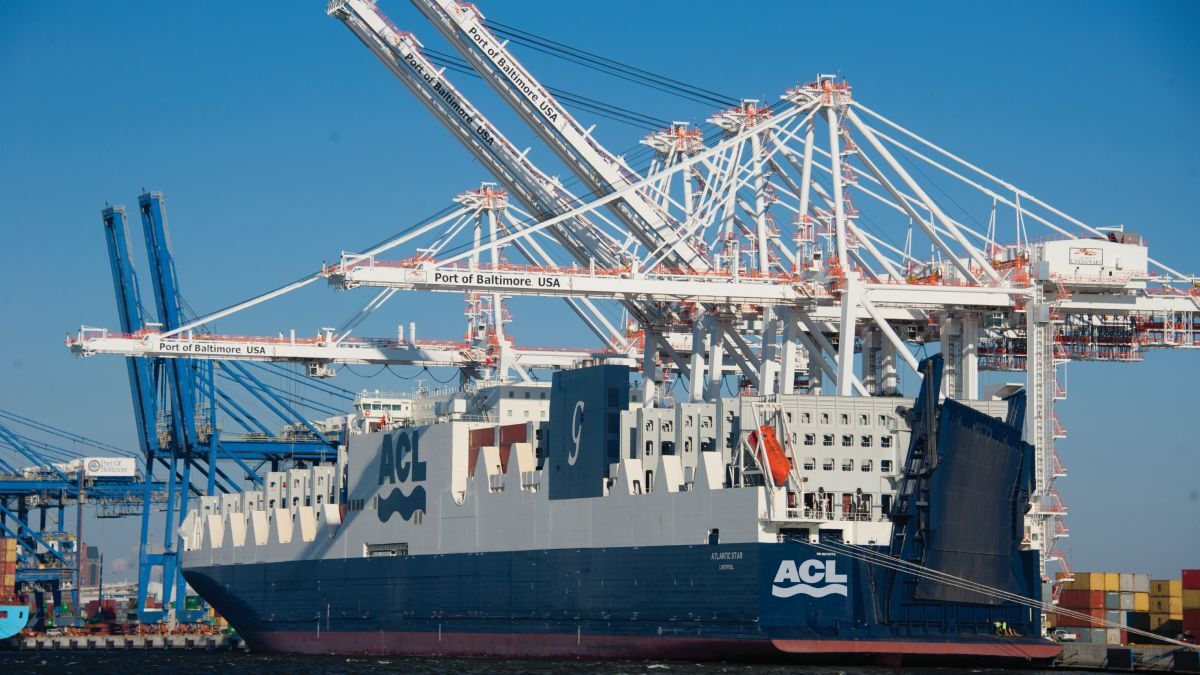
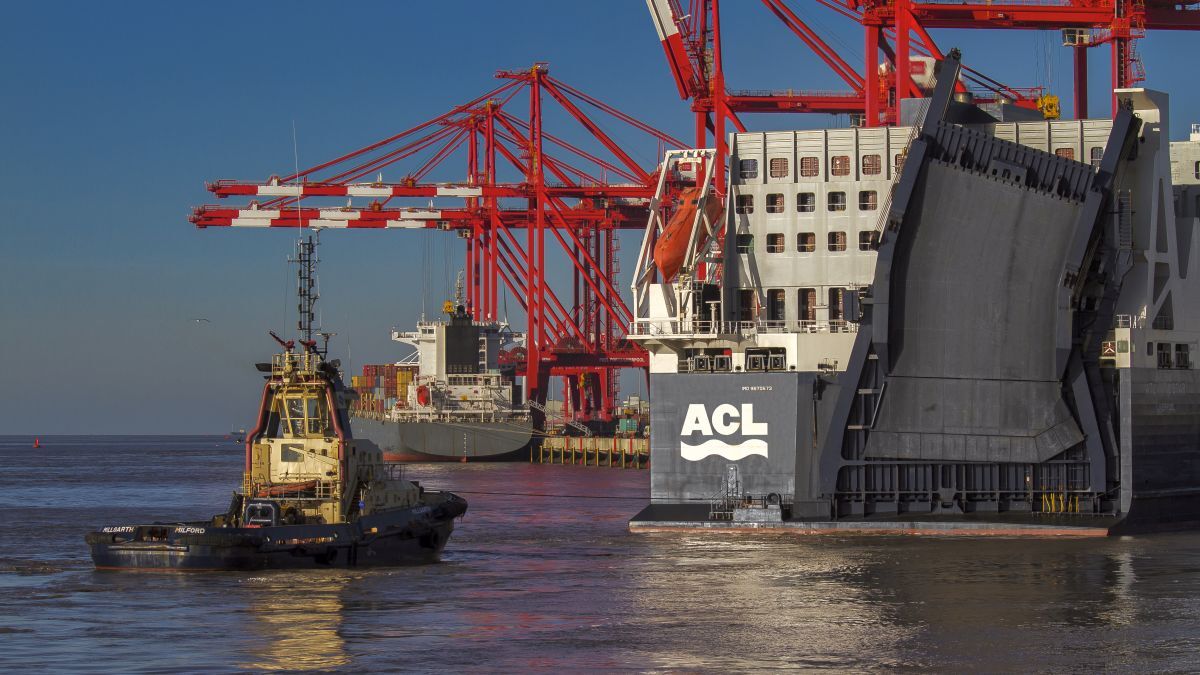
ACL are in as strong a position as anyone to weather the upcoming storm because of its smaller cargo appetite and its diversified operations, carrying roro cargo and cars as well as containers. ACL’s fleet of five G4 conros carry 3,800 TEU of containers, 720 TEU of roro and 1,000 cars each week.
The company’s fleet is one of the ’greenest’ on the Atlantic, with among the very lowest Carbon Intensity Indicator (CII) fleet scores, a record of zero deficiencies in all flag state inspections over the last three years, the only carrier with a fleet of US Coast Guard Qualship 21 certified vessels and an unmatched track record of no containers lost at sea in over 40 years.
Sign up for Riviera’s series of technical and operational webinars and conferences:
- Register to attend by visiting our events page.
- Watch recordings from all of our webinars in the webinar library.


Related to this Story

Events

Maritime Regulations Webinar Week
 16 Dec 2025
 GMT - ONLINE
Floating energy: successfully unlocking stranded gas using FLNGs and FSRUs
24 Feb 2026GMT - ONLINE
© 2026 Riviera Maritime Media Ltd.


