


Business Sectors
Business Sectors
Events
Contents
Register to read more articles.
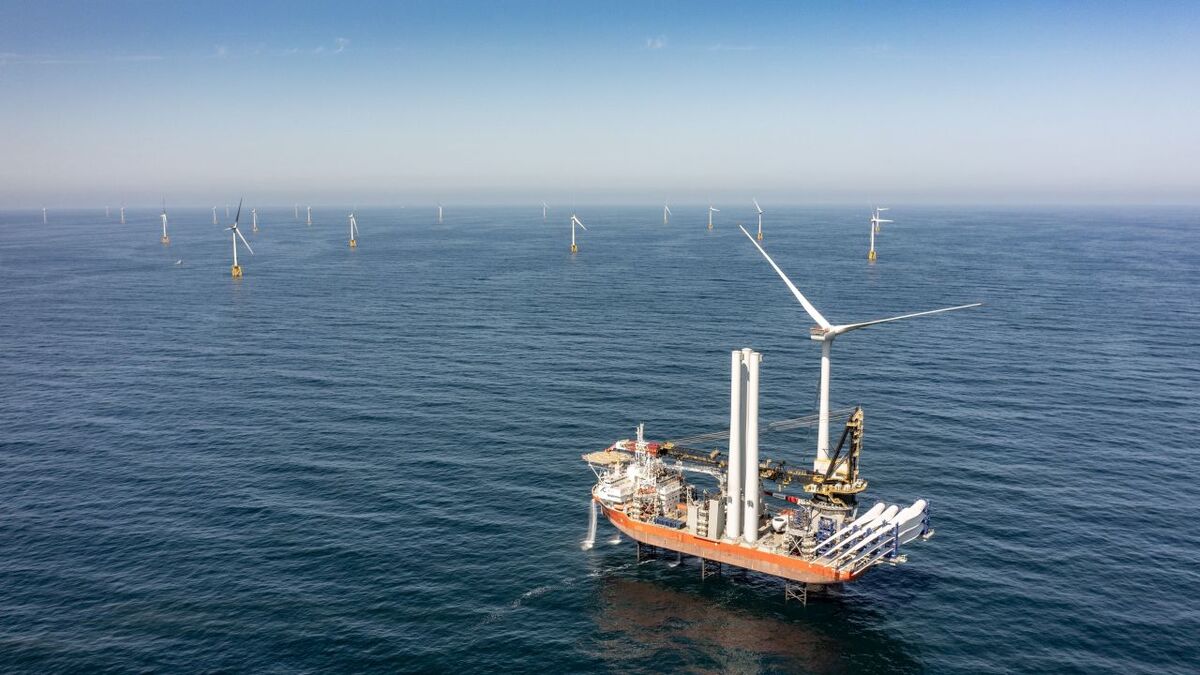
UK confirms 2030 offshore wind target has been adjusted downwards
Supply chain constraints have seen the Labour government in the UK adjust downwards its target for future offshore wind capacity


Until recently, Prime Minister Keir Starmer’s government had promoted a target of 60 GW of offshore wind by 2030, which included 5 GW of floating wind.
However, in recent weeks, that extremely ambitious target has been questioned, not least because of concerns that the supply chain does not have sufficient capacity to meet it.
In supporting documentation for its flagship Clean Power Action Plan announced on 13 December 2024, the government states that as part of its central role in steering the creation of a new energy system, it has set revised expectations for the 2030 capacities of key technologies, at national and regional level.
“We have high ambition,” states the document, ‘Clean Power 2030 Action Plan: A new era of clean electricity.’ “That means 43-50 GW of offshore wind, 27-29 GW of onshore wind, and 45-47 GW of solar power, significantly reducing our fossil-fuel dependency.”
The new targets will be complemented by flexible capacity, including 23-27 GW of battery capacity, 4-6 GW of long‑duration energy storage, and development of ‘flexibility technologies’ including gas, carbon capture utilisation and storage, hydrogen, and “a substantial opportunity for consumer-led flexibility.’
That a revision to the targets was on the cards was suggested by Chris Stark, who was recently appointed by UK Energy Secretary Ed Miliband to head a new ‘Mission Control’ tasked with turbocharging the UK to clean power by 2030.
In a September 2024 interview with Bloomberg, Mr Stark suggested that getting to clean power by 2030 was more important than getting to individual targets.
Riviera’s Offshore Wind Journal Conference will be held in London, 3 February 2025. Click here to register for this industry-leading event.



Related to this Story



Events

Maritime Regulations Webinar Week
 16 Dec 2025
 GMT - ONLINE
Floating energy: successfully unlocking stranded gas using FLNGs and FSRUs
24 Feb 2026GMT - ONLINE
© 2026 Riviera Maritime Media Ltd.


