


Business Sectors
Business Sectors
Events
Contents

Register to read more articles.
War-risk salvage needs an integrated offering
Tatham & Co partner, Stephen Askins, explains why there is a role for security companies in salvage, but salvors should take the lead


Ship casualties rarely occur in convenient places, in fair weather, or in benign jurisdictions. But the Red Sea and increasingly the Persian Gulf has seen a profound shift in how complex salvage operations are approached in conflict zones.
The US-Iran war has led to many vessel casualties in highly inconvenient and unsafe locations where salvors risk their lives and assets to potentially achieve very little.
It is not the first time where salvage has had to be conducted under a threat of hostile action. After all, Tsavliris, Smit and Wijsmuller (as was) forged their reputations in the Iran/Iraq war in the 1980s.
However, what we have seen in Q2 2026 is the beginning of a move in the commercial centre of gravity away from the traditional salvor and towards security providers.
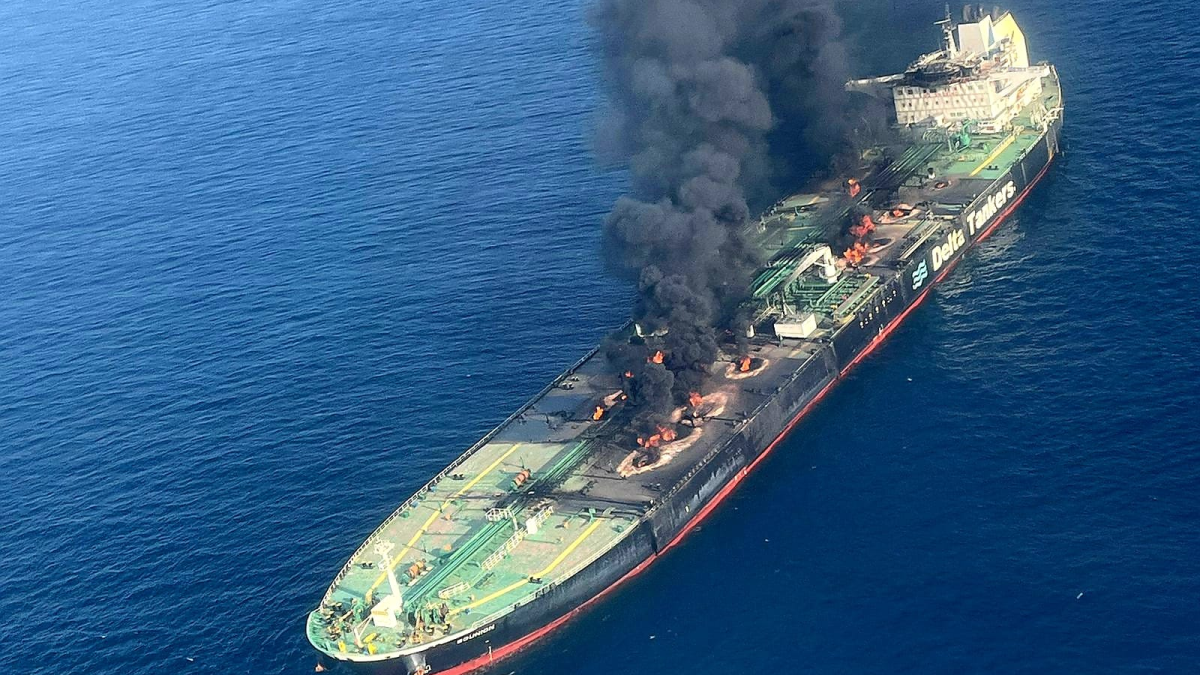
The case of the Sounion casualty should give the industry pause. A laden tanker, attacked by Houthi forces in Q3 2024, was burning and immobilised in the southern Red Sea, with the spectre of a catastrophic pollution event.
This was exactly the sort of incident in which one would expect the professional salvor to be taking the lead.
Yet the public narrative around the operation was striking. Ambrey, a business best known in the market as a maritime security and risk company, emerged prominently in connection with the response and has since been welcomed as a full member of the International Salvage Union (ISU).
It may not be the last private maritime security company to take that path.
Maritime security companies have a unique advantage in that they have teams on board their client vessels who act as their eyes and ears and provide low-level intelligence as to what they see around them.
It means they are often the first point of contact for an owner whose vessel is hit or damaged by a missile or drone.
As ex-military they are well used to putting together an immediate action plan, gathering in and sub-contracting the companies they need.

Security personnel have good connections into military headquarters and have seized opportunities to expand their services into salvage.
The problem for salvors is that often the relationship between an owner and the security company is stronger than that between the owners and the salvor.
For decades, the salvor’s ability rested on the ability to get men and equipment to the casualty quickly and then to assess and stabilise the situation.
But a casualty in a war-risk area is no longer just a marine casualty. It has a geo-political and military dimension with a salvage component.
Before anyone can rig a towline, someone must answer different questions. Who controls the threat picture? Who speaks to naval forces? Who assesses whether a boarding team may be attacked?
Who understands armed drones, missiles, militia communications, intelligence flows and state sensitivities? Who can give owners, insurers and governments confidence that the operation is not merely technically sound but survivable? That is the opening through which the security companies are entering.
“A burning tanker is not saved by situational awareness alone”
The traditional model assumes security is ancillary. Salvors may need a guard team, an escort and perhaps a liaison with naval forces.
Salvage remains the prime contract; security is subcontracted. The emerging model may invert that.
In a war-risk zone, the owner’s first question is not “who has the nearest salvage assets?” but “who can make this politically and physically possible?”
The company that can package intelligence, military liaison, risk acceptance, offshore logistics and crisis management may become the natural prime contractor. The salvor then risks becoming a technical subcontractor on its own stage.
This should worry the industry because salvage is not just a collection of marine services. It is a professional discipline, with judgment formed in casualties, not in risk matrices.
A burning tanker is not saved by situational awareness alone. It requires salvage masters, naval architects, firefighters, towage experience, improvisation and command authority at the casualty.
If those skills are pushed down the contractual chain, the market may gain a “security-led response” but lose the integrated salvage judgment that prevents bad decisions becoming expensive disasters.
There is also a commercial point. Salvors have long complained that the market undervalues readiness, equipment, people and risk.
If the response to war-zone casualties is now being aggregated by diversified security businesses, the margin and client relationship may migrate with the aggregation.
The salvor supplies the dangerous expertise; someone else owns the boardroom, the insurer relationship and the public narrative.
The reliance on the principles of Article 13 of the Salvage Convention are diluted further, leading to lower rewards which effects the ability of salvors to make the necessary investment in their equipment.
The answer is not to resent Ambrey or any other entrant. The answer is for salvors to adapt. War-risk salvage needs its own integrated offering: casualty response fused with intelligence, naval liaison, political risk, armed-threat protocols, media control and government engagement.
ISU members should be able to say, credibly, that they can lead not only the tow and firefighting plan, but the entire contested-environment response.
Importantly, on contractual terms that have been hard earned and negotiated with the insurance, protection and indemnity market.
The industry should welcome new capabilities. But it should not sleepwalk into a future in which the professional salvor arrives at the casualty wearing somebody else’s T-shirt and branded head gear.
Stephen Askins is a leading advisor on hostage situations. He has handled many hijackings and kidnappings in both east and west Africa working with owners’ crisis management teams and has helped formulate policy on armed guards and the payment of ransoms.




Related to this Story
Events

Maritime Regulations Webinar Week
 16 Dec 2025
 GMT - ONLINE

Floating energy: successfully unlocking stranded gas using FLNGs and FSRUs
24 Feb 2026GMT - ONLINE
© 2026 Riviera Maritime Media Ltd.


