


Business Sectors
Business Sectors
Events
Contents

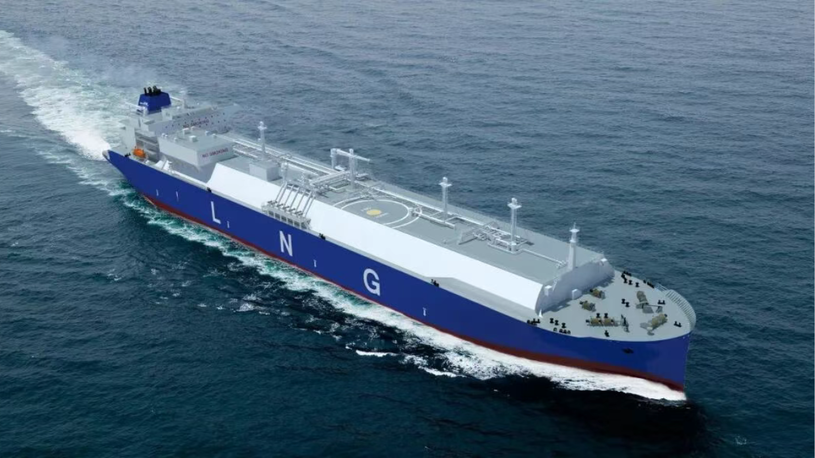
Wood Mackenzie: 'volatility is the new baseline' for LNG markets
The Strait of Hormuz closure has done more than remove LNG from the market; it has removed certainty, according to Wood Mackenzie global gas markets research director Kateryna Filippenko


The ongoing war in the Middle East has removed more than 80 million tonnes per annum (Mtpa) of LNG from world markets, equivalent to 20% of global supply.
And the longer the strait remains closed, the higher oil, gas, and electricity prices will rise, adding further pressure to businesses and households worldwide.
"There is no longer consensus on how the market evolves," according to Wood Mackenzie global gas markets research director Kateryna Filippenko, whose research consultancy has published new analysis outlining potential outcomes for global LNG markets as they grapple with the effective closure of the Strait of Hormuz.
"Volatility is the new baseline. The question for buyers, investors, and policymakers is not which scenario proves correct. It is whether their portfolios and supply strategies are resilient enough to absorb any of them," Ms Filippenko said.
Wood Mackenzie has developed three distinct scenarios for the LNG market based on different timelines for both the end of the conflict and the reopening of the Strait of Hormuz, applying the scenarios across supply, demand and pricing fundamentals.
The consultancy named its scenarios Quick Peace (Strait of Hormuz opens June 2026), Summer Settlement (September 2026 reopening), Extended Disruption (2027 reopening, but further disruptions and infrastructure damage possible).
Supply: the scale of supply loss and the degree of long-term market scarring varies dramatically across all three scenarios.
Under Quick Peace, undamaged Gulf LNG facilities restart in June 2026 and reach full capacity by 2027. Under Summer Settlement, restarts are delayed to September 2026, with full capacity by 2028.
Under Extended Disruption, assumed sporadic flare-ups of the conflict coupled with possible further damage to infrastructure mean Gulf LNG supply never comes back to the growth levels expected before the war. North Field West is postponed indefinitely; major projects face many years of delays and there are no further pre-FID developments.
But a prolonged war could result in substantially lower Middle East LNG supply growth. But supply growth continues elsewhere. More than 150 Mtpa is currently under construction outside the Persian Gulf, predominantly in the United States, with at least an additional 30 Mtpa expected to reach Final Investment Decision (FID) by end-2027.
The Extended Disruption scenario could trigger a wave of new FIDs outside of the Middle East, but it comes with risks to long-term demand too.
Demand: LNG demand shows growth across all three scenarios, supported by declining domestic production and falling pipeline imports in Europe and South and Southeast Asia.
But countries heavily exposed to LNG imports may look to reduce this dependency, putting downward pressure on LNG demand. The range of possible LNG demand levels is significant – Efforts to reduce LNG import dependency are expected to remain uneven and will face implementation challenges, with more structural change in Europe and Northeast Asia likely only after 2030.
Market balance and prices:
Under Quick Peace, markets begin to soften from 2028. There is a risk of US LNG cargoes cancellation being needed to balance the market, particularly between 2031 and 2033.
Under Summer Settlement, the imbalance is postponed by a year and could potentially extend to 2034, with similar cancellation volumes required.
Under Extended Disruption, markets continue facing heightened geopolitical risks and extreme price volatility. Market tightness through 2030 is followed by an oversupply risk as global LNG supply grows while demand remains subdued amid diversification efforts. Any further threats to supply from the Middle East risk tipping the market back into tightness.
European gas prices and Asian LNG benchmarks are projected to soften in all three scenarios once supply recovers, though at different speeds and to different levels. US gas prices face upward pressure under Extended Disruption as lower oil price limits availability of low-cost associated gas.
Ultimately, in all three scenarios it modelled, Wood Mackenzie said global LNG supply growth is likely to return but that the range of different possible LNG demand levels is significant.
The Wood Mackenzie report titled Iran war scenarios: implications for the gas and LNG market examines how each scenario could affect LNG supply availability, the potential impact on demand, how the market may rebalance under each outcome, and how high — or low — gas and LNG prices could move.



Related to this Story

Events

Maritime Regulations Webinar Week
 16 Dec 2025
 GMT - ONLINE
Floating energy: successfully unlocking stranded gas using FLNGs and FSRUs
24 Feb 2026GMT - ONLINE
© 2026 Riviera Maritime Media Ltd.


