


Business Sectors
Business Sectors
Events
Contents

Innovative reliquefaction system to attract orders


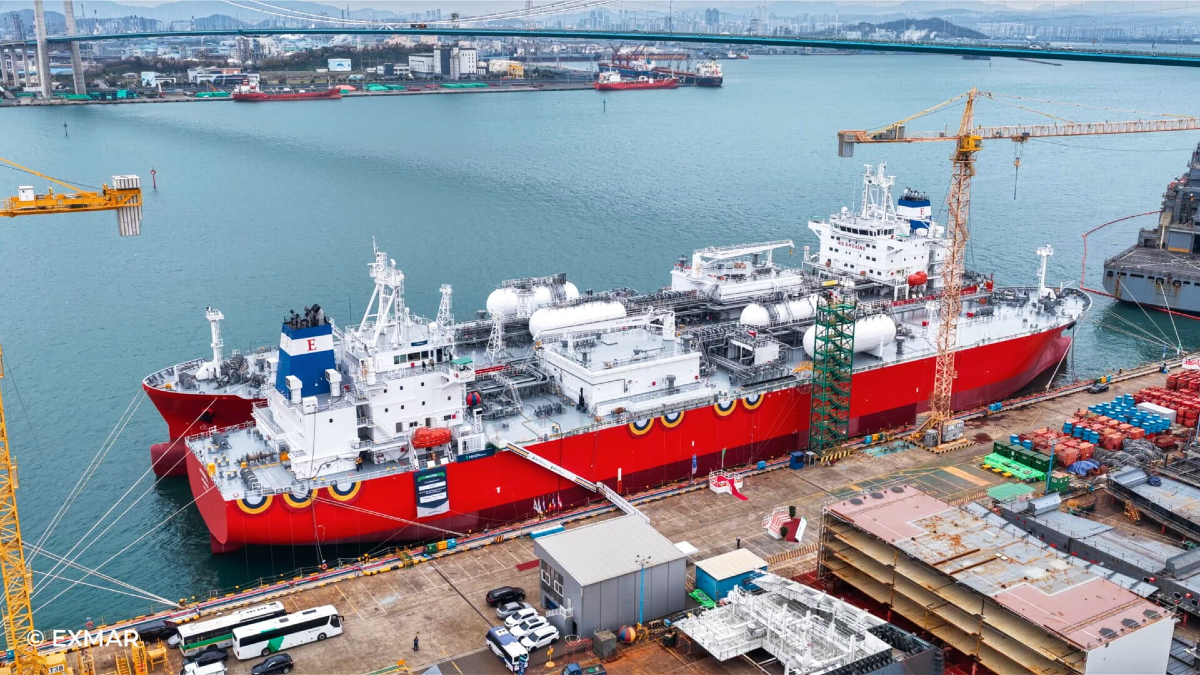
South Korea’s shipbuilder Hyundai Heavy Industries expects to secure a newbuild order this year for the first liquefied natural gas carrier to be built with its Hi-ERS reliquefaction technology.
Hyundai Heavy Industries said the reception to the Hi-ERS (Hyundai Innovative Economical Reliquefaction), which provides for partial re-liquefaction of boil-off-gas without using nitrogen (N2) refrigeration system, has been positive among potential shipowners looking at building LNG carriers.
The shipbuilder is confident that least one of its customers will adopt the Hi-ERS system when placing an LNG carrier order this year.
Hyundai touts the Hi-ERS as providing savings on capital and operating expenditures, having eliminated the refrigeration cycle from partial re-liquefaction of BOG.
Under Hi-ERS, BOG is reliquefied by recovering heat through the use of BOG cold energy and passing it through Joule-Thomson valves.
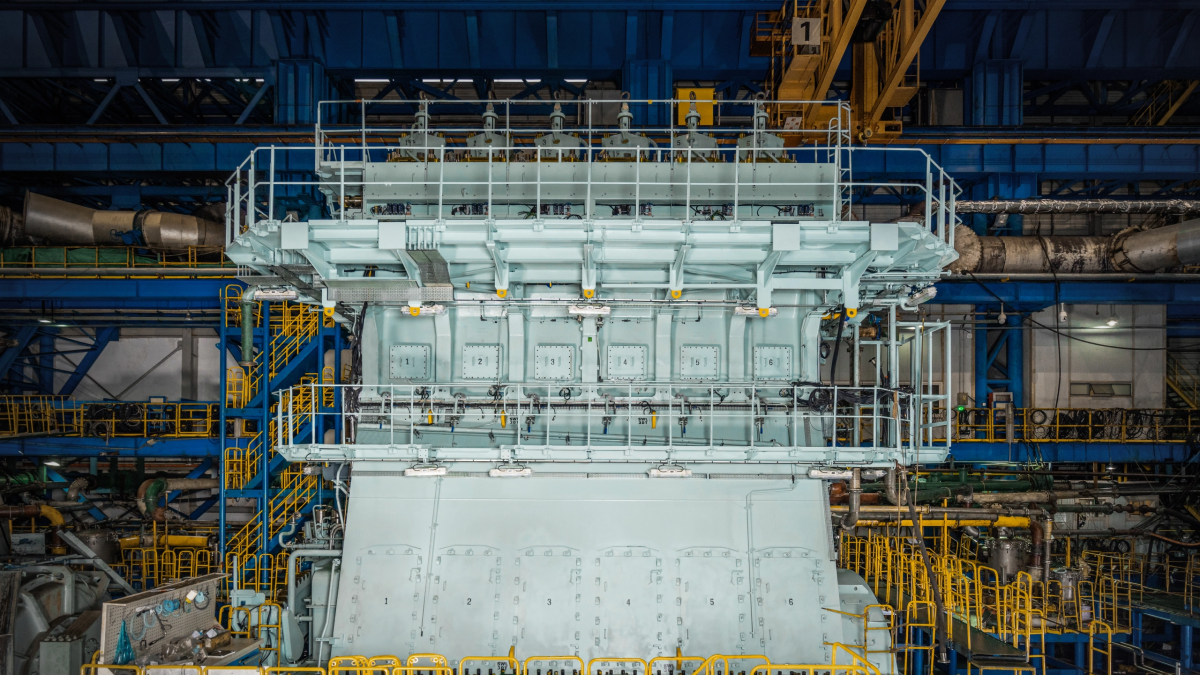
Hi-ERS can be equipped on board any LNG carrier equipped with the two-stroke Man Diesel ME-GI dual fuel engine and high pressure compressor.
The LNG carrier has cargo tanks that are fully insulated for a slightly sub-cooled condition. Ship motion and heat penetration causes the LNG to heat above its boiling point. For this reason, LNG cargo handling system continuously controls the boil off gas in the LNG cargo tank to prevent overpressure of the LNG cargo tank during transportation. In order to control the LNG cargo tank pressure within acceptable range depending on the design point of the LNG cargo tank, the BOG should be removed and extracted from the LNG cargo tank.
The High Pressure Compressor (HPC) is primarily used to control the LNG cargo tank pressure. The HPC with five-stage compressors is installed to compress the BOG from the LNG cargo tanks. The HPC supplies fuel gas to ME-GI engine for the propulsion.
When the flow rate of the BOG is higher than gas demand of the engines, surplus BOG will be sent to Hi-ERS through a control valve which is so called Joule-Thomson valve, and it is then condensed partially. Finally, the condensate is returned to the LNG cargo tanks. If the flow rate of the surplus BOG is higher than the capacity of ERS, a part of the compressed gas can be sent to other consumers such as GCU, DF generator or DF boiler and so on. When the flow rate of BOG is lower than gas demand of the ME-GI engine, the LNG fuel gas supply system will be operated to meet the required gas pressure and amount for the ME-GI engine.
For the purpose of energy recovery in the ERS system, the BOG heat exchanger is installed between the cargo tank and the suction of high pressure compressor. The temperature of the cold BOG from LNG cargo tank will be approximately between -120°C and -90°C. The pressure of the compressed BOG is approximately 300bar required by ME-GI engine. The cold BOG from the LNG cargo tanks is sufficient to make the compressed BOG cool down for partial reliquefaction. The flash gas to be vented from the gas separator that is a part of Hi-ERS is passed through the BOG heat exchanger again and transfers its cold heat to the compressed BOG via the BOG heat exchanger to improve the system efficiency of Hi-ERS, and then finally to be sent to other consumers.
If the compressed BOG in its cold state is expanded through the Joule-Thomson valve to a targeted low pressure, then it can be simultaneously decreased to the condensing temperature of BOG by the Joule-Thomson effect.
Savings from LNG carrier construction can be achieved from lower power consumption and reduced space taken up by installing a re-liquefaction system.
Hyundai carried out the Hazard and Operability study in Hi-ERS last October and classification society, DNV-GL has extended an approval in principle to the new re-liquefaction technology.
The Hi-ERS system was certified about two years after the successful trial run for Hyundai’s Hi-GAS integrated gas supply system in November 2012.
In February, Hyundai unveiled a newbuild order from Knutsen for the first pair of LNG carriers to come equipped with Hi-Gas and its other proprietary BOG re-liquefaction technology, the HHI Gas management System.
In contrast to Hi-ERS, the HHI Gas management system utilises refrigerant for reliquefaction of the BOG. The re-liquefied BOG can be stored in the LNG tank and used to fuel the vessels.
As well as the ME-GI and BOG high-pressure compressor, the HHI Gas Management system also comprises the HI-Gas integrated gas supply system and an LNG fuel gas supply system.
Hyundai estimates that the HHI Gas Management system can save up to 50 per cent in fuel costs compared to standard vessels using heavy fuel oil or marine gas oil, resulting in reductions of 92 per cent in sulphur oxide, 80 per cent in nitrogen oxide and 23 per cent in carbon dioxide emissions.
The pair of 176,000 m3 Knutsen LNG carriers are scheduled for delivery in 2016. MP

Related to this Story

Events

© 2026 Riviera Maritime Media Ltd.


