


Business Sectors
Business Sectors
Events
Contents
Register to read more articles.
Could Australia consider LNG swaps to enhance fuel security?
IEEFA says Australia could trade priority spot LNG sales for refined oil products during the supply crisis


The Australia-based Institute for Energy Economics and Financial Analysis (IEEFA) has raised the prospect of using Australia’s spot LNG exports as part of an emergency energy security response, arguing that Canberra could seek bilateral crisis supply agreements with refined oil product suppliers that are also exposed to Middle East LNG disruption.
Report author IEEFA energy finance analyst, Australian gas Kevin Morrison and IEEFA Australia chief executive Amandine Denis-Ryan set out that proposal in a 23 March briefing note on Australia’s exposure to oil shocks.
Central to that argument is a passage in the report that links oil security directly to LNG trade flows, “Another lever Australia could explore is to negotiate bilateral crisis supply agreements with our suppliers of refined oil products that are also major importers of liquified natural gas (LNG) with significant exposure to Middle East supplies. Australia may be able to offer priority for spot LNG sales (sales beyond contracted volumes, which made up about a quarter of Australia’s LNG exports in 2024) in exchange for refined oil products.”
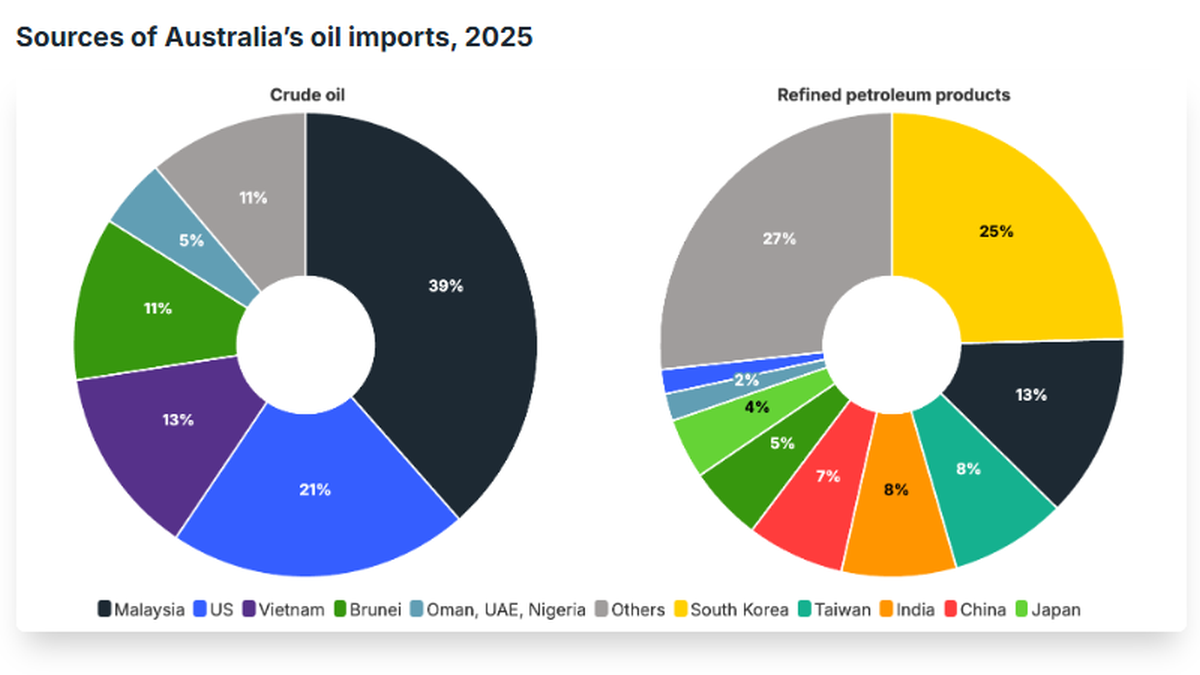
South Korea is cited as one possible counterpart in such an arrangement.
IEEFA wrote, “For example, South Korea is a large exporter with high stockpiles, and relies on LNG for over a quarter of its electricity generation.”
This opens up the possibility of “exploring bilateral crisis supply agreements with suppliers affected by LNG shortages, supported by new export control mechanisms.”
IEEFA notes that such a policy would require “new export control mechanisms” so the government could direct some spot LNG sales to specific countries during a crisis.
It adds that any such mechanism “should be based on prevailing market prices to avoid the need to compensate LNG exporters”.
The context of the LNG proposal relates to the change in Australia’s oil exposure.
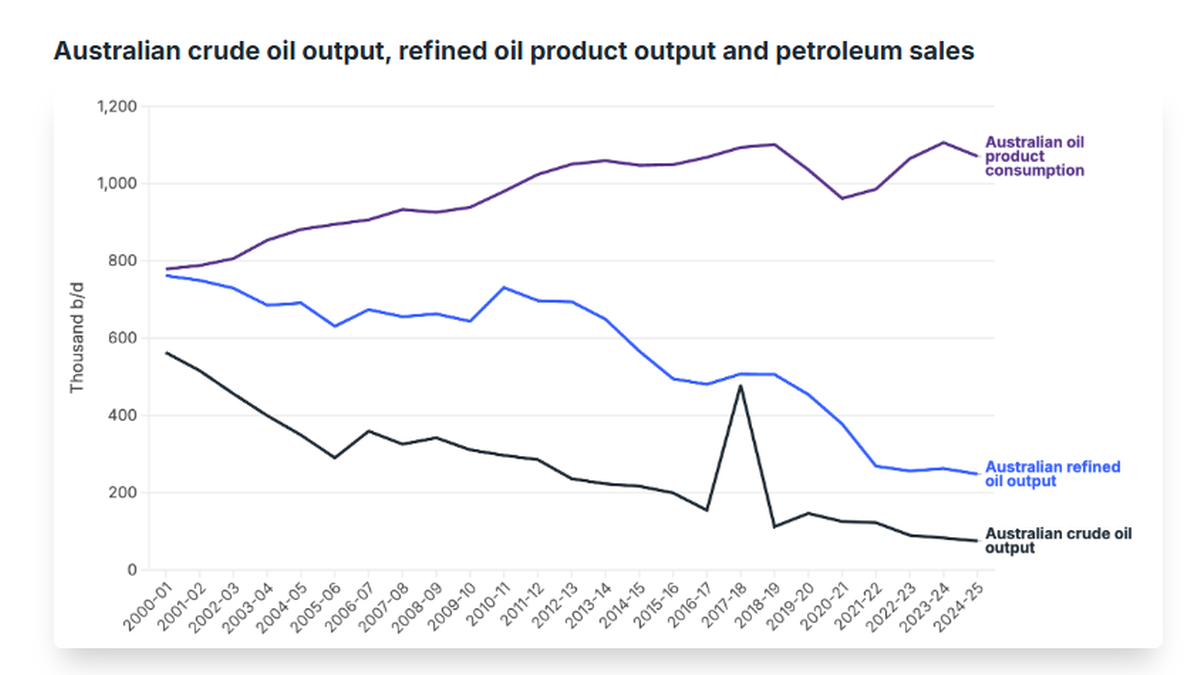
IEEFA points out that in 2000, Australia was self-sufficient, but its exposure to global oil shocks has dramatically increased over 25 years, and the country has the smallest stockpiles of all International Energy Agency members.
It added that domestic oil production now meets 5.6% of demand, and Australia’s two remaining refineries provide 17.0% of refined petroleum products.
IEEFA argues that this leaves Australia vulnerable as the Iran conflict intensifies
Longer term, authors argue that electrification offers the strongest route to resilience, with the report stating, “Electrification is the most promising solution to ensure longer-term resilience.”
For LNG markets, the report’s most direct implication is that spot cargo flexibility could become part of a crisis-response tool rather than remain solely a commercial matter.
It should be noted that IEEFA makes it clear that the proposal is one lever Australia could explore, and is not an announced policy.
Sign up for Riviera’s November 2026 LNG Shipping & Terminals Conference:
- Register to attend here: The LNG Shipping & Terminals Conference.
- To take part in the Conference or webinars, please contact Ian Pow: ian.pow@rivieramm.com
- View the latest issue of LNG Shipping & Terminals here: LNG Shipping & Terminals.


Related to this Story

Events

© 2026 Riviera Maritime Media Ltd.


