


Business Sectors
Business Sectors
Events
Contents

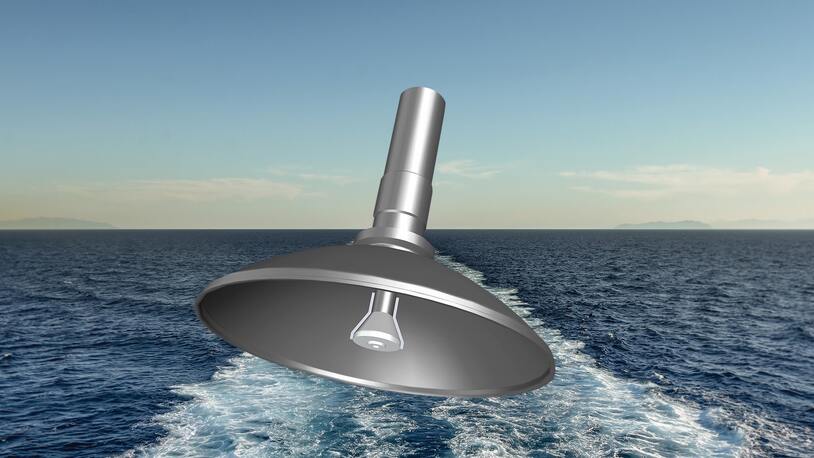
Radar antenna selection is crucial in marine tank level measurement
Non-contacting radar transmitters provide extremely accurate and reliable level measurements in tanks aboard ships. Emerson’s Tom Josefsson and Jan Wallberg explain why choosing the most suitable antenna for each application is a vital consideration.


Liquid level measurement is crucial in a range of applications aboard marine vessels, including fuel tanks and cargo tanks, as it helps to ensure the safe and efficient operation of the ship. With more than five decades of consistent advancement, non-contacting radar has emerged as the favoured technology for providing level measurements in these applications. This article gives an overview of the technology and explains why it is important to select the most suitable antenna when using non-contacting radar transmitters in marine applications.
Modulation techniques
Level measurement instruments employing radar technology emit microwaves to measure the distance to the liquid surface, and non-contacting radar devices use one of two main modulation techniques – pulse or frequency modulated continuous wave (FMCW).
Transmitters based on pulse technology emit tens of thousands of short radar pulses every second from an antenna at the tank top. These pulses reflect off the liquid surface and return to the transmitter, which measures the time delay between the transmitted signal and the received echo signal. An on-board microprocessor then calculates the distance to the surface, and once the transmitter has been programmed with a reference tank height, the ullage and innage can be calculated.
Unlike transmitters based on pulse technology, FMCW radar level devices continuously vary the frequency of their transmitted signals over time. After a signal is reflected from the liquid surface, the antenna picks up its echo, which will always have a slightly different frequency than the transmitted signal. The difference between these frequencies is directly proportional to the distance from the transmitter to the liquid surface, which enables the level to be accurately measured. A key advantage of FMCW devices is that their signal strength is much greater than in pulse transmitters. This enables them to provide superior measurement accuracy and reliability, which is why they have become the preferred solution for many challenging applications.
Frequency bands
Frequency represents a fundamental characteristic of any radar-based level instrument, as it directly influences measurement performance. Historically, three distinct frequency bands have been employed for level measurement applications. These are C-band (~6 GHz), X-band (~10 GHz), and K-band (~26 GHz). More recently, transmitters utilising frequencies within the W-band (~80 GHz) have also been introduced. It is important to bear in mind that not all frequencies are equally well-suited for every application, so careful consideration should be given to the specific requirements of the intended application.
Bandwidth
The bandwidth of an FMCW radar level device refers to the range of frequencies covered by the transmitted signal. Bandwidth is a crucial parameter, with a broader bandwidth typically allowing for better range resolution – i.e., the device’s ability to distinguish between two closely-spaced objects or surfaces along the path of the radar beam, and detect them as separate targets. The choice of bandwidth in FMCW radar level transmitters is often determined by specific application requirements, considering factors such as the desired range resolution and environmental conditions.
Dielectric constant
Non-contacting radar, guided wave radar and capacitance level instruments are all impacted to some degree by the dielectric value of the material to be measured. In level measurement terms, the dielectric constant is used to signify the reflectivity of a material.
The conductivity of a solution depends on factors such as its chemical composition, ionization capabilities, and concentration. In general, non-conductive materials typically exhibit low dielectric values, whereas conductive materials tend to have higher dielectric values. However, an important exception to this generalization is water. Since water is a polar molecule, it has a high dielectric constant of around 80, whereas nonpolar hydrocarbons generally have much lower dielectric constants of between 2 and 3.
Signal reflection
When radar technology is used for level measurements, the measured media needs to provide a strong enough reflection of the transmitted signal. In general, the higher the material’s dielectric constant, the stronger the reflected signal will be. However, as the distance to the target increases, the reflected signal must be stronger to ensure an adequate return to the radar device.
Additionally, turbulence or ripples on a liquid surface can lead to signal scattering, diminishing the signal received by the radar device. In cases where agitation is coupled with a low dielectric medium, unintended reflections from internal structures within the tank may surpass the intended liquid level measurement.
Antenna selection
Signal generation is based on factors such as the frequency being utilised by the radar transmitter, and the size of the antenna. The gain of an antenna is a measure of its ability to direct or focus the signal in a particular direction. The antenna gain is calculated by the following equation,
 |
where the gain (G) of an antenna relates to the antenna diameter (d), wavelength (λ), and efficiency (η). Comprehending this equation empowers users of radar-based level instruments to decide on an instrument’s suitability for different level measurement applications.
For example, a comparison can be made between a relatively large cone antenna and a parabolic antenna. For a device operating at 26 GHz with a wavelength of 1.2 cm and employing a 19.5 cm parabolic antenna with an efficiency of 0.45, the gain is seven times greater than that of a device operating at 10 GHz, utilizing a 15 cm (6 in) cone antenna with an efficiency of 0.70.
This implies that in applications such as measuring level in the cargo tanks of oil tankers, where the tanks may exceed 15 meters in height and the content has a low dielectric constant, a larger antenna can prove advantageous.
Furthermore, the overall beam width of a radar signal is inversely proportional to the frequency of the device. Consequently, a radar device operating at a higher frequency will have a smaller beam width compared to a lower frequency device with an equivalent antenna diameter. This characteristic greatly simplifies the installation of radar-based level measurement devices on marine cargo tanks. Tank designers do not need to keep a substantial portion of the tank free from potential obstructions, which could otherwise compromise the reliability of the measurements.
For instance, at a distance of 10 m and using a 100 mm antenna, a 26 GHz radar device features a beam width of 1.5 m, while a 6 GHz transmitter has a wider beam width of 7 m. The beam width of the 6 GHz device is 4.6 times larger than that of the 26 GHz transmitter with the same antenna size.
Increasing the antenna size not only reduces the beam width but also effectively enhances the gain of the unit. Consequently, a larger antenna diameter contributes to an increase in reflectivity, and thus becomes the most advantageous choice for level measurements at long distances on liquids with low dielectric constants.
For any radar level device, the strength of the reflected signal diminishes for lower dielectric liquids and with greater distances. Consequently, measuring on low dielectric liquids becomes more challenging as distance increases. For non-contacting radar devices, enlarging the radar antenna is necessary to enhance both signal strength and the reception of reflected signals. Utilising a higher frequency device enables this optimisation while maintaining a limited antenna size.
Accuracy and reliability expectations
In the context of level measurements aboard marine vessels, it is important to consider the degree of accuracy that is expected or desired. When using non-contacting radar transmitters, accuracy expectation establishes the criteria for how closely the level readings should match the true level values.
The expected accuracy and reliability of a cargo monitoring system is usually high, as the system must ensure that the contained liquid will not rise above the permitted limits, thereby eliminating the risk of overfill incidents. These systems predominantly employ radar-based transmitters for measuring level, and such devices are present on a wide range of vessels, spanning from very large crude carriers (VLCC) to general purpose (GP) and inland barges.
Historically, devices employed for measuring level in fuel tanks have been subject to relatively modest accuracy standards, with a notable reliance on pressure-based measurements in many installations. Nevertheless, the landscape is evolving due to heightened environmental standards, leading to the increased adoption of radar-based devices, which is particularly evident in alternative fuel applications.
A common factor across all applications is the paramount importance of ensuring the reliability of the measurements and the ability of the device to maintain functionality, especially in the harsh conditions prevalent in the marine environment. While level measurement devices on land-based tanks typically operate in relatively stable environments, marine installations often face challenging weather conditions. This underscores the need to carefully select a suitable level measurement instrument, with a specific focus on the type of antenna required.
Summary
When using non-contacting radar transmitters to measure level aboard various ship tanks, it is vital to select the right antenna. For applications involving long distances and liquids with low dielectric constants, the optimal choice often leans towards a parabolic antenna. This selection ensures high gain, thereby enhancing signal strength through its ability to direct or focus the radiated signal in a particular direction. Additionally, it enhances the reliability and availability of the level measurements, especially in situations characterised by turbulent liquids or other conditions where the measured surface lacks a mirror-like quality. The reduced beam width resulting from the parabolic antenna also facilitates installation by requiring fewer considerations for the internal tank structure design. This proves particularly advantageous on tall tanks, where operator safety and reliability are crucial.
To learn more about Emerson’s broad range of marine solutions, visit www.emerson.com/sv-se/industries/automation/marine/marine-systems-solution/cargo-monitoring-systems


Related to this Story



Events

© 2026 Riviera Maritime Media Ltd.


