


Business Sectors
Business Sectors
Events
Contents
Register to read more articles.
Vessels under fire as Hormuz shuts again; peace talks timeline unclear
’Volatile’ may be an understatement to describe developments in the Strait of Hormuz since 17 April


Hopes for the waterway’s reopening have quickly faded, as the US blockade remains firmly in place and commercial vessels are once again coming under attack.
Iran announced on 17 April that the Strait of Hormuz would remain fully open for the remainder of the ceasefire, following the truce agreement between Israel and Lebanon.
However, analysts remained cautious about a return to normal commercial traffic. Washington maintained its expanded blockade, while Tehran stated that vessels would be required to transit via routes co-ordinated by Iranian authorities.
Later that day, Iran announced it was closing the Strait again unless the US lifts its blockade on Iranian ports.
In the latest development, US President Donald Trump said on 19 April that US representatives will travel to Islamabad, Pakistan, on 20 April for renewed negotiations with Iran. He also stated that Tehran had violated the ceasefire by resuming attacks in the Strait of Hormuz.
The BBC reported that preparations are underway in the city to host the two parties.
Meanwhile, Iran has neither confirmed nor denied its participation in a new round of talks.
Shipping in confusion
Amid the uncertainty, some vessels have attempted to exit the Strait. While a number have managed to continue their journeys, others have been forced to turn back.
Windward senior maritime intelligence analyst Michelle Wiese Bockmann noted on social media that at least 33 outbound ships reversed course mid-transit.
A senior shipmanagement official told Riviera on 18 April that “everything has turned upside down again,” adding that no transits are expected until a further agreement is reached.
The Joint Maritime Information Center reported on 19 April that there were 10 transits through the Strait on 17 April, followed by 19 the next day.
Multiple vessels departed anchorages on 18 April, intending to transit the Strait of Hormuz, but returned after kinetic activity disrupted those plans, reverting to the status quo, the update stated.
Shots fired at vessels
Volatility increased further as maritime security agencies reported attacks on commercial shipping.
The United Kingdom Maritime Trade Operations (UKMTO) centre reported three separate incidents on 18 April.
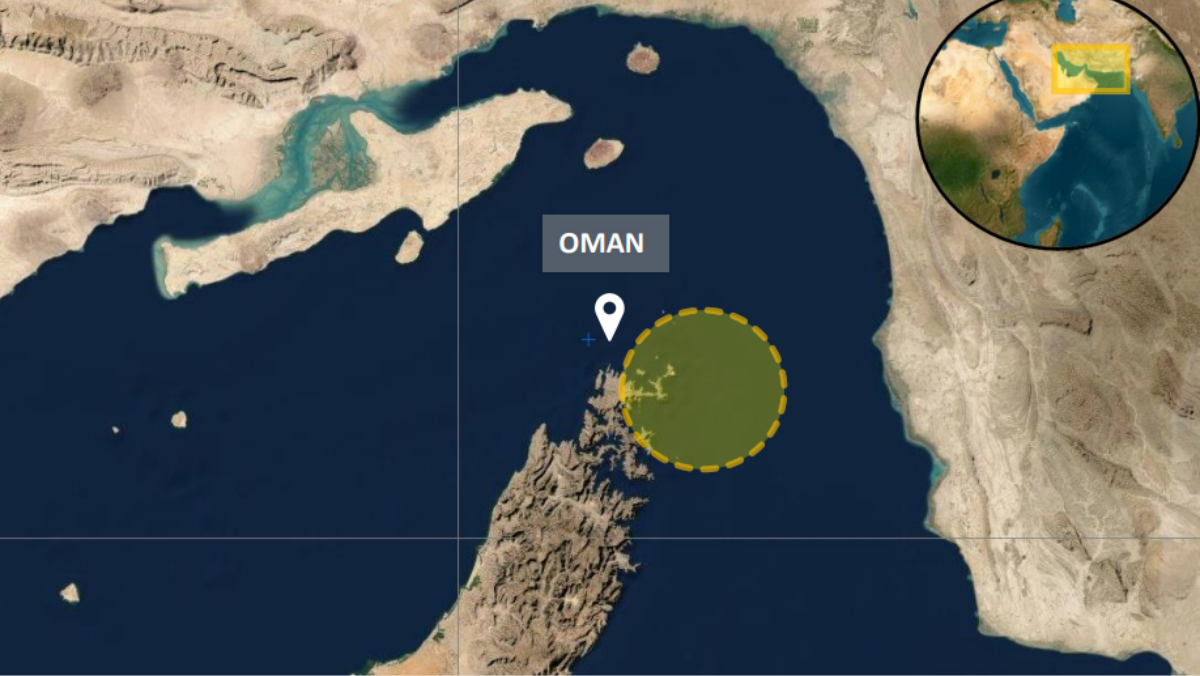
In the first, a tanker was approached 20 nautical miles northeast of Oman by two ’gun boats’ belonging to Iran’s Islamic Revolutionary Guard Corps (IRGC), which opened fire. Both the crew and the vessel were reported safe.
Vanguard reported that the vessel’s bridge windows were damaged, prompting it to turn around and return to the Gulf.
In the second incident, UKMTO reported that a container ship was struck by an unknown projectile, damaging some of its containers. No fire or environmental impact was reported. The incident occurred 25 nautical miles northeast of Oman.
In a third case, the master of a cruise ship reported observing a splash in proximity to the vessel, three nautical miles east of Oman.
Russian oil waiver extended
Meanwhile, the US administration has renewed an authorisation allowing countries to purchase Russian oil currently stranded at sea, despite earlier indications that such an extension was unlikely.
The US Department of the Treasury’s Office of Foreign Assets Control (OFAC) initially issued the temporary authorisation in March, with an expiry date of 11 April.
Speaking at the White House on 15 April, US Treasury Secretary Scott Bessent had ruled out extending the licence.
However, in a decision announced on 17 April, OFAC authorised the delivery and sale of Russian-origin crude oil and petroleum products loaded on vessels – including those subject to sanctions – until 16 May.
The OFAC waiver explicitly prohibits "Any transaction involving a person located in or organized under the laws of the Islamic Republic of Iran" among others despite Iranian oil receiving a temporary, 30 day waiver that expired on 19 April.


Related to this Story



Events

Maritime Regulations Webinar Week
 16 Dec 2025
 GMT - ONLINE
Floating energy: successfully unlocking stranded gas using FLNGs and FSRUs
24 Feb 2026GMT - ONLINE
© 2026 Riviera Maritime Media Ltd.


