


Business Sectors
Business Sectors
Events
Contents

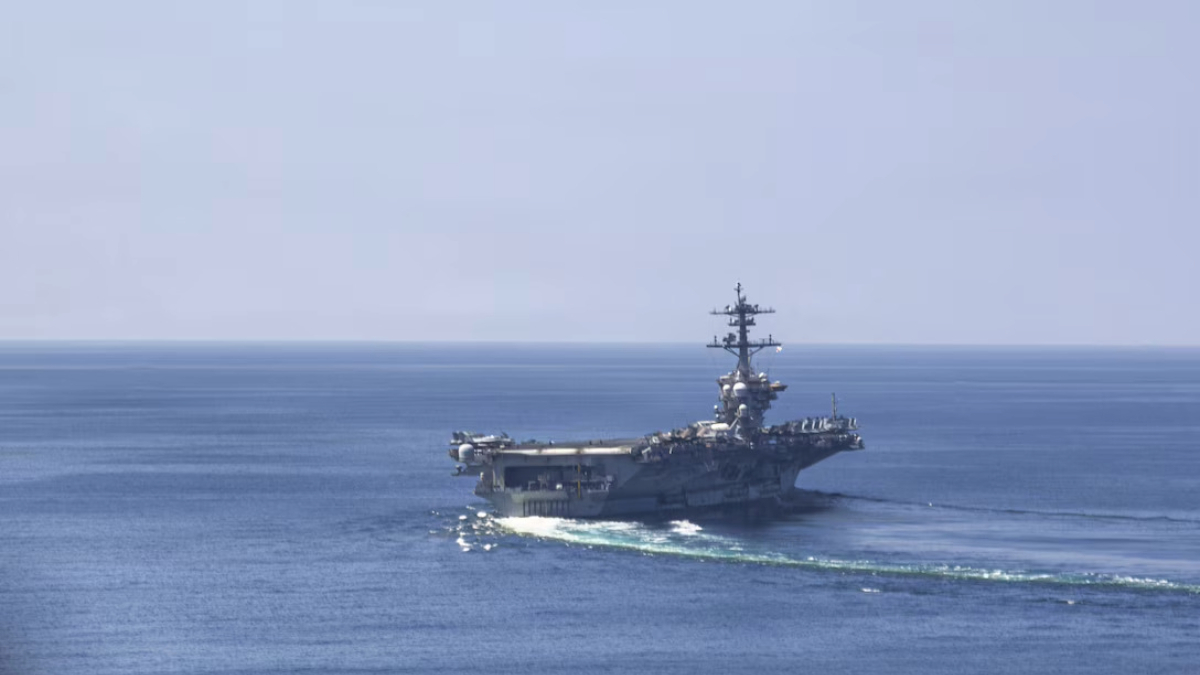
'Access restrictions' emerge across Iran’s ports as analysts assess warship impact on traffic patterns
Donald Trump’s blockade of the Strait of Hormuz is beginning to take shape, as security monitoring bodies report maritime restrictions across Iranian ports, while analysts note that warship presence in the area is expected to weigh on traffic patterns


United Kingdom Maritime Trade Operations (UKMTO) Centre noted in an update on 13 April that it had been informed that, effective from 14:00 UTC, maritime access restrictions were being enforced across Iranian ports and coastal areas, including locations along the Persian Gulf, Gulf of Oman, and the Arabian Sea east of the Strait of Hormuz.
“These access restrictions apply without distinction to vessels of any flag engaging with Iranian ports, oil terminals, or coastal facilities,” the advisory said.
According to UKMTO, the restrictions cover the entire coastline of Iran, including ports and energy infrastructure.
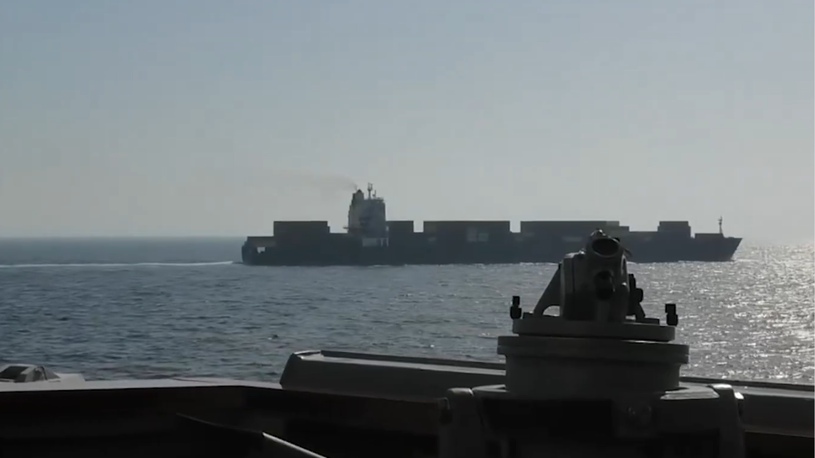
“Transit passage through the Strait of Hormuz to or from non-Iranian destinations is not reported to be impeded by these measures; however, vessels may encounter military presence, directed communications, or right-of-visit procedures during passage,” it added.
The agency also said that “neutral vessels currently within Iranian ports have been granted a limited grace period to depart.”
MarineTraffic data shows that at least two tankers reversed course near the Strait of Hormuz shortly after the start of the blockade.
US President Donald Trump said on 13 April that if Iranian “fast attack ships” approach the US naval blockade, “they will be immediately eliminated.”
Earlier, United States Central Command said the blockade would apply only to vessels calling at Iranian ports or transiting Iranian “coastal areas”.
Warship presence set to impact sentiment
Fertmax global head of research Daejin Lee told Riviera that the US Navy would not need to physically stop every transit to have an impact on Iran-linked trade.
“As the IRGC has demonstrated, the presence of warships, combined with warnings and selective interdiction, can significantly reduce Iranian-linked flows, as seen in today’s decline in vessel traffic following the weekend surge,” he said.
“That said, the practical limit of such an operation is not military capacity but political will,” he added.
According to AIS data collected by Mr Lee as of the morning of 13 April, pre-ceasefire patterns persist, with flows concentrated in essential commodity carriers, bilateral-arrangement vessels, and Iranian-linked units, showing no material change in the underlying transit profile.
“However, AIS data in the coming days will show whether this blockade will effectively diminish the advantage of Iranian-linked vessels and undermine the viability of bilateral-arrangement vessels and informal toll arrangements,” he said.
Ceasefire fails to normalise transit
Iranian oil flows continued following the ceasefire announcement, data shows. According to Kpler, at least 18 confirmed liquid tankers crossed the Strait of Hormuz between 9 April and 12 April carrying crude oil, refined products, and chemicals.
Kpler said that what has moved since the ceasefire is largely Iranian oil on Tehran’s terms, a handful of Chinese- and Thai-chartered VLCCs, Pakistan’s state fleet positioning to load, and a limited number of product cargoes. The firm added that no Europe-destined crude has transited the Strait since the ceasefire.
“That is not a normalisation of flows. As of Monday morning, it may be the last traffic to move through the Strait under any framework at all, as the US Navy begins enforcement operations and Iran’s IRGC has warned it will deal with any military vessels approaching the waterway ‘harshly and decisively’,” Kpler said.
Analysts had initially urged caution following the ceasefire, closely monitoring negotiations between the US and Iran.
While the pause may have offered a limited window for trapped vessels to exit the area, it was not expected to support new loadings.
Riviera’s International Chemical and Product Tanker Conference will be held in London on 21-22 April 2026. Use this link for more information and to register for the event.




Related to this Story


Events

Maritime Regulations Webinar Week
 16 Dec 2025
 GMT - ONLINE
Floating energy: successfully unlocking stranded gas using FLNGs and FSRUs
24 Feb 2026GMT - ONLINE
© 2026 Riviera Maritime Media Ltd.


