


Business Sectors
Business Sectors
Events
Contents

Register to read more articles.
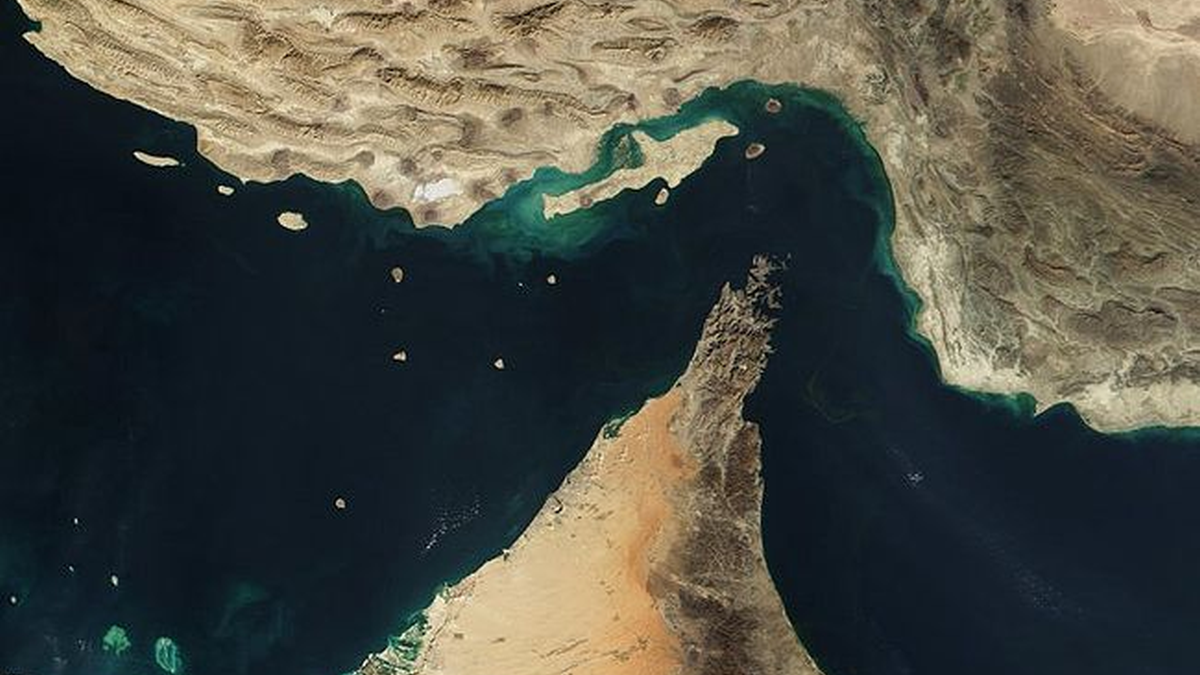
Ceasefire: potential opportunity, but fresh loadings remain risky
The temporary ceasefire agreement in the Middle East offers a “window of opportunity” for ships to exit the Gulf, though analysts warn that this represents “a managed corridor, not a restored international waterway,” and that fresh loadings in the region are unlikely in the short term


Industry observers said several uncertainties remain, leaving market participants in a “wait and see” mode.
“The ceasefire is welcome, but I would caution against reading too much into it at this stage,” Optima Shipping Services head of market analysis and decarbonisation strategies, Angelica Kemene said.
“We still need to see how it works out in practice,” echoed Banchero Costa head of research Ralph Leszczynski.
“Significant challenges remain before any ceasefire agreement involving the US, Israel, and Iran can realistically evolve into a durable resolution,” added BRS Shipbrokers head of dry bulk research Wilson Wirawan.
Intermodal head of research Yiannis Parganas noted that the ceasefire “should not be interpreted as a true normalisation of the oil market, but rather as a temporary logistical relief mechanism.”
Key risks
Ms Kemene emphasised that Iran’s own statement clarified this is not a termination of hostilities, with missile attacks on Israel and Gulf states continuing even after the announcement.
“The Lebanon question remains contested: Pakistan says it is included, Israel says it is not, and the White House has not clarified. Iran has conditioned any durable settlement on an end to operations against Hezbollah, which Israel has flatly rejected. That contradiction alone could unravel the Islamabad talks before they produce anything binding,” she explained.
Co-ordination of transits also remains uncertain. Mr Leszczynski highlighted a statement from Iran noting that “safe passage through the Strait of Hormuz will be possible via co-ordination with Iran’s Armed Forces and with due consideration to technical limitations.”
“This implies transit will still depend on Iran’s goodwill, and perhaps the payment of a transit fee,” he noted.
Mr Wirawan added that while Washington appears to accept the ceasefire framework, several elements remain contentious, including Iran’s uranium enrichment, the removal of US and Western sanctions, and the expectation of a full US military withdrawal from regional bases.
On the nuclear front, Ms Kemene pointed out that no substantive resolution has been reached. US President Donald Trump stated Iran’s uranium stockpile “will be perfectly taken care of” without providing details. “This is the hardest issue to bridge and the most likely to determine whether this ceasefire extends beyond two weeks or collapses,” she said.
“At this stage, it seems unlikely that all conditions will be fully accepted. Some compromise will be necessary; otherwise, there is a strong risk that the agreement could break down, leading to renewed hostilities,” Mr Wirawan added.
Window of opportunity
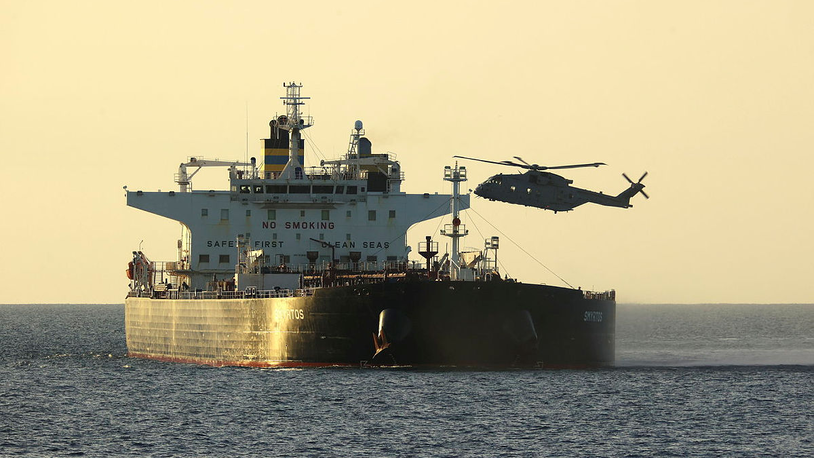
Shipowners and operators are expected to proceed cautiously. Still, the agreement provides a chance for hundreds of vessels stranded in the Gulf to exit.
“There are over 800 vessels trapped in the Gulf, and transit through the Strait requires active co-ordination with Iran’s armed forces. This is a managed corridor, not a restored international waterway,” Ms Kemene said.
“This could allow vessels that have been waiting for weeks to finally leave the Gulf,” said Mr Leszczynski.
Drewry senior manager for container research Simon Heaney, added, “Container lines with ships stuck in the Gulf will see this as a window of opportunity to get those vessels out.”
However, new cargo loadings in the area are unlikely under current conditions. With the agreement subject to further negotiations, hostilities could resume at any time, Mr Leszczynski explained.
“Most shipowners will remain hesitant to cross the Strait until there is more clarity. Owners are unlikely to commit vessels for new Gulf loadings in the near term. Therefore, I don’t think we will see many vessels crossing the Strait to enter the Gulf in the coming days,” he said.
Mr Parganas noted that while trapped cargoes may sail, fresh export programmes require inbound ballast tonnage, drawdown of onshore storage, and a reliable operating window for producers to resume output safely. “For Iraq in particular, that recovery timeline extends well beyond a two-week horizon,” he added.
Insurance also remains a critical factor. “War-risk coverage will not automatically reinstate on a political announcement alone. Underwriters will need to see incident-free passage, and Gulf infrastructure, including Ras Laffan, has not been confirmed as fully operational,” Ms Kemene said.
Persistent tanker disruption
Focusing on the tanker market, Mr Parganas explained that while some floating storage may be released, chartering appetite for incremental liftings is likely to remain cautious until transit security, war-risk insurance, and potential Iranian tolls are clarified.
“In practical terms, crude trade flows remain inefficient, vessel positioning distorted, and freight volatility is unlikely to ease materially,” he said.
Around 180M barrels of floating storage could be unlocked, but roughly 11M barrels per day of shut-in production may remain offline. Even if the corridor stays open temporarily, the released barrels provide only a short-lived buffer. Normal tanker recycling and export programme replenishment could take 30-45 days, keeping Middle East-Asia crude flows below normal and sustaining dislocation in VLCC demand, Mr Parganas concluded.
LNG carrier movements
On the LNG front, ICIS senior LNG analyst Alex Froley said about 15 laden LNG carriers are currently waiting in the Strait, with some volumes also in storage tanks at Qatar’s Ras Laffan plant.
Two Qatari LNG carriers attempted a crossing on 7 April but returned the same day.
“Following the ceasefire, some of these laden tankers may begin moving soon, potentially delivering to nearby countries such as India and Pakistan after about four days’ travel,” Mr Froley said.
“However, QatarEnergy has indicated a full return to normal operations could take three to four months, even after safe passage is established. It is also unclear whether a two-week ceasefire is long enough for operators to plan a full restart,” he added.
Sign up for Riviera’s series of technical and operational webinars and conferences:
- Register to attend by visiting our events page.
- Watch recordings from all of our webinars in the webinar library.


Related to this Story

Events

Maritime Regulations Webinar Week
 16 Dec 2025
 GMT - ONLINE
Floating energy: successfully unlocking stranded gas using FLNGs and FSRUs
24 Feb 2026GMT - ONLINE
© 2026 Riviera Maritime Media Ltd.


