


Business Sectors
Business Sectors
Events
Contents
UK intercepts and detains Russian 'shadow fleet' tanker
The United Kingdom has, for the first time, intercepted, boarded and detained a what it called a "sanctioned shadow fleet oil tanker" in the English Channel


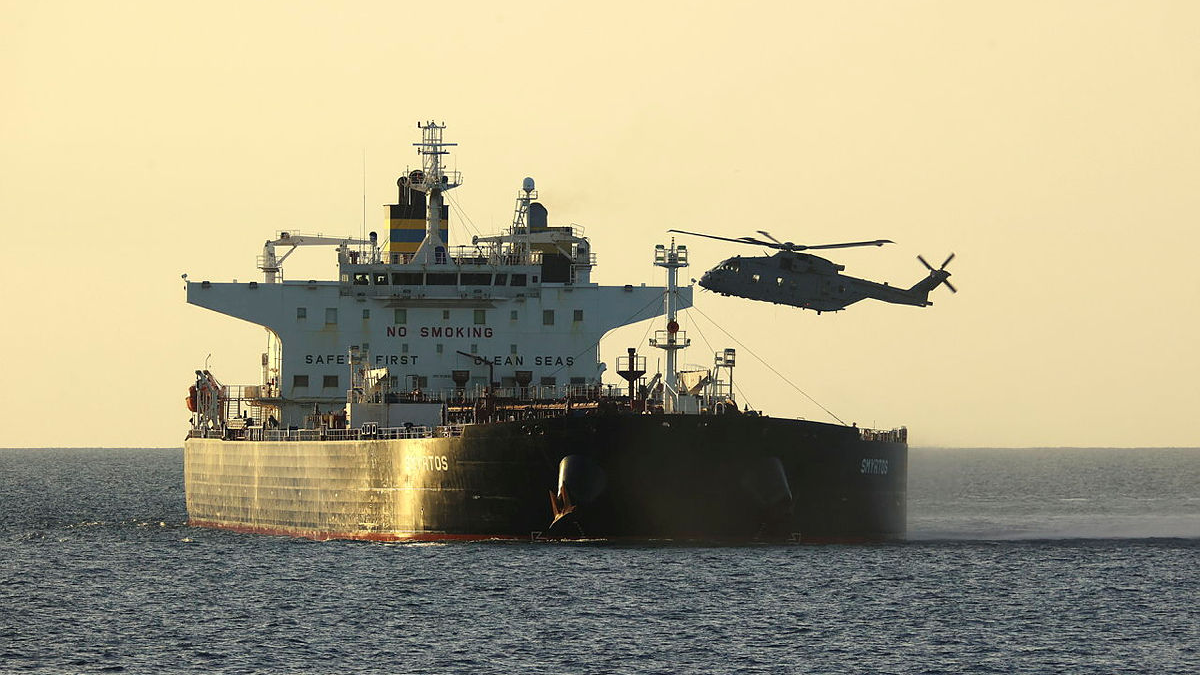
British forces have interdicted an oil tanker in the English channel after boarding via helicopter.
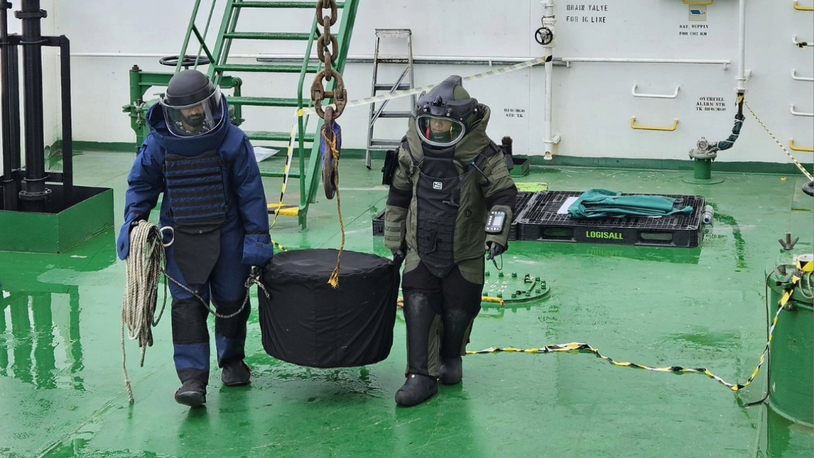
In the first operation of its kind for the UK, the vessel, Smyrtos, was boarded by a joint team of Royal Marine Commandos and what the UK called "specially trained law enforcement officers from the National Crime Agency".
The vessel will now be held and monitored off the UK’s southern coast, "as investigations continue", according to the UK Ministry of Defence (MOD).
"Russia relies on its shadow fleet to fund their conflict in Ukraine and our interdiction delivers a blow to Putin’s illegal war," UK Defence Secretary Dan Jarvis said.
The MOD said the six-hour military operation involved naval vessels HMS Sutherland and HMS Ledbury, as well as Chinooks, Merlin Mk4 and Wildcat Royal Navy aircraft, and an RAF P-8 aircraft.
"The Smyrtos will be provisionally moved to an anchorage off the South Coast of England and will be monitored for any environmental or safety concerns. The enforcement action against this vessel in UK territorial waters was carried out in accordance with domestic and international law," MOD said.
The UK Prime Minister agreed in March that British Armed Forces and law enforcement officers were able to board shadow fleet vessels, citing accordance with international law.
"This operation delivers yet another blow to Russia and reminds those fueling Putin’s war in Ukraine that they cannot hide," Prime Minister Keir Starmer said.
UK collaboration and coordination with EU on vessel policing
The UK said its first interdiction action in the English Channel builds on recent support that it provided to US and EU allies to interdict shadow fleet vessels, which included RAF and Royal Navy capabilities supporting US and French operations.
The British government said the operation was conducted "in close coordination with the French".
The UK’s interdiction of a Russian tanker came days after the EU adjusted its policy to enable vessel interventions, with inspections being carried out by its Mediterranean naval force.
Brussels has also imposed sanctions on Iran over its control of the Strait of Hormuz, citing concerns over freedom of navigation.
"Our Operation Irini has changed the rules of engagement and has now started boarding shadow fleet vessels as well," EU foreign policy chief Kaja Kallas said on the sidelines of an informal meeting of the bloc’s defence ministers.
"The idea is to change the best practices, what different countries are doing with those ships, because it is really posing a danger, and of course, also the idea is to curb Russia from the funding of this war," she added.
France and Sweden, for example, have recently boarded tankers.
The EU’s Mediterranean naval mission, Operation Irini (the Greek word for "peace"), was launched in March 2020 with the primary objective of enforcing the UN arms embargo on Libya through aerial, satellite and maritime surveillance assets. Its mandate has since expanded.
The force announced on X this week that, while conducting monitoring and surveillance activities in the Mediterranean on 7 June, it carried out a flag-verification boarding of EU-sanctioned tanker Sandhya.
Kpler senior risk and compliance analyst Dimitris Ampatzidis told Riviera that the expansion of Operation Irini could add a more practical layer of oversight and enforcement against the shadow fleet.
"The ability to conduct boardings, even in selected cases, could have a deterrent effect and demonstrate that the EU is willing to move towards more active enforcement at sea," he said.
A boarding can also help authorities gather more specific evidence regarding cargoes, vessel flags, documentation, insurance coverage and potential irregularities.
However, Mr Ampatzidis cautioned that, given the shadow fleet’s adaptability, the effectiveness of such measures would depend on how targeted their implementation is, the quality of intelligence available before inspections, and whether findings can ultimately lead to meaningful sanctions or restrictions.
"In short, it could be a useful tool for more active enforcement and better evidence gathering, but it would not by itself be sufficient to significantly reduce the shadow fleet overall," he said.



Related to this Story

Events

Maritime Regulations Webinar Week
 16 Dec 2025
 GMT - ONLINE
Floating energy: successfully unlocking stranded gas using FLNGs and FSRUs
24 Feb 2026GMT - ONLINE
© 2026 Riviera Maritime Media Ltd.


