


Business Sectors
Business Sectors
Events
Contents

Register to read more articles.
EU steps up dark fleet enforcement with vessel boardings, new designations and LNG carrier sales restrictions
The EU is stepping up enforcement efforts against the shadow fleet, expanding its measures to include vessel boardings while also targeting secondhand LNG carrier sales to Russia


At the same time, Brussels has imposed sanctions on Iran over its control of the Strait of Hormuz, citing concerns over freedom of navigation.
"Our Operation Irini has changed the rules of engagement and has now started boarding shadow fleet vessels as well," EU foreign policy chief Kaja Kallas said on the sidelines of an informal meeting of the bloc’s defence ministers.
"The idea is to change the best practices, what different countries are doing with those ships, because it is really posing a danger, and of course, also the idea is to curb Russia from the funding of this war," she added.
France, the UK, and Sweden, for example, have recently boarded tankers.
The EU’s Mediterranean naval mission, Operation Irini (the Greek word for "peace"), was launched in March 2020 with the primary objective of enforcing the UN arms embargo on Libya through aerial, satellite and maritime surveillance assets. Its mandate has since expanded.
The force announced on X this week that, while conducting monitoring and surveillance activities in the Mediterranean on 7 June, it carried out a flag-verification boarding of EU-sanctioned tanker Sandhya.
Kpler senior risk and compliance analyst Dimitris Ampatzidis told Riviera that the expansion of Operation Irini could add a more practical layer of oversight and enforcement against the shadow fleet.
"The ability to conduct boardings, even in selected cases, could have a deterrent effect and demonstrate that the EU is willing to move towards more active enforcement at sea," he said.
A boarding can also help authorities gather more specific evidence regarding cargoes, vessel flags, documentation, insurance coverage and potential irregularities.
However, Mr Ampatzidis cautioned that, given the shadow fleet’s adaptability, the effectiveness of such measures would depend on how targeted their implementation is, the quality of intelligence available before inspections, and whether findings can ultimately lead to meaningful sanctions or restrictions.
"In short, it could be a useful tool for more active enforcement and better evidence gathering, but it would not by itself be sufficient to significantly reduce the shadow fleet overall," he said.
New sanctions cover oil price cap and LNG carrier sales
Meanwhile, the EU has moved forward with its proposed 21st sanctions package against Russia.
Among the measures proposed is a temporary suspension of the Russian oil price cap.
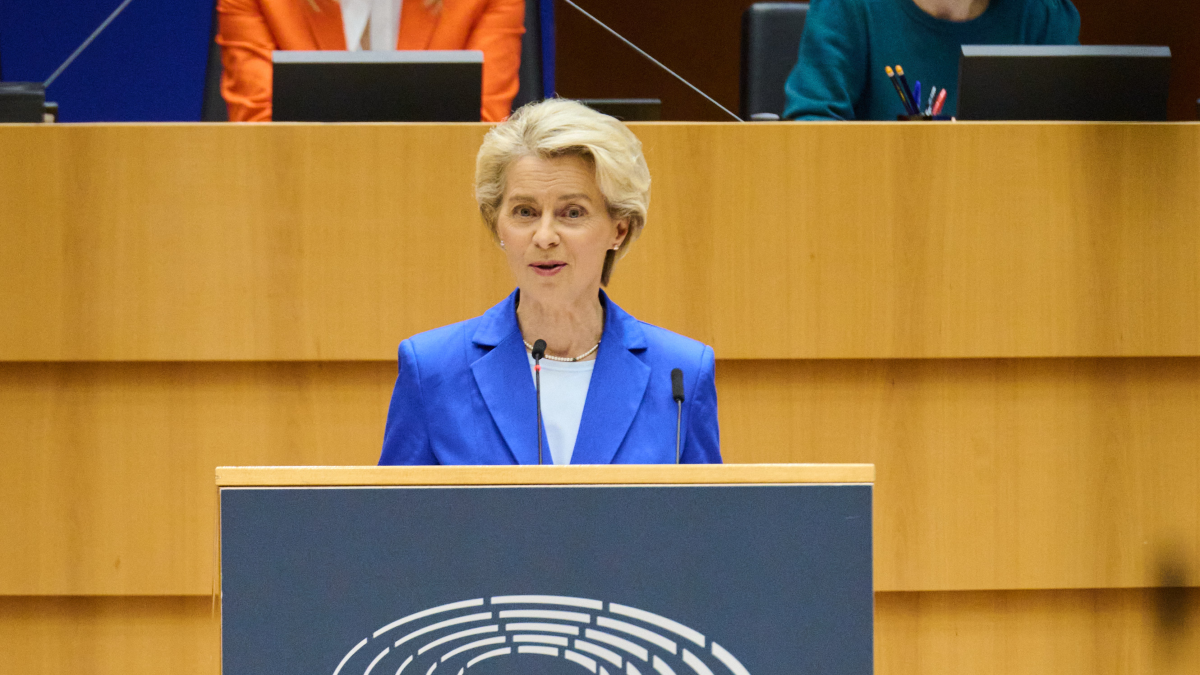
"Our oil price cap has a built-in adjustment mechanism designed to follow market developments. It was not made for market shocks like the one caused by the closure of the Strait in Hormuz," European Commission President Ursula von der Leyen said.
"So we propose to simply pause the adjustment until January next year. This will give oil markets time to stabilise while preserving pressure on Russia’s revenues," she added.
The EU is also proposing sanctions against an additional 30 vessels, on top of the 632 already designated.
"For the first time, we are also targeting vessels that support the shadow fleet by providing bunkering and other services," Ms von der Leyen said.
In addition, the EU is proposing restrictions on the sale of LNG carriers to Russia, mirroring measures previously introduced for oil tankers. The bloc’s 20th sanctions package already introduced mandatory due-diligence requirements for tanker sales.
Riviera has previously reported on Russia’s growing presence in the secondhand LNG carrier market, reflecting the country’s need to secure additional tonnage to meet rising demand in Europe and Asia.
Iran targeted over Hormuz control
In another sanctions-related development, the European Council on 8 June approved restrictive measures against two individuals and one entity involved in actions that, according to the EU, threaten freedom of navigation in the Middle East.
The Council specifically designated the Hormozgan Provincial Command of the already EU-listed Islamic Revolutionary Guard Corps Navy (IRGCN).
"The IRGC Navy has assumed control of the Strait of Hormuz and implemented a toll system under which vessels are required to provide identifying documentation, as well as cargo and destination information, which is ultimately passed on to the Hormozgan Provincial Command," the Council said.
"Using this information, the Hormozgan Provincial Command screens vessels and determines which ones are allowed to transit through the strait, in some cases after the payment of tolls."
The EU also imposed sanctions on Mohammad Akbarzadeh and Hamid Hosseini “for supporting Iran’s actions that impede lawful transit passage and freedom of navigation.”
Those designated under the sanctions regime are subject to an asset freeze, while EU persons and entities are prohibited from making funds or economic resources available to them, either directly or indirectly. In addition, listed individuals are subject to a travel ban within the European Union.





Related to this Story

Events

Maritime Regulations Webinar Week
 16 Dec 2025
 GMT - ONLINE

Floating energy: successfully unlocking stranded gas using FLNGs and FSRUs
24 Feb 2026GMT - ONLINE
© 2026 Riviera Maritime Media Ltd.


