


Business Sectors
Business Sectors
Events
Contents

Register to read more articles.
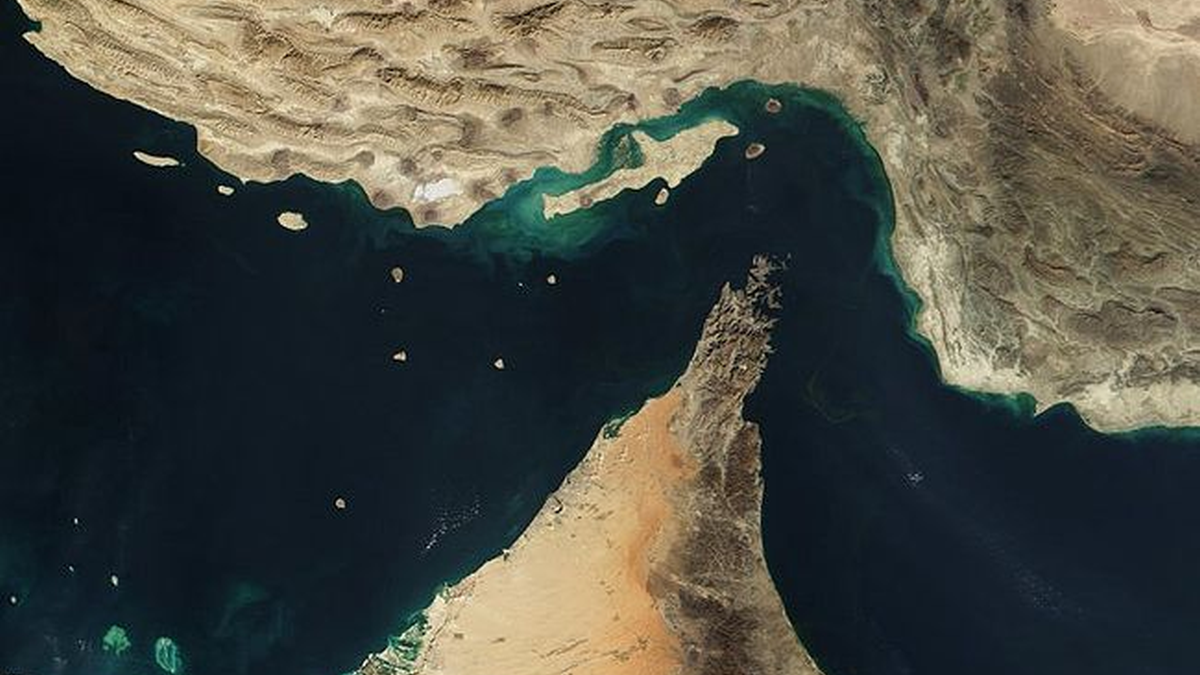
Iran declares Strait of Hormuz 'completely open' for remainder of ceasefire
Tehran has signalled that the Strait of Hormuz will remain fully open for the duration of the ceasefire, following a truce between Israel and Lebanon


“In line with the ceasefire in Lebanon, the passage for all commercial vessels through the Strait of Hormuz is declared completely open for the remaining period of the ceasefire, on the coordinated route as already announced by Ports and Maritime Organisation of the Islamic Republic of Iran,” Iran’s Foreign Minister Seyed Abbas Araghchi wrote on X on 17 April.
“Iran has just announced that the Strait is fully open and ready for full passage. Thank you!” US President Donald Trump wrote on social media.
Notably, the US-Iran ceasefire is set to expire on 22 April.
Israel and Lebanon agreed to what was initially described as a “fragile” 10-day truce. Trump also said a White House meeting between the two countries could take place within two weeks.
The inclusion of Lebanon in ceasefire discussions between the US and Iran was reportedly a key sticking point in negotiations.
Container shipping expert and Vespucci Maritime chief executive stated on social media that the truce between Israel and Lebanon may be a necessary step toward a broader settlement with Iran at a later stage, and ultimately the reopening of the Strait of Hormuz.
Greek-owned VLCC makes transit
Meanwhile, a Greek-owned VLCC appears to have exited the Strait of Hormuz, while conflicting signals from shadow tanker movements continue to emerge amid expanded US blockade enforcement in the region.
Signal Maritime freight analyst Georgios Sakellariou noted in a social media post that Dynacom Tankers’ 2025-built VLCC Atokos passed through the Strait laden from Ras Tanura and is now en route to China, according to AIS data.
Signal Ocean vessel tracking data shows the Atokos had been inside the Strait since the end of February, while its AIS transmission was inactive between 12 and 17 April.
The vessel appeared to be outside the Strait on 17 April, though it remains unclear which route it used to exit.
The US Central Command stated on 16 April that, after 72 hours of enforcement, 14 vessels had turned back in compliance with the blockade following directions from US forces.
However, Kpler reported on 17 April that two of the five vessels that transited the Strait of Hormuz the previous day were linked to elevated risk profiles. Both were identified as shadow fleet tankers operating in ballast, with one moving west to east and the other east to west.
Mr Sakellariou told Riviera that there are conflicting assessments regarding Iranian vessel movements amid the US blockade. He noted that transits are often not visible via AIS because signals are switched off, and are instead tracked using satellite imagery.
US blockade expansion
Before the latest significant developments in the Strait of Hormuz, the US had indicated a broader scope to its blockade.
The Joint Maritime Information Center (JMIC) noted on 16 April that, in addition to enforcing the blockade, “all Iranian vessels, vessels with active OFAC sanctions, and vessels suspected of carrying contraband are subject to the belligerent right to visit and search.”
“These vessels, regardless of location, are subject to visit, board, search, and seizure.”
The statement was included in an advisory update outlining US Navy activity that vessels may encounter amid ongoing operations.
According to JMIC, there is also a non-exhaustive list of contraband items that may be subject to capture at any location beyond neutral territory, if their destination is Iranian territory or territory occupied by Iran.
“Contraband is defined as goods destined for an enemy that may be susceptible to use in armed conflict,” the center explained.
The list includes all weapons, military systems, and related components (absolute contraband), as well as dual-use materials, technologies, and resources that could support military or nuclear capabilities (conditional contraband).
Maritime security bodies had noted on 13 April, when the US blockade came into effect, that access restrictions were being enforced across Iranian ports and coastal areas, including locations along the Persian Gulf, Gulf of Oman, and the Arabian Sea east of the Strait of Hormuz.
These restrictions appeared to cover Iran’s entire coastline, including ports and key energy infrastructure.
Analysts have since examined the implications of the blockade and the operational measures being implemented.




Related to this Story



Events

Maritime Regulations Webinar Week
 16 Dec 2025
 GMT - ONLINE
Floating energy: successfully unlocking stranded gas using FLNGs and FSRUs
24 Feb 2026GMT - ONLINE
© 2026 Riviera Maritime Media Ltd.


