


Business Sectors
Business Sectors
Events
Contents

Register to read more articles.
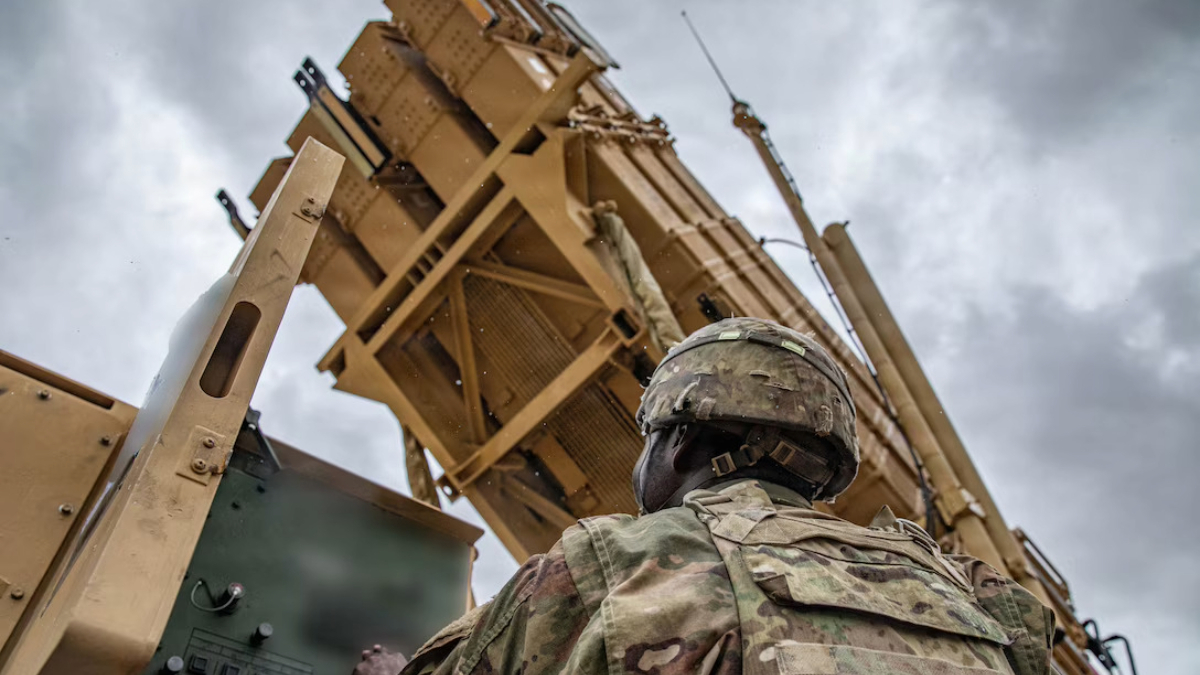
Explaining the logistics of a blockade amid hopes for renewed US-Iran talks
A combination of maritime and aviation assets is being deployed to support the US blockade of Iranian ports, analysts have noted, as signs point to a potential second round of negotiations between Washington and Tehran amid a ’fragile’ ceasefire


With the US blockade in place, maritime security consultancy Dryad Global senior intelligence analyst Scarlett Suarez explained to Riviera how such an operation would function.
“The operation could involve two to four guided-missile destroyers or cruisers for surface interdiction, supported by maritime patrol aircraft such as the P-8 Poseidon, helicopters, and possibly submarines for subsurface monitoring,” she said.
“Carrier strike groups, including USS Abraham Lincoln, are currently operating in the region and would provide air cover and additional strike capability if escalation occurs. Effective enforcement at the narrow chokepoint would likely require eight to 15 surface combatants, plus supporting vessels, for a selective blockade,” she added.
According to Ms Suarez, the US has also deployed elements of the 82nd Airborne Division, including its helicopter company, to the UAE to enhance boarding and sustainment capabilities.
“Equipped with CH-47 Chinooks and other rotary-wing aircraft, the unit is expected to play a key role in vertical resupply of naval forces and in rapid helicopter-borne boarding operations on non-compliant or restricted vessels,” she said.
In parallel, a marine expeditionary unit (MEU) has recently arrived in the Gulf region aboard amphibious ships. The MEU brings additional infantry, aviation, and amphibious assault capabilities to support vessel inspections, potential seizures, and rapid responses to Iranian asymmetric threats, Ms Suarez noted.
Challenges and potential retaliation
Ms Suarez emphasised that key considerations include the Strait’s narrow width – approximately 21 nautical miles at its narrowest point – which makes monitoring feasible but complicated by high traffic density, even at currently reduced levels, and by proximity to Iranian coastal defences and missile sites.
“Persistent risks include Iranian asymmetric responses using fast boats, drones, mines, or anti-ship missiles, as well as widespread electronic warfare, including GPS jamming,” she added.
Notably, US President Donald Trump said on 13 April that if Iranian “fast attack ships” approach the US naval blockade, “they will be immediately eliminated.”
According to Ms Suarez, rules of engagement would need to be tightly controlled to minimise the risk of miscalculation or escalation involving neutral shipping. Sustained operations would also pose significant logistical challenges related to fuel, maintenance, and crew fatigue.
Meanwhile, she warned that the blockade would significantly increase pressure on Iran but carries a high risk of retaliation against Gulf infrastructure, US forces, or commercial vessels.
“It could also deepen an existing rift within NATO,” Ms Suarez noted.
“The US President has expressed strong displeasure after several NATO allies refused to allow the use of their airbases and airspace for operations against Iran, viewing the refusal as a betrayal at a critical moment,” she added.
“The situation has further strained transatlantic relations and could reshape long-standing security arrangements in Europe and the Middle East,” Ms Suarez concluded.
Hope for renewed negotiations
Meanwhile, mainstream media reported on 14 March that the US and Iran could return to Islamabad later this week, following initial talks that ended without a breakthrough.
“Two Pakistani sources with knowledge of the talks said Islamabad was communicating with both sides about the timing of the next round, which would likely take place over the weekend,” Reuters reported.
Maritime security monitoring bodies observed, as of 13 April, access restrictions covering Iran’s entire coastline following the US announcement of a blockade of its ports.
This has increased uncertainty within the shipowning community, as many had expected the ceasefire to open a window for trapped vessels to leave the area. However, little has changed so far.
International Maritime Organization (IMO) Secretary-General Arsenio Dominguez told the body’s Legal Committee on 13 April that he has been engaging with stakeholders on freedom of navigation and the protection of seafarers.
IMO had already decided in March to begin efforts to establish a humanitarian corridor to evacuate seafarers and vessels currently stranded in the Gulf region.
“Any mechanism is being developed in line with IMO’s established Traffic Separation Scheme and jointly co-ordinated by Oman and Iran, while fully respecting the principles of freedom of navigation and the right of innocent passage enshrined in international maritime law,” Mr Dominguez told the Committee.
Riviera’s International Chemical and Product Tanker Conference will be held in London on 21-22 April 2026. Use this link for more information and to register for the event.

Related to this Story

Events

Maritime Regulations Webinar Week
 16 Dec 2025
 GMT - ONLINE
Floating energy: successfully unlocking stranded gas using FLNGs and FSRUs
24 Feb 2026GMT - ONLINE
© 2026 Riviera Maritime Media Ltd.


