


Business Sectors
Business Sectors
Events
Contents
Register to read more articles.
IMO moves to start immediate talks on humanitarian corridor for stranded Gulf seafarers
The International Maritime Organization (IMO) is ready to begin efforts to establish a humanitarian corridor to evacuate seafarers and vessels currently trapped in the Gulf region


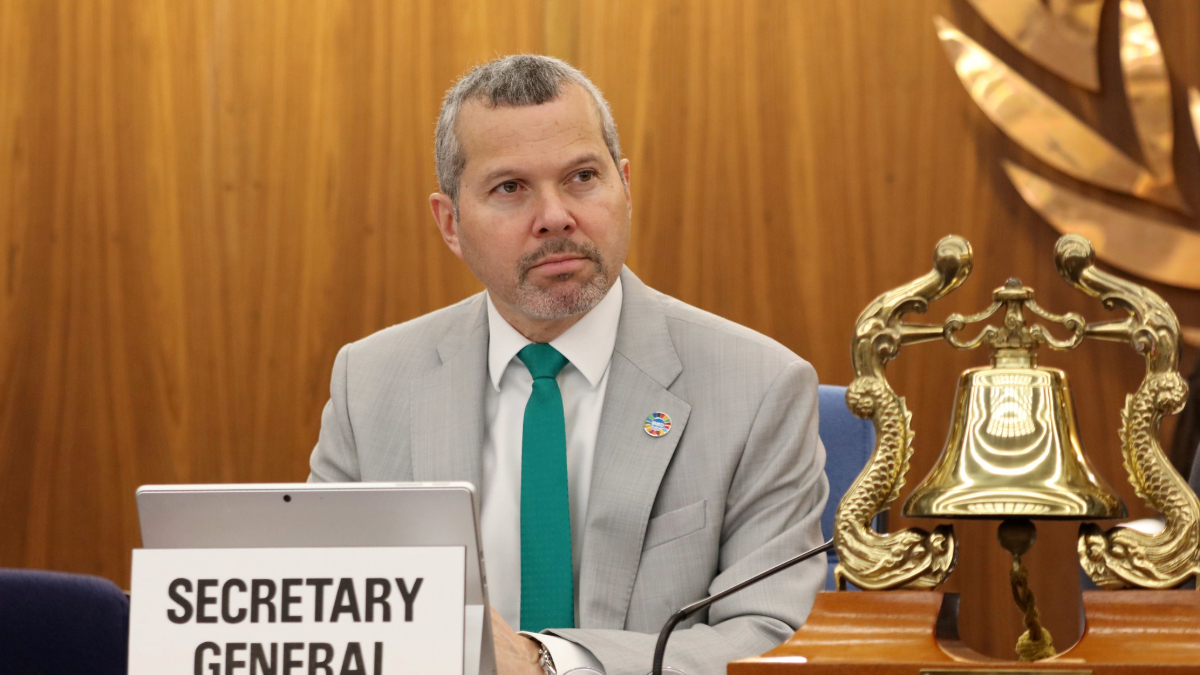
The announcement came from IMO Secretary-General Arsenio Dominguez during his closing remarks at the 36th extraordinary session, held between 18 and 19 March in London.
In a draft summary of decisions seen by Riviera, IMO’s Council invited the Secretary-General to collaborate with relevant parties and take necessary immediate actions to initiate the establishment of the framework, as a provisional and urgent measure.
The decision emphasised that evacuations from high-risk areas to safe locations should be conducted through peaceful means and voluntarily.
The proposal, submitted by Bahrain, Japan, Mexico, Panama, Singapore, and the United Arab Emirates, received backing from the majority of member states.
“I shall be taking this instruction very carefully,” Mr Dominguez said, adding that negotiations would begin immediately.
“However, for this to become a reality, I shall need the understanding, commitment and, above all, concrete actions from all the countries involved.”
According to IMO estimates, approximately 20,000 seafarers remain stranded in the Persian Gulf.
Protection of seafarers
The Council also called upon member states to ensure an adequate provision of water, food, fuel, and other essential supplies to ships unable to leave the region.
States are encouraged to facilitate crew change and renewal operations in accordance with international standards, safeguarding the health, safety, and well-being of seafarers.
The Council further stressed the importance of a co-ordinated international approach to navigation safety, taking into account crew fatigue and the risks of transiting the area amid extensive jamming and spoofing of Global Navigation Satellite Systems (GNSS).
“These decisions must not remain within these four walls,” said Mr Dominguez, urging member states to elevate them to the highest governmental levels.
“Seafarers and shipping must never be used as collateral victims of any geopolitical conflict.”
Iran, China cite ’one-sided’ draft
The IMO Council called for the de-escalation of tensions and the exercise of restraint, and urged all parties to engage in constructive diplomacy and refrain from acts that hinder navigation.
The Council also condemned the “attacks by the Islamic Republic of Iran” against vessels and the “purported closure of the Strait of Hormuz”, as well as attacks on the territorial waters of countries in the region.
The Council demanded that Iran “immediately refrain, in accordance with international law, from any actions or threats aimed at closing, obstructing or otherwise interfering with international navigation through the Strait of Hormuz.”
The Iranian delegation stated that it could not support the draft decision, describing it as “one-sided, unfair, inaccurate and legally deficient.”
“It reflects a politicisation of the work in IMO, risking the setting of a dangerous precedent,” the delegation added.
China also expressed concerns that the text was “one-sided, not balanced, not inclusive, not constructive,” while Indonesia noted that certain elements of the declaration reflected a degree of imbalance and called for a more even-handed, carefully calibrated approach.
Sign up for Riviera’s series of technical and operational webinars and conferences:
- Register to attend by visiting our events page.
- Watch recordings from all of our webinars in the webinar library.

Related to this Story
Events

Maritime Regulations Webinar Week
 16 Dec 2025
 GMT - ONLINE
Floating energy: successfully unlocking stranded gas using FLNGs and FSRUs
24 Feb 2026GMT - ONLINE
© 2026 Riviera Maritime Media Ltd.


