


Business Sectors
Business Sectors
Events
Contents

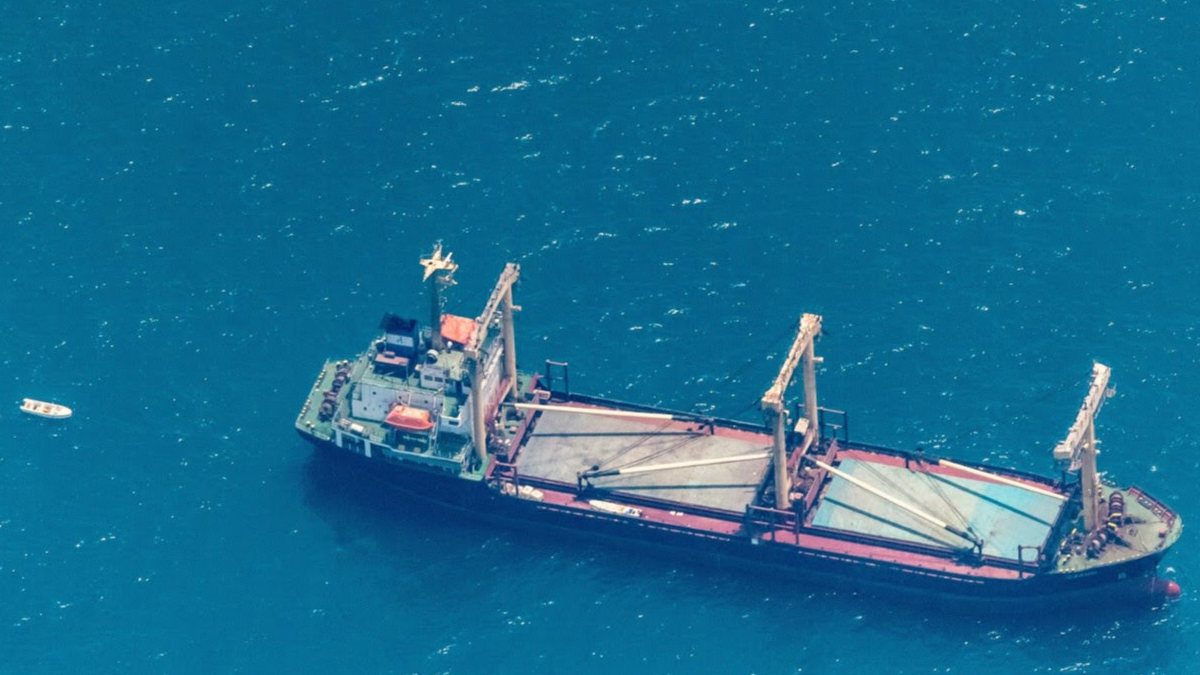
15 crew released along with hijacked vessel used as 'mothership' by Somali pirates
Two of six merchant ships taken by Somali pirates in a spate of hijackings since April have been freed or released, but 67 seafarers remain captive


The Saint Kitts and Nevis-flagged general cargo ship Sward and its 15 crew have been released after more than four months in captivity off Somalia.
The vessel, hijacked by armed pirates on 26 April 2026, was reportedly released near Garacad on 11 September, with all crew members reported safe, according to maritime security company Marisks. Marisks noted an unconfirmed report that the vessel and its crew had been freed in return for a ransom payment.
"Latest AIS data on 14 September showed Sward underway under its own power, proceeding southwest off the Somali coast," the Greece-based maritime security firm said. "Puntland security sources indicated that a ransom was paid before the release, although this has not been independently confirmed."
The 1998-built general cargo vessel Sward was one of several ships seized off Somalia and Yemen between late April and May 2026. The vessel was then used as a so-called ’mothership’, to extend the reach of pirates’ attacks on other merchant ships in the area.
Outlining an escalating sequence of attacks on three vessels at the time, European Union joint naval command EUNAVFOR said it received an alert on 20 April from the Puntland Maritime Police Force reporting that fishing vessel Alkhary 2 had been hijacked by pirates. The following day, the operation reported the hijacking of small 3,000-dwt tanker Honour 25, approximately 28 nautical miles southeast of Alkhary 2. The fishing vessel was released the following day, on 22 April, with all crew safe, while pirates remained on board Honour 25. Four days later, 8,500-dwt Sward was hijacked off Dhinowda, on the northern coast of Somalia.
Another small, 3,300-dwt oil tanker Eureka was later hijacked off the coast of Yemen on 2 May 2026.
Concern remains for seafarers’ condition
The release of Sward and its captive crew follows months of international concern over the condition of seafarers held aboard hijacked ships off Somalia.
In July, the International Maritime Organization (IMO) said 44 seafarers were being held aboard three hijacked vessels, Honour 25, Sward and Eureka, from incidents between April and May. The IMO’s report said crews had been running critically low on food and water and living under the constant threat of violence.
A statement issued through the Djibouti Code of Conduct and Jeddah Amendment in July described the situation aboard Honour 25 as particularly serious. Its 17 crew members had, at the time, been in captivity for more than two months; five, including the master, were suffering health problems, food supplies had reportedly been reduced to rice and available water was unsafe to drink. The statement also said armed pirates guarding the tanker had exchanged gunfire with a rival pirate group attempting to approach the ship.
Additional hijackings
Despite the release of Sward’s crew, the number of crew members being held on board hijacked vessels has increased since IMO’s July warning, with the hijackings of Asana and Seamull (also known as Sibu 1) in mid-July and late August, respectively, adding 38 crew to the total number in captivity, 22 from Asana and 16 from Seamull.
On 17 August, eight armed men reportedly boarded the Cameroon-flagged general cargo ship Lutuf, about four nautical miles south of Mareeyo, Somalia. Attackers reportedly approached from Sward.
Although Lutuf was carrying an armed security team, and the crew and guards mustered in the citadel, the ship was boarded and the citadel breached, allowing the pirates to take control of the vessel and the 10 people aboard.
Days later, 25-year-old Seamull (Sibu 1), a 32,238-DWT tanker with unclear ownership and a false Eritrean flag was reportedly hijacked approximately 136 nautical miles east of Al Mukalla, Yemen.
The Royal Navy-led United Kingdom Maritime Trade Operations (UKMTO) Centre reported the hijacking based on a distress call and later updated with what it said was "confirmation that the tanker has been boarded by six armed persons who are now in control of the vessel and redirecting to Somalia".
Marisks said the vessel’s AIS destination had been subsequently changed to “PIRATES ONBOARD HELP”.
"This incident reinforces the significant resurgence of piracy and armed maritime activity across the Gulf of Aden and wider Somali basin. It follows the hijackings of Eureka on 2 May, Asana on 17 July and Lutuf on 17 August, alongside multiple suspicious approaches, armed-skiff sightings and attempted attacks," Marisks said.
Pirates abandoned Lutuf in small skiffs on 29 August, after a joint operation to free the vessel and its crew undertaken by the Turkish Navy and aided by Somalia’s Ministry of Defence.
The Somali ministry said the joint operation took place over 10 days, and said the vessel is secure and "has safely resumed its voyage". All 10 people on board were later reported safe by local sources.
As of its latest statement on the resurgent piracy, prior to Lutuf and Sward being released, IMO said more than 90 seafarers were being held captive. The release of 15 seafarers on board Sward and 10 crew and security officers on board Lutuf would take still leave 67 seafarers being held on board hijacked vessels Asana, Seamull, Honour and Eureka.
Sign up for Riviera’s series of technical and operational webinars and conferences:
- Register to attend by visiting our events page.
- Watch recordings from all of our webinars in the webinar library.





Related to this Story


Events

Maritime Regulations Webinar Week
 16 Dec 2025
 GMT - ONLINE

Floating energy: successfully unlocking stranded gas using FLNGs and FSRUs
24 Feb 2026GMT - ONLINE
© 2026 Riviera Maritime Media Ltd.


