


Business Sectors
Business Sectors
Events
Contents
Register to read more articles.
Box ship sector seeks to improve ship performance monitoring
Conference highlights advances in performance monitoring, and the potential for further improvements


A trend towards using data-driven, digital vessel performance systems is gathering pace in the shipping industry - this was one of the main takeaways from the 10th HullPIC conference. Collaboration between stakeholders, continuous innovation and knowledge sharing were also emphasised as critical drivers for advancing performance management and sustainability efforts.
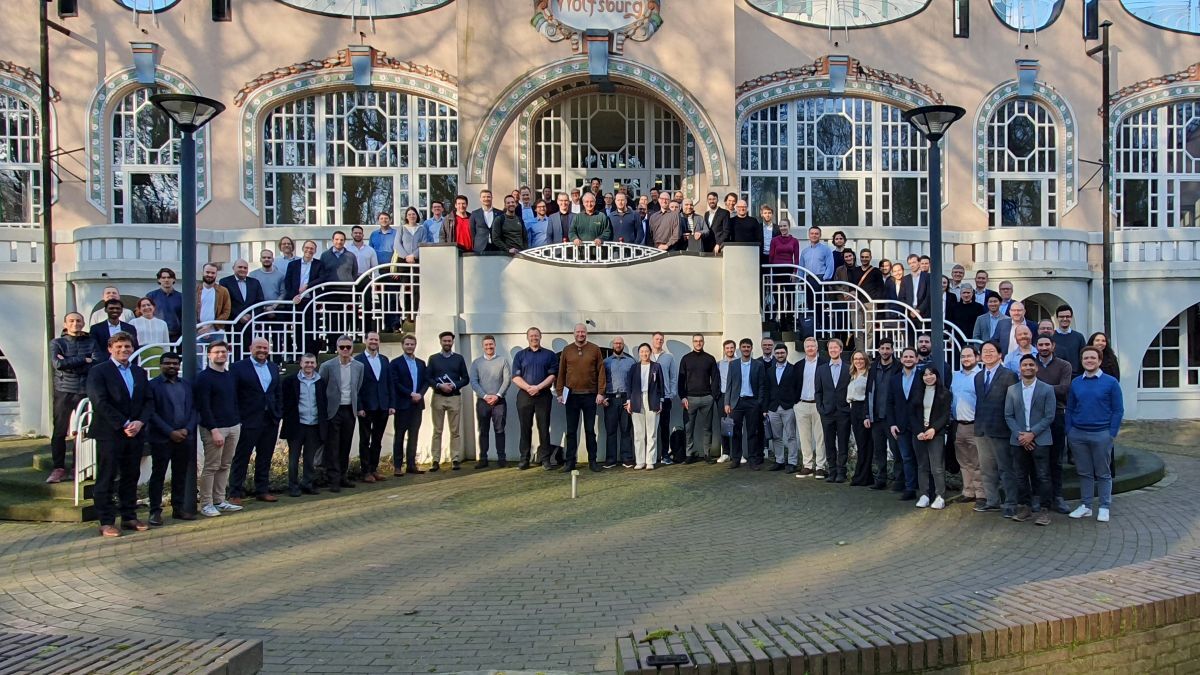
The Hull Performance and Insight Conference (HullPIC) was recently held in Mulheim, Germany. The annual conference, initiated by Jotun and VB conferences and supported by industry sponsors, attracts a wide range of stakeholders, including ship operators, technology and solution providers, data analysts and classification societies.
With market pressures and regulatory developments forcing the maritime industry to focus on energy efficiency and meeting environmental challenges, ship operators are eyeing opportunities in ship performance monitoring and efficiency-based technologies and solutions. A significant number of those operators were joined by technology and solution providers at HullPIC, where 85 industry professionals gathered from around the globe.
“This is our 10th HullPIC and it’s encouraging to see the growing industry interest in performance management and indeed, our annual conference, to discuss the latest developments, challenges and opportunities,” said Jotun global category director, hull performance, Morten Sten Johansen. “The number of companies embracing data-driven, digital solutions is growing but more needs to be done to accelerate industrywide best practices and transparency to support ship operators as they work to achieve performance improvements and meet regulations mandated by IMO and the EU.”
In the lead up to the conference, DNV senior project manager Volker Bertram said interest in hull performance monitoring is growing, and the concept and technology has come a long way in the decade since the first HullPIC. He described performance monitoring as, “arguably the biggest single lever to improve ship energy efficiency.”
The three-day conference included presentations and insights from leading experts and practitioners. The sessions covered a broad range of subjects, including performance monitoring practices, measuring and analysis methodologies, leveraging high-frequency data and AI-driven solutions, vendor and operator perspectives, and talks about the next steps to spur further development and increase awareness in this evolving field.
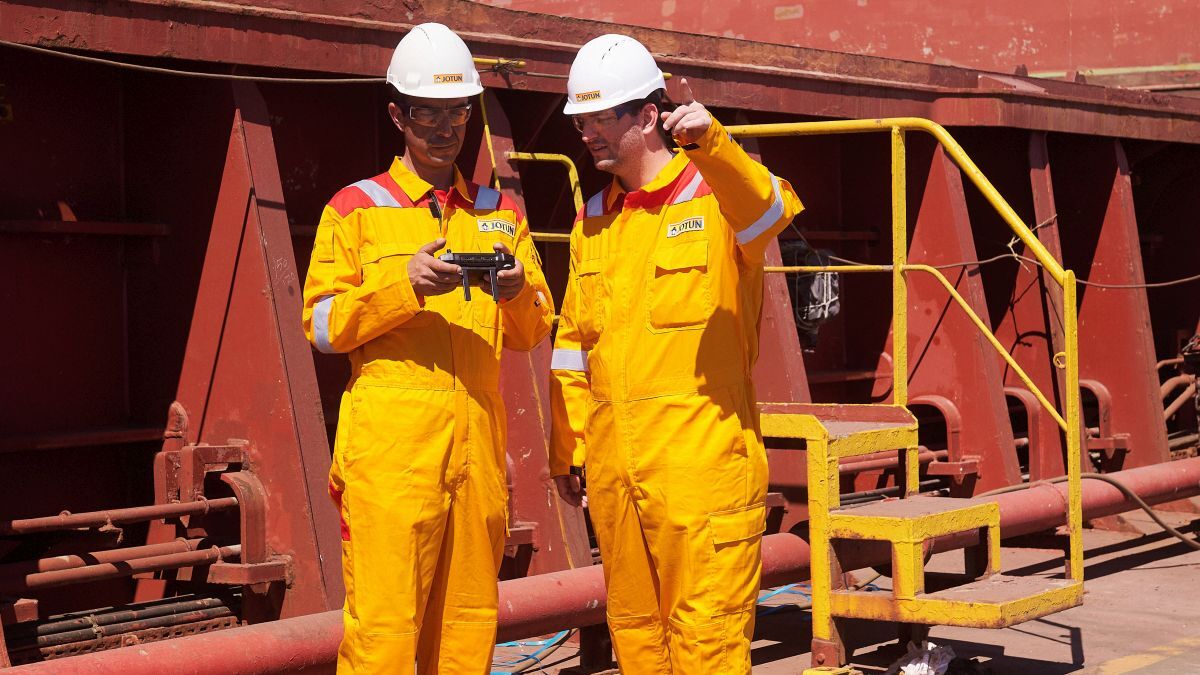
Also under discussion were hull cleaning aspects. In his presentation, Jotun’s Manolis Levantis focused on Proactive cleaning: leveraging data for a successful beginning. He covered how offering an always clean hull by combining antifouling, robotics and active hull condition monitoring meets IMO’s definition of proactive cleaning. Mr Levantis also explained how data is used to monitor and optimise proactive cleaning operations along with real-world case studies, demonstrating the significant impact on proactive cleaning.
Poll reveals positive attitude towards a move to auto-logged data
As is usual for HullPIC, a short survey was carried out by Idealship asking delegates to respond to several pertinent questions. When asked what sources they used to analyse hull performance, around a third said auto-logged sensor data. However, of the shipping company delegates, the majority used either a combination of noon reports and external data such as weather or noon reports alone. Currently, only about a quarter of shipowner delegates used auto-logged sensor data.
There is, however, a more positive attitude towards a move to auto-logged data where only a quarter of delegates thought it would take 10 years or more for 95% of shipping companies to use auto-logged data but 70% thought the switch would come in between 2-10-years’ time. The question of how much fuel it was thought could be saved was put at 60% in the 0 to 4% range and 34% suggesting more than 4%. Clearly the savings element is being appreciated.
On the topic of how retrofitted efficiency measures have performed, the largest proportion (44%) reported less than the original business case suggested with performance above the business case having the lowest response. Overall, most delegates thought shipping companies should share performance data to collaborate on coatings and retrofits, although some said sharing data should only be done within alliances. Less than 10% thought shipowners should keep data confidential.
Widescale adoption of digital solutions needs to speed up – but how?
The focus on performance management is growing in the industry and leading ship operators and solution providers are taking important initiatives to improve performance monitoring. But what needs to be done to speed up the widescale adoption of data-driven, digital systems? This was the theme of the final session, which brought together a panel of operators and developers who shared their thoughts on developments and whether tightening regulations and the focus of ESG was driving up interest.
Zeaborn Ship Management/Bestship Services’ Bjørn Walther said, “Ship performance monitoring is complex, but the use of data-driven solutions can help to show owners how their ships are actually performing. There are a lot of good systems, but different approaches are used, and it often boils down to money and getting value.”
From the audience, Maersk subject matter expert Malte Mittendorf said, “One reason for hesitancy of certain operators could be the lack of accuracy and benefit of tracking potential performance systems. Data and advice quality are key to driving user adoption on the shore and vessel side. Similarly, a clear incentive scheme between charterer and operator for splitting the cost as well as the savings could drive more investments in performance systems.”
Hapag-Lloyd manager sustainability Martin Koepke said, “Digitalisation is moving to the next level. With high-frequency data becoming more accessible and AI-driven solutions gaining traction, the industry is making significant strides in performance analysis, fuel efficiency and emissions reduction.”
Bahri Ship Management fleet performance engineer Said Al Natseth commented, “Accelerating the adoption of data-driven performance monitoring requires providing operators with clear evidence of cost savings, efficiency improvements, and regulatory compliance benefits. Additionally, simplifying system integration and offering financial incentives – such as subsidies or flexible payment models – can help mitigate reluctance.”
“The value of additional insights obtained from the data/digital systems should be recognised among the industry and management. Some basic approaches as presented at the conference could be a good starting point to convince people of the potential and value of data,” said CLdN’s Luka Scherens.
DFDS vessel performance specialist Frederik Hammer Berthelsen added, “It is difficult to live without data and digital systems as an operator/owner and I would not know how it is possible to operate without a system, with the increasing regulation, reporting and complexity of fuel reporting and operational optimisation. It does not have to be an advanced system, as you can come a long way with manual reporting. But the added value of having more data and more advanced systems needs to be recognised by the industry.”
Tighter regulations and ESG driving up interest
Echoing the comments made earlier, Mr Mittendorf said, “The introduction of international regulations is increasing the demand for reporting and data-collection solutions. Utilising the data for driving operational efficiency will, in my opinion, come naturally as a next step.”
Mr Al Natsheh added, “Stricter regulations including CII and EEXI, alongside the increasing ESG commitments, are pushing operators to invest in digital solutions. These tools help optimise fuel efficiency, reduce emissions, and ensure compliance, making them a necessity rather than a choice.”
Summarising the conference, Jotun’s Mr Johansen said, “There is growing consensus that data-driven, digital vessel performance systems are necessary to help make shipping more sustainable but there are challenges and widescale adoption will take time. There are, however, a lot of good initiatives underway to improve vessel performance and progress is being made as evidenced by the presentations and papers at HullPIC.”
He concluded, “The active participation and exchange of knowledge and best practice between industry stakeholders has been key to the success of HullPIC and we all remain committed to continuing our work to further advance vessel performance management that benefits responsible ship operators, suppliers and the environment.”
The conference proceedings and papers are shown here.
Sign up for Riviera’s series of technical and operational webinars and conferences:
- Register to attend by visiting our events page.
- Watch recordings from all of our webinars in the webinar library.


Related to this Story


Events

Maritime Regulations Webinar Week
 16 Dec 2025
 GMT - ONLINE
Floating energy: successfully unlocking stranded gas using FLNGs and FSRUs
24 Feb 2026GMT - ONLINE
© 2026 Riviera Maritime Media Ltd.


