


Business Sectors
Business Sectors
Events
Contents

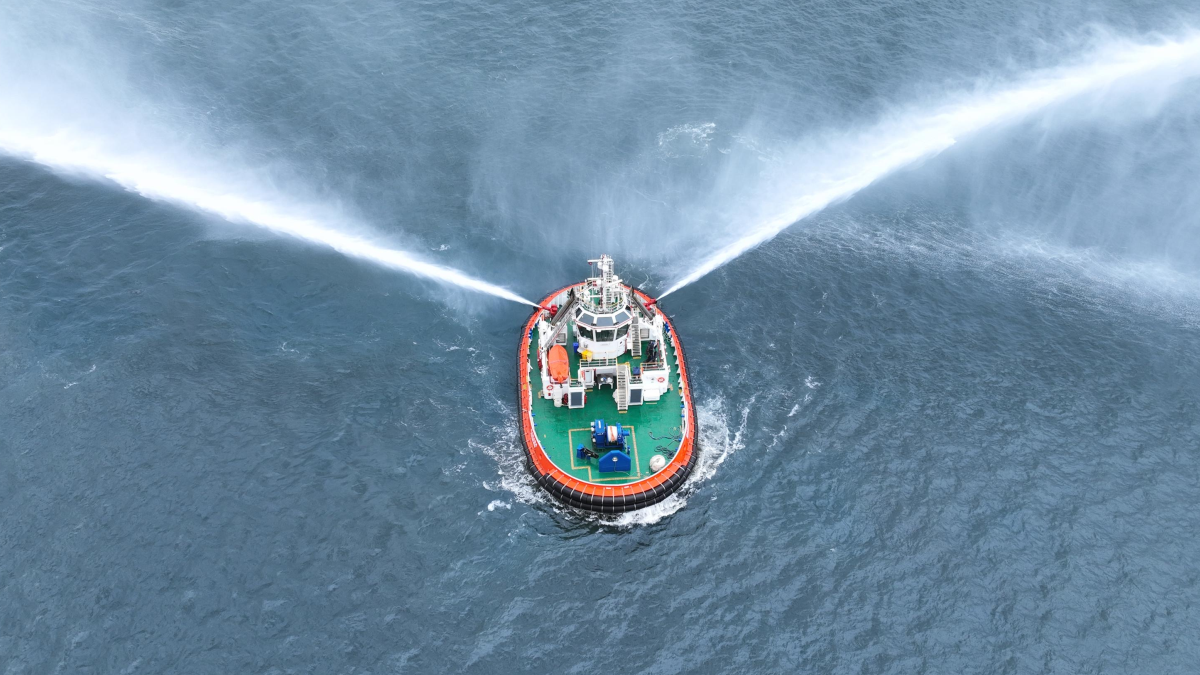
Maritime safety: firefighting guidance for tug crews
Hundreds of tugs worldwide are equipped each year with high-capacity firefighting monitors and pumps capable of responding when lives, assets, infrastructure and the environment are at risk


Tugs are the first vessels to respond to most maritime and harbour fires, extinguishing them as quickly as possible, but not all crew are adequately trained to use these vital assets.
Firefighting tugs can cool structures, supply large volumes of water or foam, tow vessels away from sensitive areas and support evacuation, however, tug crews rely heavily on experience rather than structured doctrine.
This is why the British Tugowners Association published its Use of Tugs in Firefighting in Q2 2025 as a comprehensive operational framework for safely deploying harbour and escort tugs in marine firefighting operations.
According to Targe Towing commercial director Alasdair Smith, the publication “establishes a common operational language covering command structures, communication protocols, crew competency expectations, equipment capability and maintenance, and the safe integration of tug operations with shore fire services and salvage teams.”
It formalises how firefighting tugs should be used during emergencies, and improves decision-making during the critical early stages of a fire.
“The publication transforms tug firefighting from an experience-based capability into a structured safety system”
It clarifies responsibilities and legal considerations, and helps operators and authorities to understand both operational limits and safe working boundaries.
“The publication converts inherently hazardous emergency actions into controlled risk management,” said Mr Smith. “It explains how to carry out these actions safely and in co-ordination with incident command authorities.”
Written in 2024 and distributed for industry feedback in Q1 2025, the guidance has been embedded into operational practices since May, “moving safety from policy into real-time decision-making on board vessels,” said Mr Smith. In 2025, associated quick-reference materials for crews were produced to support firefighting operations.
“The publication transforms tug firefighting from an experience-based capability into a structured safety system,” said Mr Smith. “It improves co-ordination, reduces risk to personnel, and enhances the protection of ports and the environment during some of the highest consequence emergencies faced in maritime operations.”
He said firefighting is changing in the shipping industry, as vessels carry lithium-ion batteries, more cars and use alternative fuels that have different characteristics from heavy fuel oil and marine gasoil. “All behave differently in fire conditions compared with traditional hydrocarbon fires,” said Mr Smith. These fires increase the risk to emergency responders and the assets mobilised to tackle them.
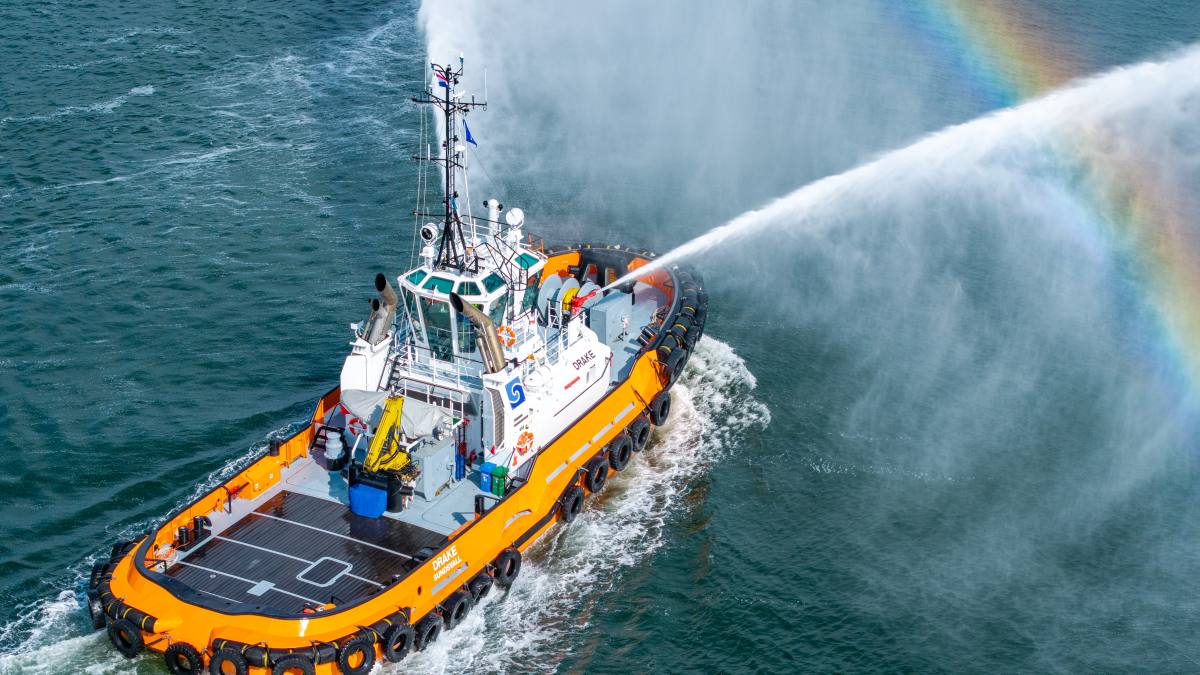
BTA and UK Chamber of Shipping secretary Robert Merrylees said this guidance fills the training and safety gaps and the operational boundary between the life-saving obligations under IMO’s SOLAS convention and the commercial salvage rules.
The guide “ensures masters do not unknowingly expose crews to liability or significant safety risks,” said Mr Merrylees. “It provides the insight and guidance for tug crews facing the energy transition, offering specific engagement protocols for high-risk lithium-ion, ammonia, and hydrogen fires.”
BTA’s guidance also aligns tug operations with shoreside fire and rescue services as well as command and control principles, mitigating the communication failures that have historically escalated incidents.
It provides a protocol for water application rates and mandates stability monitoring that directly prevents the loss of the casualty and protects the tug from resultant debris or explosion.
“Ensure masters do not unknowingly expose crews to liability or significant safety risks”
The guide “introduces immediate, actionable safety protocols for alternative fuels where standard firefighting fails,” said Mr Merrylees. For fires involving lithium-ion batteries, tugs must only engage for boundary cooling and remain upwind to avoid toxic vapour clouds that standard bridge equipment cannot detect.
It also offers guidance on go and no-go criteria for tugs approaching ammonia carriers on fire and required gas detection limits before the vessel can engage to prevent crew incapacitation from the toxic gas.
“The guide seeks to mitigate against the fog and confusion that endangers first responders or hampers emergency response,” said Mr Merrylees. “This creates a measurable safety improvement by ensuring tug masters and shore-based firefighting commanders speak the same tactical language. It moves the industry from reactive bravery to proactive professional competency.”
Equipment suppliers
Fire Fighting Systems (FFS) passed a major milestone in supplying its FiFi-class external firefighting systems in 2025, as it enables more tugs to become highly competent first responders.
The Moss, Norway-headquartered subsidiary of Madison Fire & Rescue, completed its 6,000th shipset incorporating a water pump and monitors in 2025. In the past 25 years, it has delivered more than 15,000 fire monitors and over 12,000 fire pumps worldwide.
FFS chief executive Trond Sorlie said the company was established in a management buyout in 2003 to offer all the components required for a complete FiFi system.
The products are all developed in Norway and produced in Sweden using local foundries and assembled at its own facilities, he said.
“This is an integrated plant with its own electrics, pumps, transmission, monitors and testbed, which means every system leaving the factory is fully tested,” said Mr Sorlie.
Each product has its own digital ‘pump curve’ indicating its performance and certification. FFS monitors spend all their operational life in marine conditions, exposed to salt, vibration and harsh duty cycles, where pumps are installed below deck, enabling tugs to deliver high-capacity firefighting support to protect other ships, terminals and harbour structures.
FFS stocks spare parts in an inventory valued at around €5M (US$5.9M) to respond to requests within 24 hours, said Mr Sorlie. It can ship out replacement parts, including pumps and monitors, within 48 hours. It has a distribution network of agents to assist tug owners and shipyards with requirements.
Tackling onboard fires
When it comes to onboard fires, quickly engaging suppression systems can prevent a catastrophic blaze, but CO2, often used on ships, can lead to seafarers on affected ships asphyxiating.
Aksis Fire has developed a clean agent for fire suppression to replace traditional CO2 systems. AKS5112 is safe for humans and is a non-corrosive, non-conductive and environmentally friendly extinguishing agent, said Aksis Fire research and development manager Gorkem Berk Kunal.
“By removing CO2 from the suppression process, the system eliminates the risk of asphyxiation for personnel and reduces total carbon emissions by over 99%,” he said.
“This makes daily operations and maintenance in machinery spaces, switchboard rooms, and other critical equipment areas much safer.”
AKS5112 leaves no residue and prevents secondary damage to sensitive electrical and electronic installations, “ensuring that equipment remains functional after a discharge”, which is an important advantage compared with older CO2 or powder-based systems.
Mr Kunal said the system is fully compliant with SOLAS fire protection requirements and aligns with MSC.1/Circ.848 performance-based fire safety guidance, “supporting safe and reliable fire protection in marine applications.”
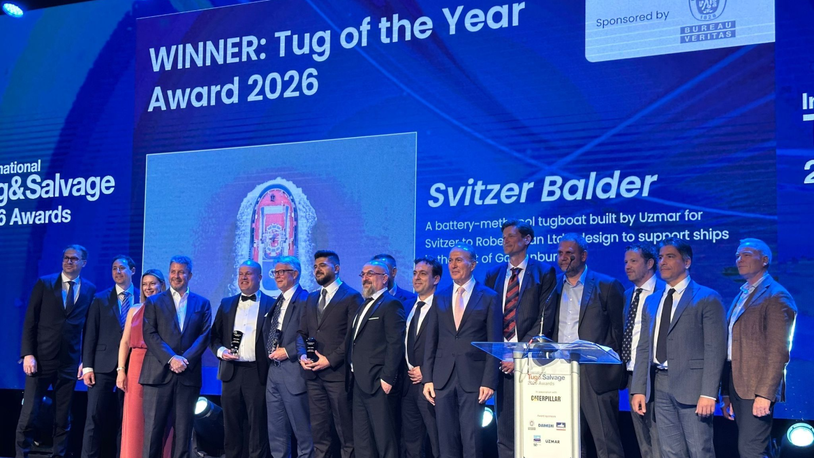
The 28th International Tug & Salvage Convention, Exhibition & Awards will be held in Gothenburg, Sweden, in association with Caterpillar, 19-21 May 2026. Use this link for more details of this industry event and the associated social and networking opportunities.

Related to this Story
Events

Maritime Regulations Webinar Week
 16 Dec 2025
 GMT - ONLINE
Floating energy: successfully unlocking stranded gas using FLNGs and FSRUs
24 Feb 2026GMT - ONLINE
© 2026 Riviera Maritime Media Ltd.


