


Business Sectors
Business Sectors
Events
Contents

Register to read more articles.
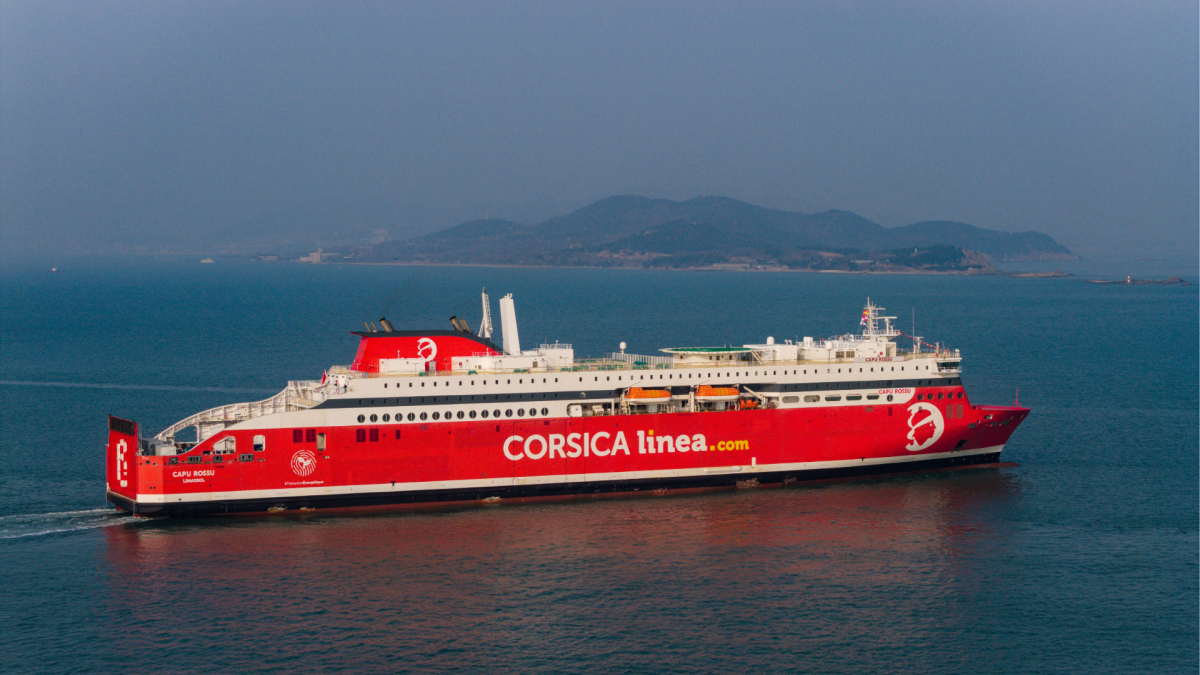
Capu Rossu: setting the pace for the Mediterranean’s green transition
Corsica Linea has readied the LNG-powered ropax ferry for the Marseille-Corsica route, with the capability to adopt battery-hybrid technology as port infrastructure evolves


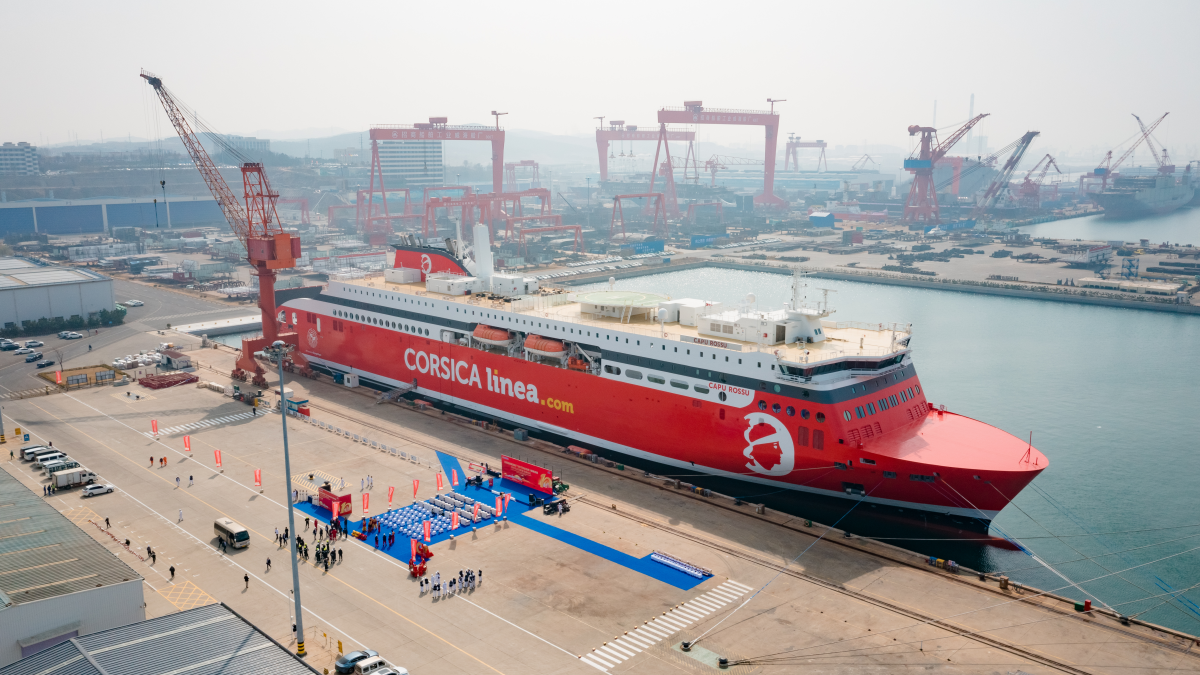
In March, Swedish shipowner Stena RoRo took delivery of Capu Rossu, the 13th vessel in its groundbreaking 15-ship E-Flexer ropax series. Immediately following its delivery from the China Merchants Industry (CMI) shipyard in Weihai, the LNG-powered ferry was handed over to French operator Corsica Linea and commenced its maiden voyage to France.
The vessel is scheduled to be christened during two dedicated ceremonies, taking place in Marseille on 11 June and Ajaccio on 12 June. Due to begin commercial operations in mid-June 2026, the 6,665-dwt vessel will ply the waters between Marseille and the island of Corsica.
Measuring 204.0 metres in length with a 27.8-metre beam, the ship boasts a substantial gross tonnage of 38,222. However, it is not a typical ropax ferry as it is significantly larger than the standard tonnage currently serving the region. Its internal architecture spans 10 decks, providing a massive 2,505 linear metres of freight garage space and a passenger environment, optimised for up to 1,035 guests.
“The vessel serves as a sophisticated response to increasingly lean carbon budgets”
With an air draught of 41.0 m and a 6.6 m draught, the vessel is specifically sized to navigate the infrastructure of its home port in Ajaccio, signalling a new era of high-capacity, dual-fuel efficiency for the region.
The E-Flexer evolution
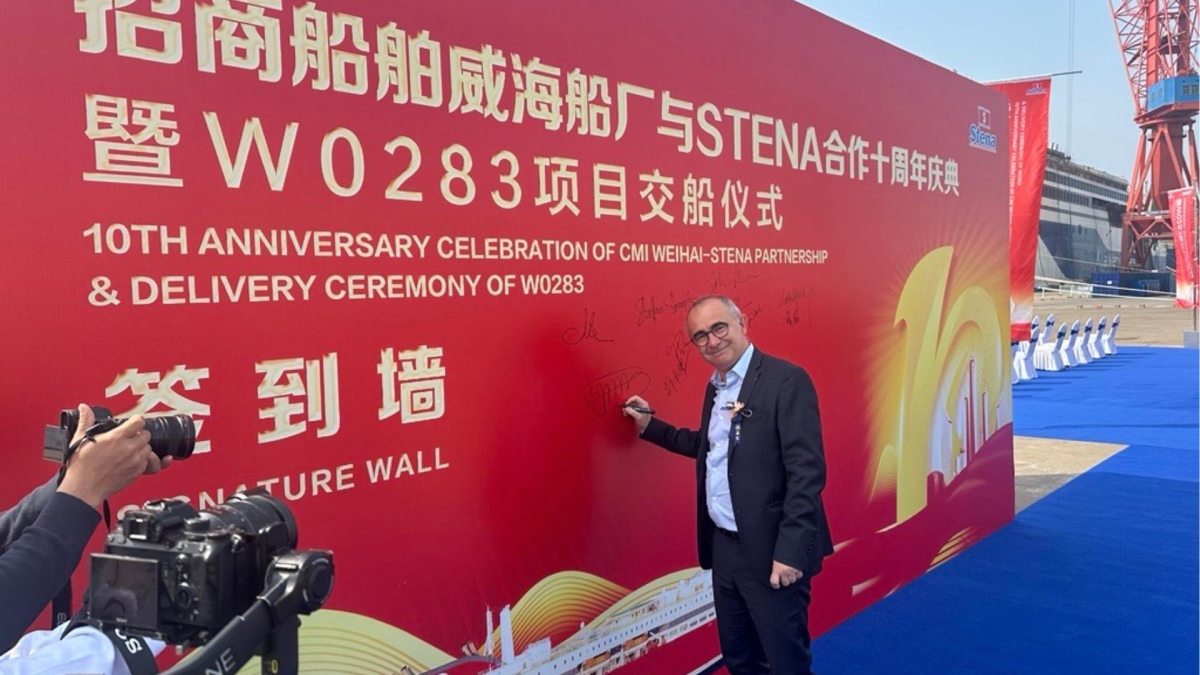
The success of the E-Flexer project is deeply rooted in Stena RoRo’s partnership with the CMI Weihai shipyard. Since 2016, this collaboration has resulted in 19 total orders, including E-Flexer, NewMax, and C-Flexer designs.
"The cooperation with CMI Weihai has been instrumental," noted Stena RoRo CEO, Per Westling. "It has made it possible for us to deliver tailor-made ships, both to our own Stena Line and to several external ferry companies, with the highest quality and on time."
Capu Rossu follows 12 preceding units delivered to operators, including Stena Line, Brittany Ferries, DFDS, and Marine Atlantic. As the brand-new ferry nears the Port of Marseille, it carries the expectations of an industry under pressure to decarbonise, proving that environmental responsibility and commercial scale can indeed sail in the same direction.
A future-proof concept
The vessel’s true value lies in its sophisticated propulsion suite. Powering the vessel is a pair of Wärtsilä 12V46DF engines, generating a combined output of 27,480 kW. This configuration allows the ship to maintain a service speed of 23 knots, ensuring reliable transit times despite its increased scale.
While the vessel retains the operational flexibility to run on traditional marine fuels, its technical significance lies in long-term adaptability. The onboard machinery is engineered for immediate compatibility with sustainable variants, specifically bio-LNG and e-methane. Crucially, the transition to these lower-carbon energy sources can be achieved without major mechanical overhauls.
Perhaps most notably, the newbuilding carries the "Battery Power" class notation for enhanced sustainability. This technical designation allows the vessel to increasingly embrace electric propulsion and shore power, enabling operations in environmentally sensitive areas and significantly reducing emissions while in port. By integrating this framework, the ship is future-proofed to adopt battery-hybrid technology as port infrastructure evolves. This strategic flexibility ensures the vessel can align its operational profile with the rapidly evolving green transition goals of the Mediterranean region, remaining technologically relevant throughout its lifespan.
“Due to [the] fast development of the hull form design and propulsion optimisation, in combination with the battery power systems, it is clear that ordering of new ships will be the most important and strongest tool to reduce the CO2 emissions of the ferry industry”, said Mr Westling.
Navigating a new regulatory era
The entry into service of Capu Rossu coincides with a transformative regulatory shift for European shipping. With the EU Emissions Trading System (EU ETS) extended to the maritime sector in 2024 and the FuelEU Maritime standards entering into force in January 2025, the vessel serves as a sophisticated response to increasingly tight carbon budgets.
As of 2026, operators are required to surrender allowances for 100% of their verified emissions. Furthermore, this marks the first year that methane and nitrous oxide are officially included in the scheme. For Capu Rossu, LNG provides an immediate reduction in CO2 exposure, while its engine design is critical to managing methane slip, which now carries a direct financial penalty.
Additionally, the ship is naturally compliant with the IMO-designated Mediterranean Sulphur Emission Control Area, which has mandated a strict 0.10% sulphur limit across the region since May 2025.
"The cooperation with CMI Weihai has been instrumental"
Crucially, the vessel is engineered to satisfy the progressive greenhouse gas intensity targets set by the FuelEU Maritime regulation. Its multi-fuel readiness allows it to integrate bio-LNG and e-methane as they become available, meeting stricter targets without the risk of becoming a stranded asset.
The future-proofing extends to the quayside, anticipating the 2030 zero-emission mandate for passenger shipping. Under FuelEU Maritime, passenger ships will be prohibited from using onboard combustion engines while at berth in major European ports. The cold ironing capability of Capu Rossu will eliminate local pollutants, ensuring silent, emissions-free port calls in densely populated hubs like Marseille and Ajaccio before the regulatory deadline.
National identity and design
The vessel represents a significant addition to the French merchant fleet, flying the national flag under the first register. Its name is a deliberate tribute to the iconic red granite cliffs in the heart of the Calanche de Piana in Corsica, a symbolic choice that anchors the ship within the island’s cultural and natural landscape.
Its arrival coincides with a symbolic milestone for the Corsican company, which celebrates its 10th anniversary in June.
“The arrival of a second new vessel in the year of Corsica Linea’s 10th anniversary embodies the success of the company and the commitment of all our employees who bring the French flag to life in the Mediterranean," said Corsica Linea managing director, Pierre-Antoine Villanova.
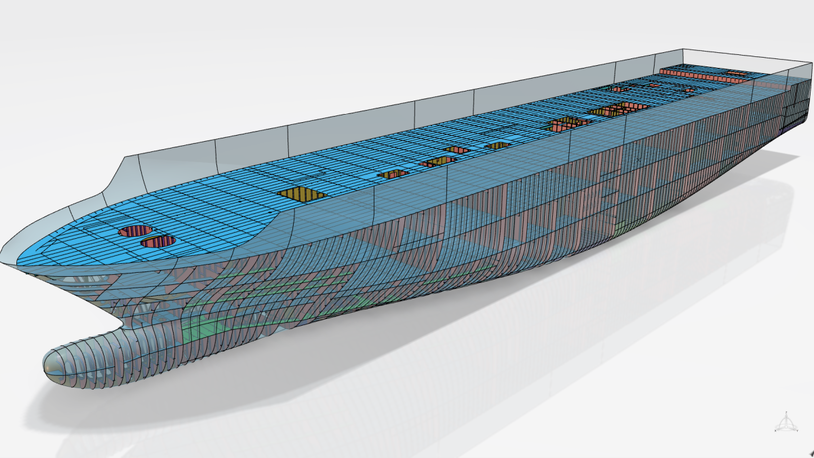
While the ship shares the proven E-Flexer architecture, Finnish engineering firm Deltamarin tailored it to the specific commercial and technical demands of the Marseille-Corsica route. Responsible for the basic and detailed design, Deltamarin ensured the ship was aligned exactly with the French company’s operational needs, balancing a garage capacity for 135 trailers and 180 vehicles with premium passenger amenities. Across its 10 decks, the vessel offers 234 passenger cabins and expansive public spaces, including a 300-seat restaurant, a 250-seat snack bar, and a 350-seat main bar.
A cornerstone of the Corsican green corridor
The arrival of the Capu Rossu serves as a central pillar of Corsica Linea’s broader decarbonisation roadmap and its commitment to establishing the first French green maritime corridor between Corsica and the mainland. As the second LNG-powered ropax to join the fleet, following the 2023 debut of A Galeotta, the vessel marks a critical phase in the progressive transition toward a low-carbon fleet.
The expansion is part of a structural investment program exceeding €350M (around US$410M) since 2016 and is essential to the operator’s strategic goal of achieving a 40% reduction in CO2 emissions by 2030.
Bridging the infrastructure gap
Despite its advanced technical readiness, the initial years of service for Capu Rossu will involve navigating an evolving landscape of land-side infrastructure. While the vessel is equipped for immediate cold ironing, the full realisation of its zero-emissions port calls depends on the completion of specialised high-voltage installations.
Since 2017, the Port of Marseille Fos has offered 50 Hz high-voltage land-side power to ferries serving Corsica, with ongoing infrastructure expansion. This culminated in a significant milestone in April 2026 with the rollout of shore-power connections for larger vessels. While Marseille has achieved this full-scale connectivity, Ajaccio remains in a transitional phase. Although electrification tenders for its commercial berths were launched in 2024, the port’s high-voltage capacity is not expected to be fully synchroniaed with Capu Rossu in the near-term, leaving the vessel to rely on its LNG-powered engines.
Furthermore, while Marseille has cemented its status as the Mediterranean’s premier LNG bunkering hub, Ajaccio still lacks permanent refuelling infrastructure. This leaves the vessel dependent on mainland supplies and its own round-trip autonomy.
Ultimately, a green ship is only as effective as the port infrastructure and fuel supplies supporting it. This highlights that maritime decarbonisation is not a solo venture but an ecosystem-wide challenge. Its success depends on the seamless coordination of shipping lines, port authorities, and fuel providers, all underpinned by government strategy and financial backing.
By deploying a vessel that meets environmental requirements years ahead of the 2030 mandate, Corsica Linea is effectively "pulling" the infrastructure forward. As quayside plugs become standard and bio-methane production scales up, Capu Rossu is ready to capitalise on its high-efficiency design.




Related to this Story

Events

Maritime Regulations Webinar Week
 16 Dec 2025
 GMT - ONLINE

Floating energy: successfully unlocking stranded gas using FLNGs and FSRUs
24 Feb 2026GMT - ONLINE
© 2026 Riviera Maritime Media Ltd.


