


Business Sectors
Business Sectors
Events
Contents

Register to read more articles.
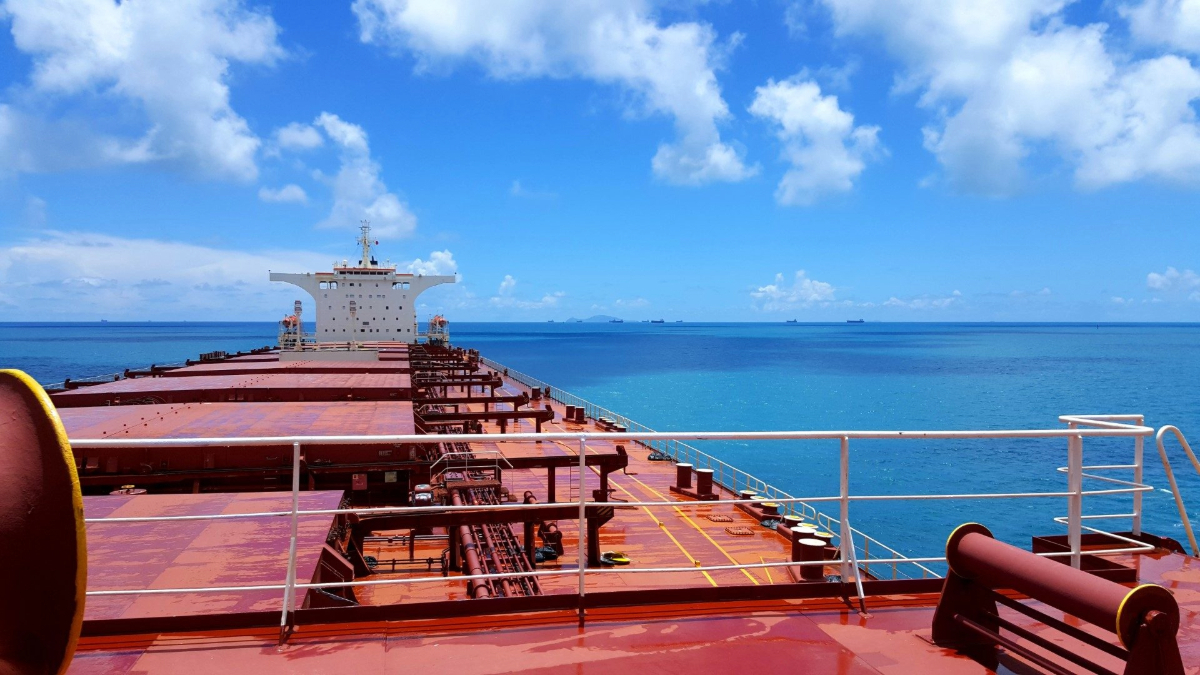
Challenging mix: China, Red Sea, Trump and orderbook in the dry bulk spotlight
The dry bulk market is set to face persistent challenges in 2025 after entering the new year on a weak note. China’s economic uncertainty, recent developments in the Red Sea, and potential tariffs on global trade are expected to weigh heavily on demand growth


Charter rates have fallen across all vessel types, highlighting a weak first quarter for the dry bulk sector, which seems unlikely to replicate the unexpectedly strong performance of the same period last year.
“During 2024, dry bulk seaborne trade achieved notable growth of 4.5%, with various commodities contributing to this increase. Iron ore and pellet trade rose by 2.4%, coal by 3.0%, agribulk by 2.2%, bauxite by 12.3%, and minor bulk by 8.9%,” S&P Global Commodity Insights, head of dry bulk freight & commodities research, Pranay Shukla told Riviera.
“However, for this year, we are projecting relatively flat growth due to several macroeconomic challenges,” he added.
Mr Shukla highlighted key hurdles, including China’s economic policies and the state of its property market, the potential impact of a Red Sea de-escalation following the Gaza ceasefire agreement, and the possible implications of Donald Trump’s return to office on domestic and foreign policy, including trade agreements, tariffs and international relations.
Capesize segment under pressure
Focusing on the Capesize segment and the iron ore trade, Mr Shukla noted current data points to stability rather than significant growth in Brazilian exports in 2025, with most increases expected in shorthaul trade between Australia and China.
Notably, in 2024, the market observed strong demand for iron ore from Mainland China, particularly for front-haul trade from Brazil, which exceeded seasonal tonnage levels during the first half of the year. As a result, tonne-mile growth in the Capesize segment throughout 2024 outpaced fleet supply growth, pushing the C5TC average to US$22,500 per day.
“This year, tonne-mile growth is projected to be only marginally higher year-on-year, while supply growth is estimated at 1.5%,” Mr Shukla said.
He also noted that any de-escalation in the Red Sea could exert further pressure on tonne miles. Last year, rerouteing via the Cape of Good Hope added 1.5% growth to Capesize tonne miles.
Declining Chinese demand
China’s performance, a critical driver of the dry bulk market, is expected to weaken this year. Mr Shukla predicted a decrease in shipments for dry bulk commodities into Mainland China.
As previously reported by Riviera, China is contending with a mix of internal and external challenges that could profoundly impact market dynamics in the coming months.
The analyst anticipates coal demand to decline by 4%, while iron ore imports are forecast to fall by 1.5–2.0%.
“This reduction in demand could have significant implications for shipping and trade dynamics in the region, potentially affecting freight rates and overall market conditions,” Mr Shukla explained.
Panamaxes and Supramaxes face headwinds
The weak outlook extends to smaller vessel segments, such as Panamaxes and Supramaxes.
For Panamaxes, challenges stem from declining coal demand amid La Niña conditions and stable minor bulk growth, which increased by over 25M tonnes year-on-year in 2024.
A return to normalcy in the Red Sea could further reduce tonne miles, removing the benefits of alternative trade routes created by regional instability. Supply growth for Panamaxes is projected at 3.6% in 2025, outpacing tonne-mile growth at 2.2%.
For Supramaxes, reduced exports of steel products and iron ore from India are expected to have a negative impact. “This imbalance could intensify competition among vessels and exert downward pressure on freight rates,” Mr Shukla explained.
Significant newbuilding deliveries
A surge in newbuilding contracts in recent years will significantly increase vessel deliveries in 2025, particularly in the Panamax and Supramax segments.
According to Mr Shukla, Panamax and Supramax deliveries are expected to account for 4.5% and 5.1% of total capacity, respectively. After factoring in demolitions, this will translate to a year-on-year capacity increase of 3.4% for Panamaxes and 3.9% for Supramaxes.
“This significant increase in capacity is expected to affect freight rates. Stakeholders should prepare for potential downward pressure on rates as supply surpasses demand in the coming year,” Mr Shukla concluded.
Trump’s second term and tariffs
While a probable de-escalation in the Red Sea is expected to reduce tonne-mile demand, analysts are now turning their focus to US trade policy.
Addressing the geopolitical landscape and ongoing tariff discussions intensified by President Trump’s re-election, Mr Shukla remarked that shipping and freight markets often thrive on disruptions.
“The speculation surrounding potential tariffs under President Trump’s administration could further complicate the dry bulk market. Tariffs might alter trade routes and volumes,” Mr Shukla observed.
Meanwhile, Greece-based Star Bulk Carriers executives noted during a recent webinar that tariffs, although generally seen as a trade impediment, can also prompt short-term surges in shipping volumes as businesses rush to stock goods ahead of potential restrictions.
Sign up for Riviera’s series of technical and operational webinars and conferences:
- Register to attend by visiting our events page.
- Watch recordings from all of our webinars in the webinar library.




Related to this Story

Events

Maritime Regulations Webinar Week
 16 Dec 2025
 GMT - ONLINE
Floating energy: successfully unlocking stranded gas using FLNGs and FSRUs
24 Feb 2026GMT - ONLINE
© 2026 Riviera Maritime Media Ltd.


