


Business Sectors
Business Sectors
Events
Contents

Register to read more articles.
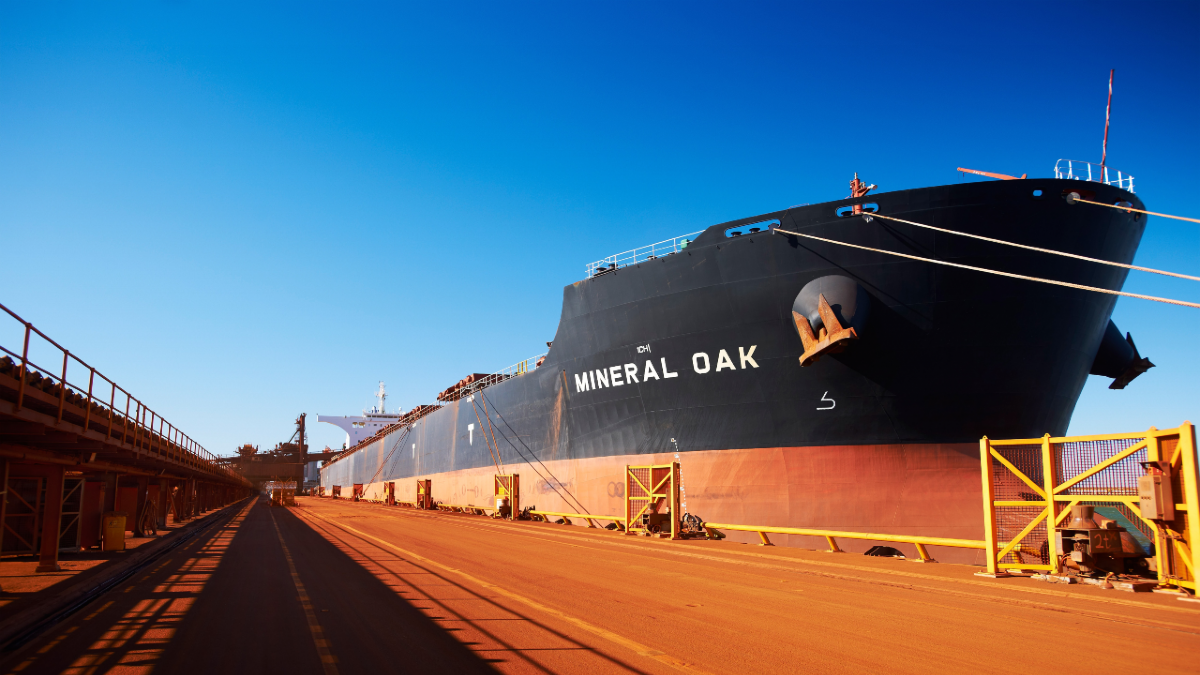
All eyes on China: dry bulk market grapples with geopolitical, financial challenges
The dry bulk sector has entered 2025 with a cautious approach, with stakeholders closely monitoring developments in China, a key driver of the industry


China appears to be grappling with a combination of internal and external challenges that could significantly influence market dynamics in the months ahead.
While Chinese demand remains the primary catalyst behind the market’s movements, intense geopolitical tensions with the United States and a challenging domestic economic environment paint a complex and uncertain picture. Stakeholders are bracing for potential disruptions, as the interplay of these factors could have ripple effects across global trade and freight markets.
Geopolitical headwinds
Geopolitical tensions have continued to escalate, with implications for the dry bulk sector. In the opening days of 2025, the US added major Chinese shipping companies to its list of ’Chinese military companies’, escalating trade frictions. This situation is expected to become even more pronounced as Donald Trump returns to the White House.
“The country’s leaders are bracing for potential shocks to the economy from higher tariffs threatened by Donald Trump,” shipping data platform Signal Ocean highlighted in a recent report.
Examining the broader trade relationship between the world’s two largest economies, Breakwave Advisors characterised the current environment as a "classic game theory dynamic." Analysts noted, “While there is limited concrete information regarding trade policies under the new Trump administration, historical patterns provide significant context, reducing the surprise element that dominated in 2016.” However, Breakwave Advisors also pointed out China is now better prepared to manage potential policy shifts.
In any case, market insiders remain wary of the evolving geopolitical landscape. "The last few years have been characterised by increased geopolitical uncertainty. Looking ahead, we expect such events to continue influencing global trade and effective vessel supply," Breakwave Advisors added.
Economic pressures and policy responses
Focusing on China’s financial conditions, Signal Ocean highlighted that the country continues to face substantial headwinds. This is evident in the failure of iron ore prices to rally in December, coupled with a continued softening of steel demand, both critical indicators for the dry bulk sector.
Amid these challenges, the Chinese government is implementing a variety of measures aimed at stimulating the economy. These include efforts to boost consumer spending and provide support to businesses, according to Signal Ocean’s analysis. While these interventions reflect the government’s capacity to act, their effectiveness remains uncertain.
“China retains substantial capacity to implement stimulative policies, despite facing significant structural challenges,” Breakwave Advisors noted.
Greek shipbroking house Xclusiv Shipbrokers reported that China is undergoing its most significant monetary policy reform in recent years. Specifically, the People’s Bank of China is shifting from traditional quantitative loan targets to a more interest rate-based approach, aligning its policies with those of Western central banks.
This transition marks a major step toward modernising China’s monetary policy toolkit. However, challenges remain, as Xclusiv pointed out. The government must strike a delicate balance between prioritising state-directed lending and embracing market-driven principles. Simultaneously, financial institutions need to adapt to this new operating environment, which represents a departure from longstanding practices.
Volatility in the market
As 2025 begins, the dry bulk charter market is experiencing significant volatility. Despite a moderate recovery from sharp declines in late 2024, the sector remains in a seasonally weak period, with rates hovering near multi-month lows.
“Given the typically low trading volumes in the first quarter, any sharp rate increases would largely depend on unpredictable weather-induced delays or disruptions,” analysts at Breakwave Advisors noted.
Nevertheless, the sector has demonstrated resilience in the face of adversity. Despite the challenging conditions in the latter part of 2024, the Baltic Dry Index averaged 1,755 for the year – 27% higher than its 2023 average, according to data from Greece’s Allied Shipbroking.
Looking ahead, the question remains whether 2025 will continue this trend or if the sluggish start to the year will set the tone for a more challenging market environment. Much will depend on the interplay of macroeconomic factors, geopolitical developments and weather-related disruptions.
Sign up for Riviera’s series of technical and operational webinars and conferences:
- Register to attend by visiting our events page.
- Watch recordings from all of our webinars in the webinar library.





Related to this Story



Events

Maritime Regulations Webinar Week
 16 Dec 2025
 GMT - ONLINE
Floating energy: successfully unlocking stranded gas using FLNGs and FSRUs
24 Feb 2026GMT - ONLINE
© 2026 Riviera Maritime Media Ltd.


