


Business Sectors
Business Sectors
Events
Contents
Register to read more articles.
IMO to consider CII revision proposals
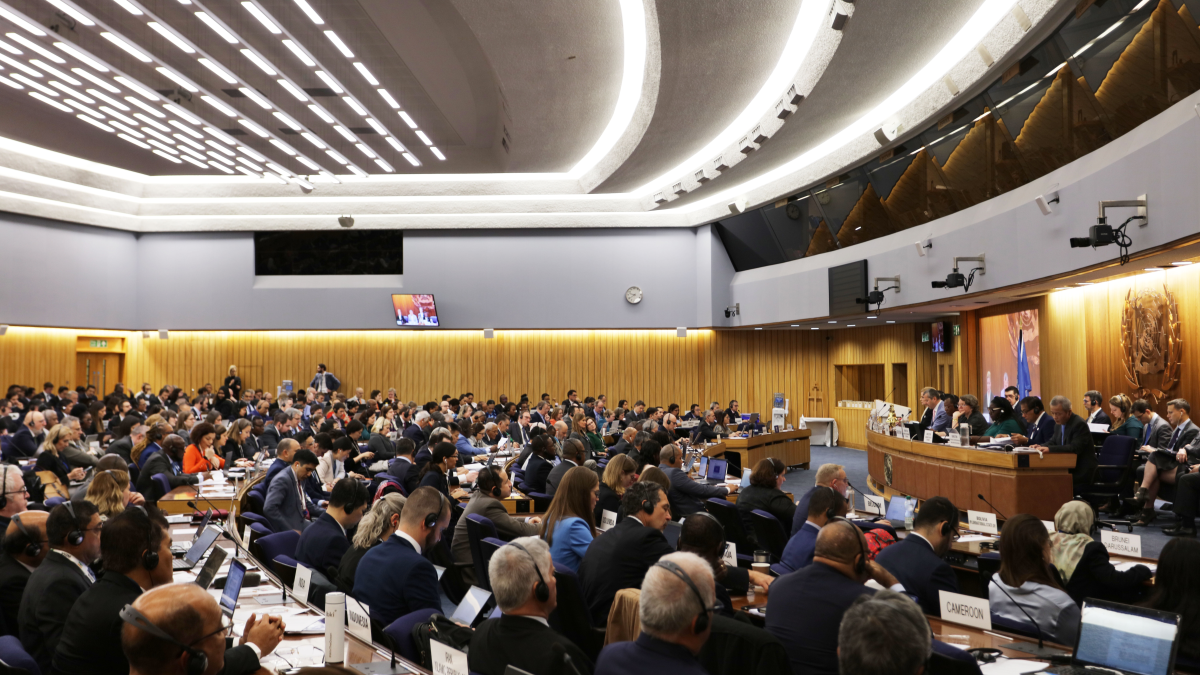
The upcoming MEPC 82 meeting will address industry proposals to revise the Carbon Intensity Indicator (CII) framework to better reflect operational realities and emissions performance


A key discussion on the agenda for the forthcoming Marine Environment Protection Committee meeting (MEPC 82) at the end of September 2024 is the Carbon Intensity Indicator, which falls under the Energy Efficiency of Ships item on the agenda.
CII was introduced to monitor and reduce greenhouse gas (GHG) emissions from ships, and has emerged as a critical tool under International Maritime Organization’s (IMO) strategy to achieve net-zero emissions by 2050.
However, the operational realities of shipping have highlighted various challenges in the current CII framework, sparking widespread calls for revision.
From the impact of idle time to the challenges faced by specific ship types and regions, the industry has come forward with proposals to recalibrate the CII, ensuring that it better reflects true operational efficiency and emissions performance.
One of the central challenges with the current CII framework is the impact of idle time on the attained CII rating. Ships frequently spend extended periods at anchor, in port, or undergoing maintenance at dockyards, during which emissions continue to accumulate without corresponding transport work.
The studies submitted (MEPC 82/INF.38) by Intercargo, including analyses by Bureau Veritas (BV) and DNV, demonstrate how idle time disproportionately worsens CII ratings. BV’s analysis of bulk carriers found that ships rated D and E – generally perceived to have poor environmental performance – often had lower overall emissions than their B or C-rated counterparts. This discrepancy arose because the lower-rated ships tended to experience more idle time.
According to the report (MEPC 82/INF.38), “Increased idle time is directly related to a rating of D or E. Yet, the ships with an E rating have less average total emissions than those with B or C ratings.”
This, it is felt, demonstrates a fundamental flaw in the CII system, wherein ships with extended idle periods, often beyond their control, are penalised.
The inclusion of emissions from docking operations presents another challenge to CII. Ships undergoing necessary maintenance or refuelling in port are subject to fuel consumption that does not contribute to transport work, which artificially inflates their CII ratings.
The submission by China (MEPC 82/6/35) highlights this issue, pointing out that emissions during docking are often unavoidable and should be deducted from CII calculations. The proposal argues “fuel consumption for operations such as tank washing, degasing and safety procedures during docking should be excluded from CII calculations to prevent penalising ships for emissions that are beyond their control.”
This revision would ensure ships undergoing routine port operations are not unfairly penalised in their CII ratings, leading to a fairer and more accurate representation of their environmental performance.
The Caribbean region, home to numerous small island developing states, presents another set of challenges under the current CII framework. Ships operating in this region often engage in shortsea shipping, characterised by shorter voyages between islands and frequent port calls. These operations result in high idle times and increased emissions relative to the transport work performed, which disproportionately affects their CII ratings.
The study (MEPC 82/INF.48), commissioned by the Inter-American Development Bank and conducted by the University of Trinidad and Tobago, revealed “shortsea shipping in the Caribbean faces unique challenges due to the high percentage of time spent in port, where emissions occur without corresponding transport work.”
This issue is compounded by the region’s limited port infrastructure, which further exacerbates waiting times and inefficiencies.
The study calls for a review of the CII framework to account for short voyages and the unique operational realities of the region, proposing correction factors to ensure fairer ratings for ships serving these routes.
To address these challenges, several proposals have been put forward to revise the CII framework. One of the most prominent suggestions is the exclusion of idle emissions from CII calculations.
The American Bureau of Shipping, on behalf of Liberia and the International Chamber of Shipping, submitted a study (MEPC 82/INF.46) proposing revised reference lines that exclude emissions during idle periods, such as time spent in port, at anchor, or during drydock operations. The study argued “excluding idle emissions from CII calculations would result in a more accurate reflection of a ship’s true operational efficiency.”
The report further demonstrated that excluding idle emissions would improve the fairness of the CII framework, particularly for ships with higher port waiting times. The revised methodology, based on active voyage emissions, would provide a more accurate measure of a vessel’s environmental impact.
In addition to recalibrating the CII formula, other proposals have advocated for the introduction of alternative metrics that account for different operational realities.
Brazil and India, in their submission (MEPC 82/6/40), supported the use of the EQ-CII metric, which introduces a holistic approach to measuring carbon intensity.
The EQ-CII metric accounts for both transport and non-transport work, providing a more comprehensive view of a ship’s efficiency. This approach acknowledges that emissions generated during non-transport activities, such as time spent in ballast or during auxiliary operations, should be factored into the overall efficiency calculation.
“The EQ-CII metric offers a fairer and more nuanced measurement of energy efficiency, especially for ships that spend considerable time in non-transport activities.”
The implementation of such an alternative metric could resolve many of the discrepancies seen in the current system, particularly for specialised ships and those engaged in shortsea shipping.
The fleet-balancing proposal (MEPC 82/INF.41) put forward by Interferry presents another innovative solution. This mechanism allows fleet operators to balance emissions across their fleet, ensuring that emissions from better-performing ships offset those from ships facing operational constraints, such as high idle times or short voyages. The proposal is designed to offer flexibility while still adhering to decarbonisation goals.
“The fleet-balancing mechanism ensures ships operating in challenging environments, such as roro vessels on fixed routes, are not unfairly penalised for operational realities outside their control.”
This solution would allow shipping companies to maintain compliance with CII regulations while accounting for variations in ship performance due to external factors.
As IMO moves toward its 2026 comprehensive review of the CII framework, these proposals put forward at MEPC 82 will likely play a central role in shaping the future of energy efficiency regulations for the maritime industry.
CII and other IMO regulations will be discussed at the Tanker Shipping & Trade Conference, Awards & Exhibition 2024. Register you interest here.


Related to this Story

Events

Maritime Regulations Webinar Week
 16 Dec 2025
 GMT - ONLINE
Floating energy: successfully unlocking stranded gas using FLNGs and FSRUs
24 Feb 2026GMT - ONLINE
© 2026 Riviera Maritime Media Ltd.


