


Business Sectors
Business Sectors
Events
Contents

Register to read more articles.
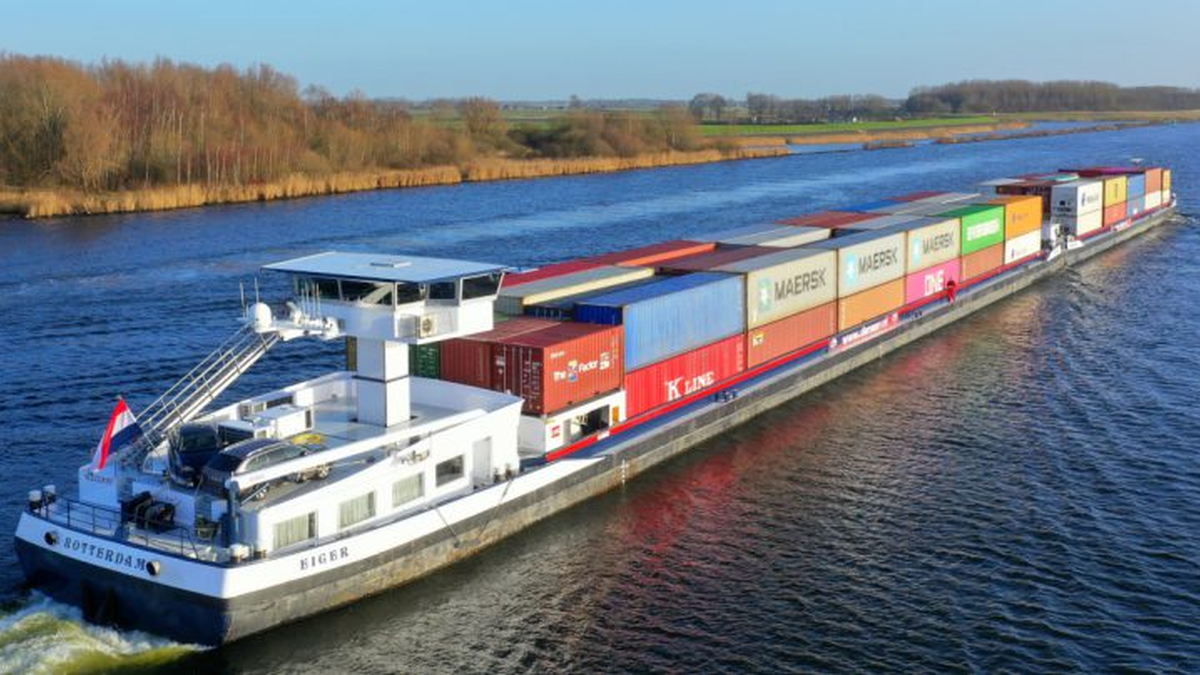
Danser digitally connects chartered inland container shipping
A Dutch owner and operator of vessels shipping containers along inland waterways in the Netherlands has installed digital units for real-time data transmissions


Danser Group has installed digitalisation units on owned and chartered-in vessels that transport cargo along inland waterways in the Netherlands to increase transparency and efficiency.
These devices can collate data from onboard systems and transmit them in packets to provide real-time insights to managers and cargo owners.
“Being able to connect digitally with the ships we charter - not just our own fleet - is an important milestone,” said Danser Group chief executive Ben Maelissa.
“Once installed on board, we have the real-time insights we need to make better decisions and can, keep our customers better informed as we continue building towards a fully digital operation.”
Danser manages eight owned vessels, and relies on an additional 70 chartered ships to operate its liner services.
In its first roll-out phase, digital devices will be deployed on the chartered vessels operating its Limburg Express container liner service, which runs from Rotterdam via the River Maas to terminals in Venlo and Born, both close to the German border.
Data covering vessel position, speed, estimated time of arrival, fuel consumption and emissions will be transmitted from each vessel in port and as it sails along the waterways.
Danser is installing Shipping Technology’s ST Brain Lite across its vessels, even on older, chartered vessels for which a full digital installation is either technically complex or economically unfeasible.
“ST Brain Lite will play a crucial role in enriching our data as it brings a combination of quality and scalability,” said Mr Maelissa.
Shipping Technology chief operating officer, Donald Baan, said Danser has become the first inland shipping operator to actively stimulate onboard digitalisation by covering the investment costs for ship owners.
“A significant part of the inland fleet still operates largely analogue,” said Mr Baan.
“We are removing the barriers to digitalisation and making connected shipping accessible for every vessel, for more transparency and efficiency throughout the supply chain.
Many operators depend on manual processes such as phone calls, WhatsApp messages, emails and spreadsheets to track vessel locations, cargo status, arrival times and fuel consumption.
Crew members on these ships are responsible for a substantial administrative burden, manually relaying information that operators need for planning and reporting.
“Inland shipping has a huge opportunity to strengthen its competitive position through smarter data exchange and digital collaboration,” said Mr Baan.
ST Brain Lite is a smaller version of Shipping Technology’s ST Brain that is already installed on 380 inland vessels including tankers, cruise ships and container barges.
It is a small onboard computer that connects to the vessel’s existing systems – GPS, AIS, loading systems, and tank monitoring and container stowage software – and transmits data in real time to a secure cloud facility and an operators’ own planning programs.
It can be installed by crew members and remotely activated by Shipping Technology’s office team.
Riviera will host TUGTECHNOLOGY ‘27 in Rotterdam, the Netherlands, 19-20 May 2027. Use this link for more information and to register.
Related to this Story

Events

Maritime Regulations Webinar Week
 16 Dec 2025
 GMT - ONLINE
Floating energy: successfully unlocking stranded gas using FLNGs and FSRUs
24 Feb 2026GMT - ONLINE
© 2026 Riviera Maritime Media Ltd.


