


Business Sectors
Business Sectors
Events
Contents

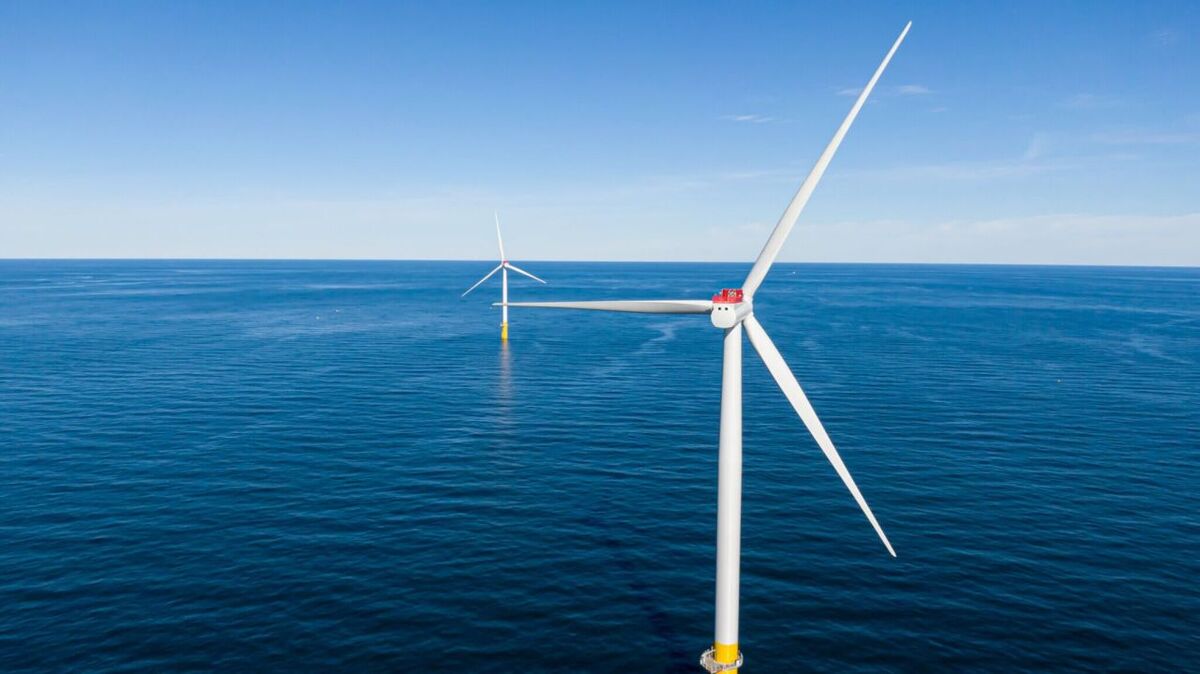
Dominion Energy files lawsuit against Trump stop work order
Dominion Energy has filed a complaint and a motion in the US District Court for the Eastern District of Virginia, seeking a temporary restraining order to stay a stop work order on the Coastal Virginia Offshore Wind (CVOW) project


In a statement issued to OWJ, Dominion Energy said, “If granted by the court, this will allow the project to resume work. At the same time, we will work to seek resolution through co-operation with the agencies and the White House, with a focus on achieving a durable solution.” The complaint and motion were filed on 23 December 2025.
Dominion Energy said CVOW “is essential to meeting our customers’ needs.” The company said that delaying the project will lead to increased costs for customers and threaten long-term grid reliability.
“Given the project’s critical importance, we have a responsibility to pursue every available avenue to deliver the project as quickly and at the lowest cost possible on behalf of our customers and the stability of the overall grid,” the company said.
The US Department of the Interior announced on 22 December 2025 that it was pausing leases for all large-scale offshore wind projects that are under construction in the US due to what it claimed are ‘national security risks.’
The Department of Interior said the pause “will give the Department, along with the Department of War and other relevant government agencies, time to work with leaseholders and state partners to assess the possibility of mitigating the national security risks posed by these projects.”
Secretary of Interior Doug Burgum claimed that the action “addresses emerging national security risks, including the rapid evolution of the relevant adversary technologies,” and what he claimed were “vulnerabilities created by large-scale offshore wind projects with proximity near our East Coast population centres.”
In addition to CVOW, leases were paused for Vineyard Wind 1 (OCS-A 0501); Revolution Wind (OCS-A 0486); Sunrise Wind (OCS-A 0487); and Empire Wind 1 (OCS-A 0512).
In November 2025, Dominion Energy said the 2.6-GW windfarm, the largest offshore windfarm in the US, was on schedule for first delivery of electricity to customers in Q1 2026 and full project completion at the end of 2026. The company said it had been making significant progress on the project, which was ~66% complete at that time. It also noted that tariffs introduced by the Trump administration had added US$443M to the cost of the project, but that CVOW is “well-aligned with focus on American energy dominance,” and “represents the fastest and most economical way to deliver nearly 3 GW to Virginia’s grid to support America’s AI and cyber, shipbuilding and military pre-eminence.”
Ørsted, which is working on the Sunrise Wind and Revolution Wind projects, said it is evaluating all options to resolve the matter expeditiously, together with its partners. The company said, “This includes engagement with the Bureau of Ocean Energy Management and other permitting agencies as well as the evaluation of potential legal proceedings.”
Another of the projects affected, Empire Wind, said it is already complying with relevant national security related requirements, identified as part of the regulatory process conducted over several years and will continue to work with BOEM and other federal agencies to continue to implement all necessary mitigation for the project.



Related to this Story

Events

Maritime Regulations Webinar Week
 16 Dec 2025
 GMT - ONLINE
Floating energy: successfully unlocking stranded gas using FLNGs and FSRUs
24 Feb 2026GMT - ONLINE
© 2026 Riviera Maritime Media Ltd.


