


Business Sectors
Events

Floating energy: successfully unlocking stranded gas using FLNGs and FSRUs
 24 Feb 2026
 GMT - ONLINE
Contents

Dry bulk leaders expect steady trade, scrapping in 2026
Executives at a Capital Link dry bulk panel noted balance sheets stayed conservative as rates improved, but coal and geopolitics set the tone for 2026


In a Capital Link shipping sector webinar series dry bulk discussion on 11 December 2025, moderated by B Riley Securities managing director Liam Burke, executives from Star Bulk Carriers, Euroseas and EuroDry, Pangaea Logistics Solutions and Wah Kwong Maritime Transport said stronger second-half 2025 freight markets had supported a more constructive tone into 2026, but they noted capital allocation and leverage discipline as the differentiators in a still-volatile cycle.
Star Bulk president Hamish Norton said the company had not been “levering up at this point”, despite what he described as attractive borrowing terms.
He said Star Bulk had been able to borrow at “SOFR plus 140 basis points or less”, but its net debt stood “below scrap value”.
In the same context, he said the company had been using high secondhand prices to dispose of older and smaller ships, generating cash that was “mostly” deployed on share buybacks, while debt reduced through scheduled amortisation of “about US$200M a year”.
A similar balance-sheet posture came through from the other panellists, albeit with different operating models, with Pangaea Logistics Solutions chief operating officer Mads Boye Petersen describing a “cautious and conservative approach”, saying loan-to-value on a fair market value basis sat at “around 40%-45%”.
He said debt availability remained competitive for quality companies, but argued owners still had to be selective given where asset values sat.
Rising production from Brazil and Simandou in Guinea would still be absorbed by China, potentially displacing shorter-haul Australian volumes and increasing tonne-miles
Wah Kwong managing director William Fairclough also aligned with what he described as a “comfortable level” around “50%” debt on a group basis, while noting that newer ships attached to long-term contracts could support higher leverage where pricing from Chinese leasing houses proved compelling.
Euroseas chairman and chief executive Aristides Pittas said his company’s approach to leverage had not changed over two decades: debt enhanced returns when priced below operational returns, but excessive leverage became existential when markets turned.
He said Euroseas typically targeted “around 50% debt”, with flexibility to move towards “60%” in weaker markets, and closer to “40%” when prices appeared inflated.
He added the post-2009 recapitalisation wave reinforced the need for “medium debt” levels that still allowed owners to withstand a downturn.
On fleet strategy and earnings exposure, the discussion drew a clear line between companies pursuing deliberate spot-market exposure and those balancing it against contract cover.
Mr Norton said Star Bulk stayed “primarily spot” because shareholders wanted spot exposure and because, in his view, owners with sufficient balance sheet resilience tended to “end up making more money in the spot market than if you fix out”.
Mr Pittas described a similar toolkit but with more explicit use of risk management, saying Euroseas sometimes used forward freight agreements for cover depending on risk appetite and near-term expectations.
Mr Fairclough said Wah Kwong’s allocation between spot and time charter depended on market view and risk management, with the company seeking “performance arbitrage” by deploying modern, efficient ships on longer-haul trades while placing older tonnage on routes less sensitive to fuel and efficiency.
When the moderator raised consolidation – citing a proposed Diana Shipping cash offer for Genco – Mr Norton said public-market valuations had created a structural block.
Newbuilding prices look very expensive given expected charter rates
He said most listed dry bulk companies traded below net liquidation value, limiting the appeal of issuing shares for acquisitions, while boards still demanded at least liquidation value plus a premium in any takeover. “I think the consolidation process is stuck at the moment,” he said, adding he would be surprised if proposed deals progressed “in anything like the currently proposed structure”.
Mr Petersen said consolidation could still happen where a public company could issue equity close to net asset value, pointing to Pangaea’s merger with a private company and share issuance at NAV to add 15 handy-sized ships, but he also characterised the sector as fragmented in ways that limited the operational impact of scale on freight-market outcomes.
On demand, panellists broadly described 2025 as bifurcated, with a weak first half followed by a stronger recovery, with Mr Petersen noting that the first six months had been “extremely challenging”, and attributed the severity to negative macro narratives rather than a straightforward collapse in fundamentals.
He said customers such as power plants, steel mills and commodity traders sounded “pretty confident” about demand over the next 12 months, leaving Pangaea “cautiously optimistic” but not positioned for “huge movement in either direction”.
Mr Pittas said geopolitics had increasingly overshadowed conventional supply-demand modelling, but he still expected 2026 to hold “around these levels plus or minus 20%-25%”.
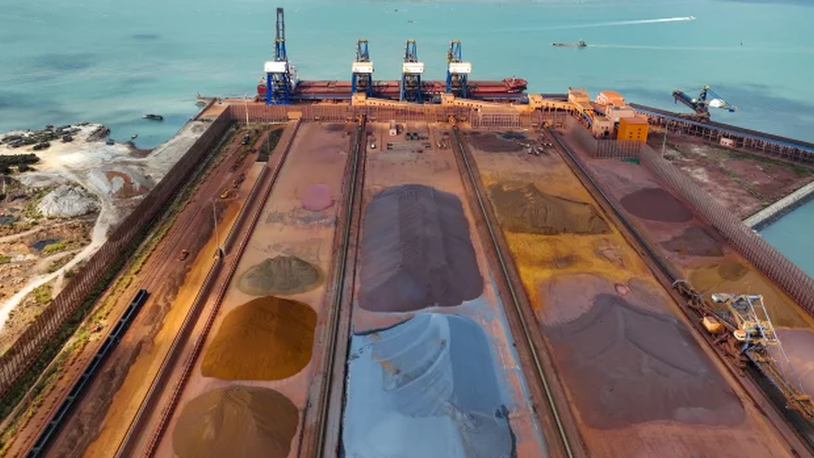
Mr Norton struck the most explicitly bullish tone and said coal, grain and minor bulk volumes look set to remain strong into 2026, supporting smaller ship segments, while iron ore could deliver higher tonne-miles even without meaningful tonne growth.
He argued that rising production from Brazil and Simandou in Guinea would still be absorbed by China, potentially displacing shorter-haul Australian volumes and increasing tonne-miles.
Separately, he dismissed concerns that bauxite demand might soften materially, arguing aluminium demand remained broad-based and that West Africa-to-Asia bauxite had cost and logistics advantages. “I’m not worried about bauxite as a cargo,” he said.
Mr Fairclough emphasised coal’s sensitivity to Chinese policy and weather-driven power demand and said the Chinese government’s approach to domestic coal production and coal pricing had been an important driver of market shifts, noting domestic coal prices had dropped and that warmth had reduced seasonal demand.
He also pointed to front-loading of cargo movements ahead of tariffs, leaving stockpiles high across commodities and in his view, grain mattered but did not typically drive the market on its own.
On fleet supply, the panel addressed the orderbook as manageable by historical standards, but repeatedly returned to fleet age and efficiency differentials as the medium-term tightening mechanism.
Mr Pittas said orderbooks in Kamsarmax and Ultramax segments sat at about 14% and 12% respectively, which he characterised as “very reasonable” compared with the extreme orderbook levels seen before the 2010–2020 downturn.
Mr Petersen said the key uncertainty lay in scrapping timing, which remained limited while markets stayed firm, and he highlighted slow steaming as an additional variable affecting capacity.
Mr Norton said newbuilding prices looked “very expensive” given expected charter rates, and he said Star Bulk wanted to preserve debt capacity to renew its fleet when ships looked cheap and shipyards became more willing to discount.
In the Q&A, panellists said they did not expect major shipyard delivery delays, with Mr Fairclough describing consolidation and modernisation in Chinese shipbuilding and arguing that “we do not see major delays”.
Mr Pittas said he had become “a little bit more cautious about Chinese leasing” amid regulatory uncertainty, because comparable terms were available from conventional banks, although he noted some leasing houses appeared increasingly aggressive on pricing.
Closing remarks converged on the idea that the next disruption was more likely to come from a demand shock than from an abrupt oversupply.
Mr Fairclough said efficiency gaps between old and new tonnage, alongside regulatory pressure, looked set to push older ships out, while geopolitics remained the principal wild card.
Mr Norton said a large cohort of fuel-intensive ships delivered between 2007–2012 would move into scrapping age in a compressed window, and he argued shipyards would not have the capacity to replace that block quickly, raising the risk of future fleet tightness even if the market did not appear short today.
Riviera’s Maritime Decarbonization Americas Conference will be held in Houston, Texas, 22-23 January 2026. Click here for more information on this industry-leading event.



Related to this Story




Events

Maritime Regulations Webinar Week
16 Dec 2025GMT - ONLINEFloating energy: successfully unlocking stranded gas using FLNGs and FSRUs
24 Feb 2026GMT - ONLINE
© 2024 Riviera Maritime Media Ltd.


