


Business Sectors
Business Sectors
Events
Contents
Register to read more articles.

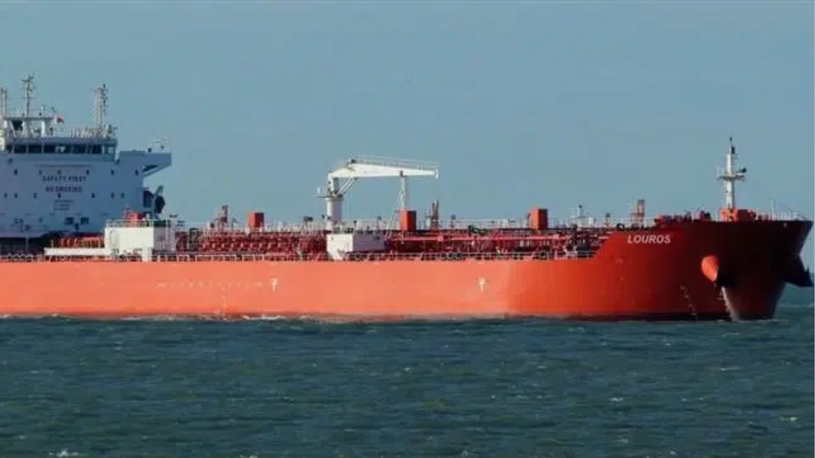
Greenland’s Royal Arctic Line to end HFO use
Clean Arctic Alliance welcomes Greenland government-owned shipping line’s decision


Responding to news published in early May in Sermitsiaq newspaper, on how Royal Arctic Line will move away from heavy fuel oil (HFO) use ahead of an IMO ban taking full effect in 2029, the Clean Arctic Alliance welcomed the move, with lead advisor Sian Prior saying, “By choosing to use cleaner fuels and getting rid of heavy fuel oil ahead of schedule, Royal Arctic Line isn’t just making good business sense, it is ensuring it can never spill heavy fuel oil in the Arctic, and is also cutting black carbon emissions, a super pollutant that has a disproportionate impact on the Arctic and contributes to the melting of sea ice and glaciers.”
“This is hugely positive, and I was very pleased when I heard the news. This is a green transition at the highest level. Royal Arctic Line had the opportunity to pollute the sea until 2029, but is now choosing to take the environment and climate seriously and keep the sea clean”, said senior advisor at Green Global Future, a Clean Arctic Alliance member, Kåre Press-Kristensen, quoted in the Sermitsiaq article.
The Arctic Alliance says when the prohibition on using and carrying heavy fuel oil was agreed by the IMO in June 2021, it included significant loopholes allowing countries to grant waivers, and for shipping companies to use exemptions to the ban.
“As a result, the ban will only come up to full speed in 2029. Until then, HFO will no longer be allowed to be used or carried for use while sailing in Arctic waters, unless a ship has a protected fuel tank or has been issued with a waiver by an Arctic coastal nation – meaning potentially around 74% of Arctic shipping remains unaffected by the ban.”
Yet Arctic shipping is growing. Recent Arctic Council studies of ship activity in the Arctic have shown an increase of 37% between 2013 and 2024 and a 108% increase in total distance travelled over the same time period.
The Green Arctic Alliance comments, “The ban, in its current form, leaves the Arctic marine environment exposed to the risk of devastating spills of HFO, and to high emissions of black carbon from those ships still using heavy fuels. Black carbon has a disproportionately high impact when released in and near the Arctic – when emitted from the exhausts of ships burning oil-based fuel – and settles onto snow and ice. It accelerates melting and the loss of reflectivity – the albedo effect – which creates a feedback loop that further exacerbates local and global heating.”
This is why the Clean Arctic Alliance called on IMO member states, particularly Arctic coastal countries, and Arctic shipping to implement the Arctic HFO ban and enforce it fully with immediate effect – without resorting to loopholes. “By doing so, the regulation can significantly reduce the risk of HFO spills and also see co-benefits – reducing air pollution, and slowing down the impacts of climate warming on the Arctic.
"IMO member states, especially Arctic coastal countries, must go farther than the IMO ban by implementing it in ways that truly protect the Arctic from HFO spills and black carbon emissions – and that means refusing to offer loopholes to ship operators,” a statement said.
It sums up that by combining better fuel choices today with the use of existing technology such as filters, ships operating in the Arctic would see black carbon or soot emissions reductions of more than 90%.
Sign up for Riviera’s series of technical and operational webinars and conferences:
- Register to attend by visiting our events page.
- Watch recordings from all of our webinars in the webinar library.



Related to this Story

Events

Maritime Regulations Webinar Week
 16 Dec 2025
 GMT - ONLINE
Floating energy: successfully unlocking stranded gas using FLNGs and FSRUs
24 Feb 2026GMT - ONLINE
© 2026 Riviera Maritime Media Ltd.


