


Business Sectors
Business Sectors
Events
Contents

Hormuz deal: uncertainty leaves waterway in dire straits of dark transits, attacks and rising costs
With a deal said to be forthcoming, crews, ships and the environment have borne the costs of ongoing attacks amidst a lack of clarity around how, or if, the Strait of Hormuz will again be reopened


Oman has reportedly agreed to a framework for a deal with Iran that may provide a mechanism to temporarily reopen the Strait of Hormuz.
US media outlet MS NOW, citing "Middle East diplomats with knowledge of the negotiations", said no details were provided on the deal or its terms, but one source, an Iranian official, said the deal would be temporary and would not include tolls on commercial ships. The official told MS NOW reporters that the United Nations (UN) shipping body, the International Maritime Organization (IMO), and the US would be involved in an official announcement of the agreement. A separate official, said to be from another Gulf state told the outlet that the deal has been endorsed by the members of the Gulf Cooperation Council, which includes Bahrain, Kuwait, Oman, Qatar, Saudi Arabia, and the United Arab Emirates (UAE).
The Iranian source said the deal will create new shipping routes through the Strait of Hormuz, with commercial vessels entering the Middle East Gulf through an Iranian-controlled route and exiting through a route controlled by Oman.
Prior to the news report, Iranian media and officials had claimed an agreement was being negotiated with Oman, with no mention of the US, with the same routes involving "service fees" and Iranian clearance before vessels would be allowed to exit through the Omani route.
In response, shipping trade lobby groups penned an open letter to the UN and IMO calling the imposition of "compulsory charges for transit" a "precedent that could undermine the internationally recognised legal framework governing straits used for international navigation".
"Once such a precedent is established, it becomes increasingly difficult to resist similar measures elsewhere," the letter cautioned, equating the importance of the principle of freedom of navigation with the importance of seafarer safety.
"Since the beginning of the conflict seafarers have been operating in an environment of heightened uncertainty, with some sustaining injuries and tragically losing their lives while carrying out their work at sea," the letter, signed by CEOs and Secretaries General of eight regional and international shipping bodies.
Just as the safety of seafarers should be "non-negotiable," the letter said, so should the preservation of freedom of navigation "as the foundation of international maritime governance".
"We must ensure that internationally recognised rights of navigation are not compromised or used as part of political negotiations," the shipping lobbies said.
Reuters cited shipping industry sources as saying insurance clauses and sanctions on Iran would mean a deal involving fees and granting Iranian control over the Strait would not be feasible.
"Iran is seeking fees of between 5% and 7% of the price of cargoes from ships using the strait," the report said, citing a senior Iranian official. "Oman is discussing fees of around 3%, while Washington wants no fees at all."
MS NOW’s later report cited a US official who said that Washington would only support a temporary deal that does not involve impediments to the freedom of navigation or fees.
Vessel attacks and environmental fall-out remain a feature in Middle Eastern waterways
Multiple maritime security firms including Greece-based Marisks have received reports from commercial vessels of explosions in the vicinity of vessels operating in both the Strait of Hormuz and the Gulf of Aden in recent days.
UK-based Vanguard Tech reported Iranian claims that IRGC forces had struck two "unspecified targets in the Strait of Hormuz" on 6 August. The vessels were not identified, but Vanguard said the claim likely referred to Marshall Islands-flagged VLCCs Nissos Kea and Nissos Keros, which both "went dark", interrupting AIS transmissions.
No independent confirmation or verification of the purported attacks has yet arisen, and the Royal Navy-led United Kingdom Maritime Trade Operations (UKMTO) Centre’s latest recorded incident involved vessels reporting explosions in the vicinity.
The Signal Group published statistics on transits in the Strait of Hormuz since the prior ceasefire deal between the US and Iran collapsed on 14 July, saying that nearly two-thirds of vessels had transited the strait with their AIS turned off and that transits had been dominated by the so-called "dark fleet" of sanctioned vessels.
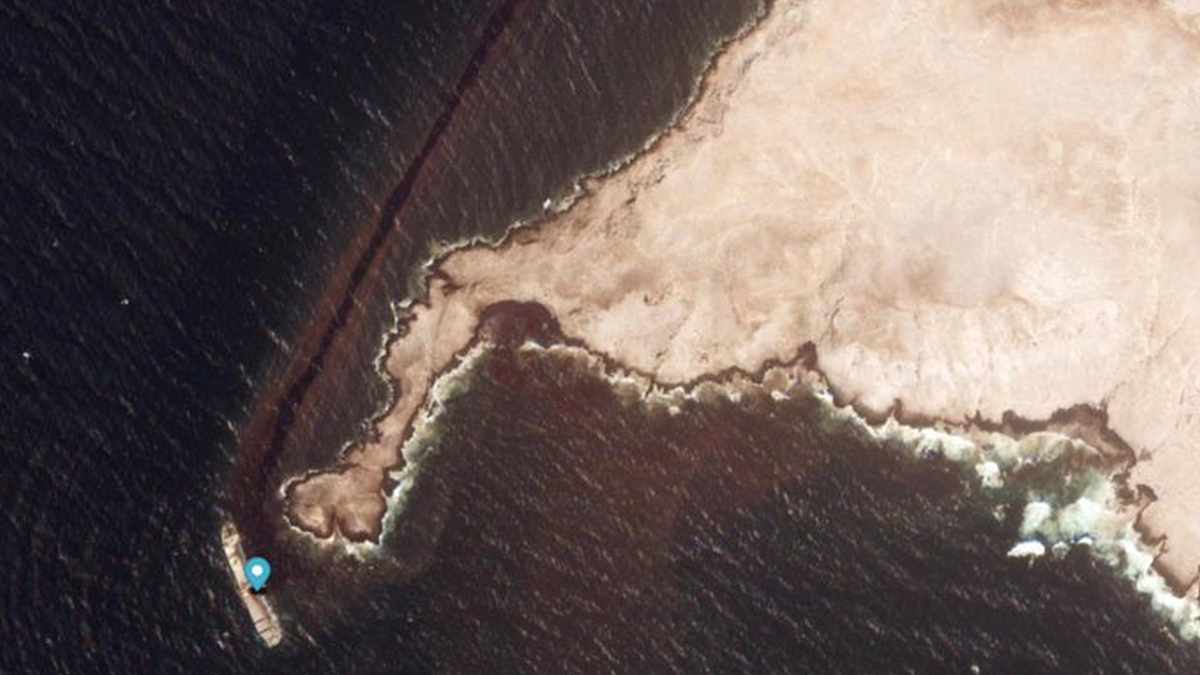
One such dark fleet vessel, which was reportedly attacked in early June off the southern Omani coast, has been observed in satellite imagery to have grounded and created an oil spill that is now covering hundreds of square miles in a protected marine area.
International non-governmental organisation Greenpeace published satellite imagery analysis from its German chapter saying the oil spill from "the Russian shadow fleet tanker Caroline Bezengi, grounded in Oman’s Al Hallaniyat archipelago, has accelerated and is now estimated to have spread across roughly 600 square kilometres".
"Large stretches of Al Qibliyah Island’s shoreline appear to have been affected, while additional oil slicks extend far out to sea, further polluting and damaging this protected marine ecosystem. The tanker has reportedly been leaking oil since it ran aground in June, following a suspected limpet mine attack that resulted in the flooding of the engine room, and urgent action is needed to contain the spill and prevent further harm to marine life and local livelihoods," Greenpeace said.
Greenpeace urged Omani authorities and all relevant regional bodies to act immediately to assess all remaining options to contain the spill, secure the tanker’s cargo and conduct a comprehensive, independent assessment of the ecological damage.
Oman’s state-run Oman News Agency reported that Oman’s Ministry of Transport and Environment Authority are "handling" the incident "to mitigate any potential impacts on the environment," saying "specialised technical teams are continuing to monitor developments and implement the necessary procedures in accordance with the approved emergency response plans and competencies, with the aim of reducing any potential impacts on the marine environment and navigational safety".
"The competent authorities also continue to monitor through satellite images, the results of field surveys, and technical models, to follow developments in the situation and assess any potential environmental impacts, in order to support the making of appropriate decisions based on the latest developments and ongoing technical assessments, in accordance with approved international standards and practices, and in compliance with relevant international laws and agreements," the agency said.
Sign up for Riviera’s series of technical and operational webinars and conferences:
- Register to attend by visiting our events page.
- Watch recordings from all of our webinars in the webinar library.





Related to this Story

Events

Maritime Regulations Webinar Week
 16 Dec 2025
 GMT - ONLINE

Floating energy: successfully unlocking stranded gas using FLNGs and FSRUs
24 Feb 2026GMT - ONLINE
© 2026 Riviera Maritime Media Ltd.


