


Business Sectors
Business Sectors
Events
Contents

Register to read more articles.
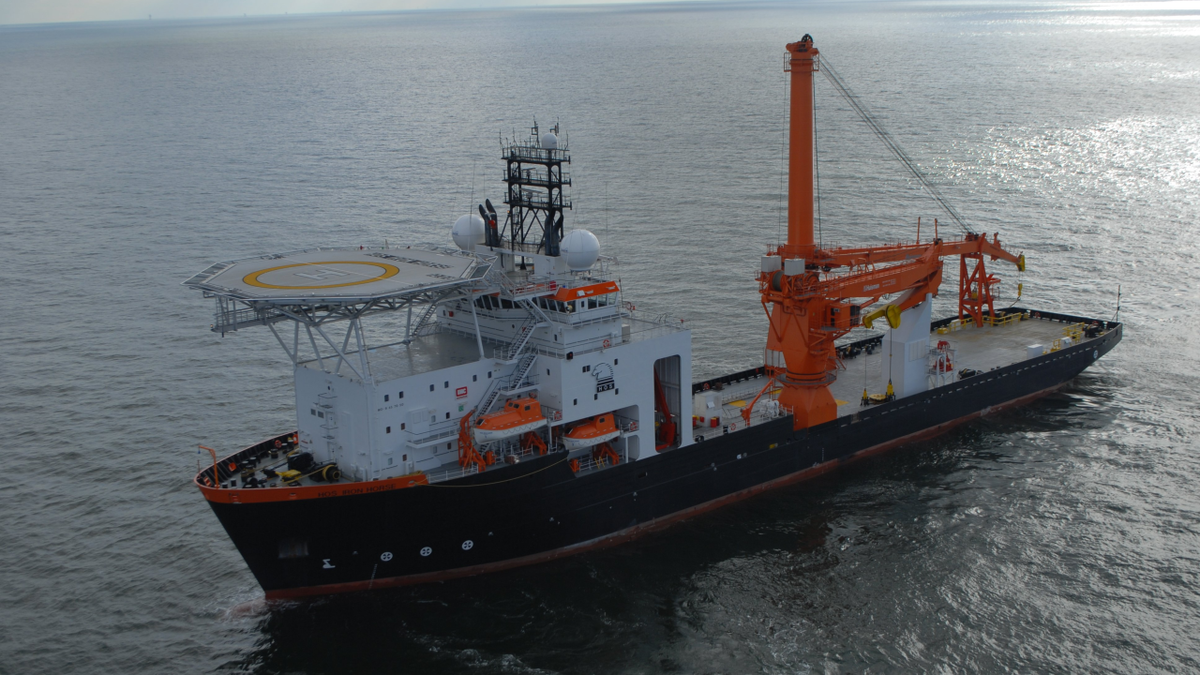
Hornbeck, Helix to create ‘integrated offshore services company’
Only a few years ago, American offshore vessel owner Hornbeck Offshore had to enter into an agreement with its creditors before submitting a pre-packaged Chapter 11 filing – but the company’s fortunes are now very different


The Chapter 11 filing arose as a result of a devastating downturn in the offshore oil and gas industry that began in 2014, a downturn that squeezed demand for OSVs, forcing the company to stack a large number of its vessels.
Hornbeck Offshore wasn’t alone in being hit hard by the downturn. Other American owners also filed for bankruptcy, but they, like Hornbeck Offshore, are now reaping the rewards of a market that has rebounded. Some have expanded into new markets for OSVs in order to secure growth, or acquired their competitors; others, like Hornbeck Offshore, are to merge with complementary businesses, in this case Helix Energy Solutions.
Even so, it came as a surprise to many when Hornbeck Offshore – which still has more than 20 vessels stacked, seemingly unlikely to return to operation in the short term – and Helix announced in April 2026 that they were to merge by the end of the year, and were planning an all-stock transaction that will see Hornbeck shareholders own approximately 55% and Helix shareholders 45% of the combined company.
However, if at first sight the merger seems an unlikely one, there is logic behind the deal, as representatives of the soon-to-be combined company explained.
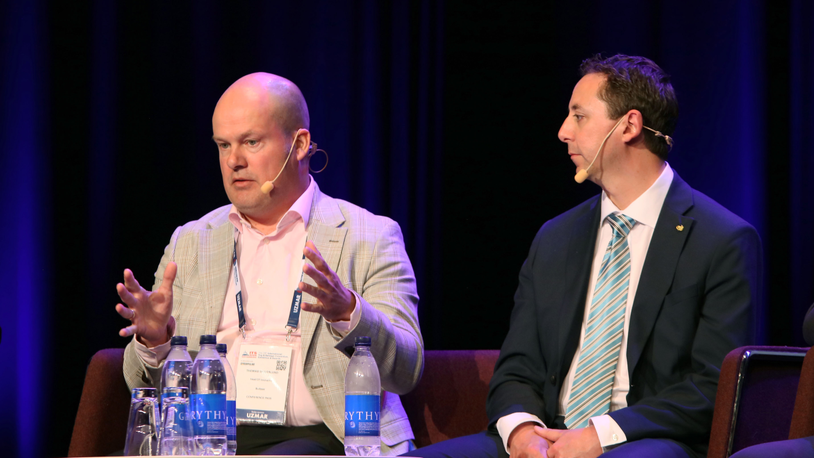
In a late-April presentation and webcast, Helix chairman, Bill Transier, executive vice president and chief operating officer, Scotty Sparks, and Hornbeck Offshore president, chairman and chief executive, Todd Hornbeck, described the merger as the combination of two market leaders, both serving the offshore oil and gas industry, but bringing complementary assets and expertise to the new company.
The merger between the companies “will create a recognised leader in offshore operations through a diversified and expanded high-specification fleet of speciality vessels, supported by subsea robotics, well intervention and technical service capabilities, including trenching subsea pipelines and cables,” they said.
The combined company will, they explained, provide integrated subsea and marine transport solutions to customers in the deepwater energy, defence and renewables markets. For its part, Hornbeck Offshore said the deal creates a company that is well-placed for future growth and sustained shareholder value creation, supported by increased scale, balance-sheet strength and robust free cash flow generation. It is expected to generate US$75M or more in annual revenue and cost synergies.
Hornbeck chairman, president and chief executive, Todd Hornbeck, said the deal capitalises on each company’s unique expertise, and “will unlock meaningful strategic and operational benefits that enhance our ability to serve customers worldwide and drive significant shareholder value creation.”
Helix president and chief executive, Owen Kratz, who is to retire soon, said: “In merging two proven industry leaders with industry-leading teams, assets and offerings, this transaction creates a global deepwater vessel and services company with the scale and capabilities to deliver sustainable, long-term growth. This combination is a compelling opportunity to enhance value for Helix’s shareholders, building on our momentum as one of the world’s premier marine service contractors.”
In the webcast, Mr Transier highlighted the complementary nature of Helix’s well intervention vessels and Hornbeck Offshore’s fleet of deepwater OSVs. This combination will enable the merged company to offer ‘end-to-end services’ over the lifetime of an offshore development, he said. “Together,” he said, “we will respond to customers’ needs whilst securing significant cost savings and boosting revenues and EBITDA significantly.”
Mr Hornbeck and Mr Sparks described how the merged company would be able to offer “tailored logistic solutions for life-of-field requirements” – as Hornbeck Offshore always has – and riserless well intervention and other subsea services such as trenching, of the type that Helix has long specialised in. “We will be the only company able to provide well intervention, inspection maintenance and repair, subsea robotics, deepwater logistics solutions, trenching and renewables,” Mr Hornbeck said.
But the new company’s offering will not depend solely on the offshore oil and gas industry. Hornbeck Offshore has long had a significant volume of business working for the US Department of Defence – providing logistic support for the US Navy’s submarine fleet, submarine rescue, training and support, long-range acoustic survey support and autonomous vessels – a business line that Mr Hornbeck expects will grow in the coming years.
Having survived the downturn that started in 2014, Mr Hornbeck said Hornbeck Offshore currently has its largest ever backlog. He sees opportunities to market the company’s vessels in all of the segments in which it already operates, and to bring back into operation some of the ships that are still stacked. “We can reactivate vessels quickly and inexpensively when the market goes under-supplied,” he said.
“The resources are available for organic growth and for acquisitions,” said Mr Hornbeck. “We will move assets where the business is. The combined company has a lot of cash on its balance sheet.” In fact, the company post-merger will have a US$2Bn backlog and around US$500M in cash when the transaction closes. The combination of Hornbeck Offshore’s expertise and assets and those of Helix will also reduce earnings volatility and provide the new company with greater through-cycle resilience.
“We will be able to offer bundled services to the industry and provide clients with cost reductions that you get working with a single company rather than many,” Mr Hornbeck explained. For his part, Mr Sparks said the offshore oil and gas market – and Helix – is in much better shape than it was two to three years ago, and presents opportunities for growth.
Mr Hornbeck said both companies were in a similar position. “Helix is a good company, well run and with good capitalisation,” he concluded. “But it was only so big. It needed to build scale and reduce the cost of capital. The combined company will be a real growth company,” he said, “able to deliver significant shareholder value.”
Following the completion of the transaction, Mr Hornbeck will serve as president and chief executive of the combined company. The combined company’s board will comprise seven directors, three of whom will be from Helix and four from Hornbeck. Post closing, the combined company will operate under the Hornbeck Offshore Services name and trade on the New York Stock Exchange under the ticker symbol HOS.
Under the terms of the agreement, which has been approved by the boards of both companies, Hornbeck stockholders will receive a fixed exchange ratio of 10.27167 shares of Helix common stock for each share of Hornbeck common stock owned.


Related to this Story


Events

Maritime Regulations Webinar Week
 16 Dec 2025
 GMT - ONLINE
Floating energy: successfully unlocking stranded gas using FLNGs and FSRUs
24 Feb 2026GMT - ONLINE
© 2026 Riviera Maritime Media Ltd.


