


Business Sectors
Business Sectors
Events
Contents
Register to read more articles.
How Ukraine maintains maritime operations despite war
Ukraine has managed to maintain critical maritime operations despite constant aerial attacks, with port workers maintaining grain exports during nightly loading operations while managing frequent air raid disruptions


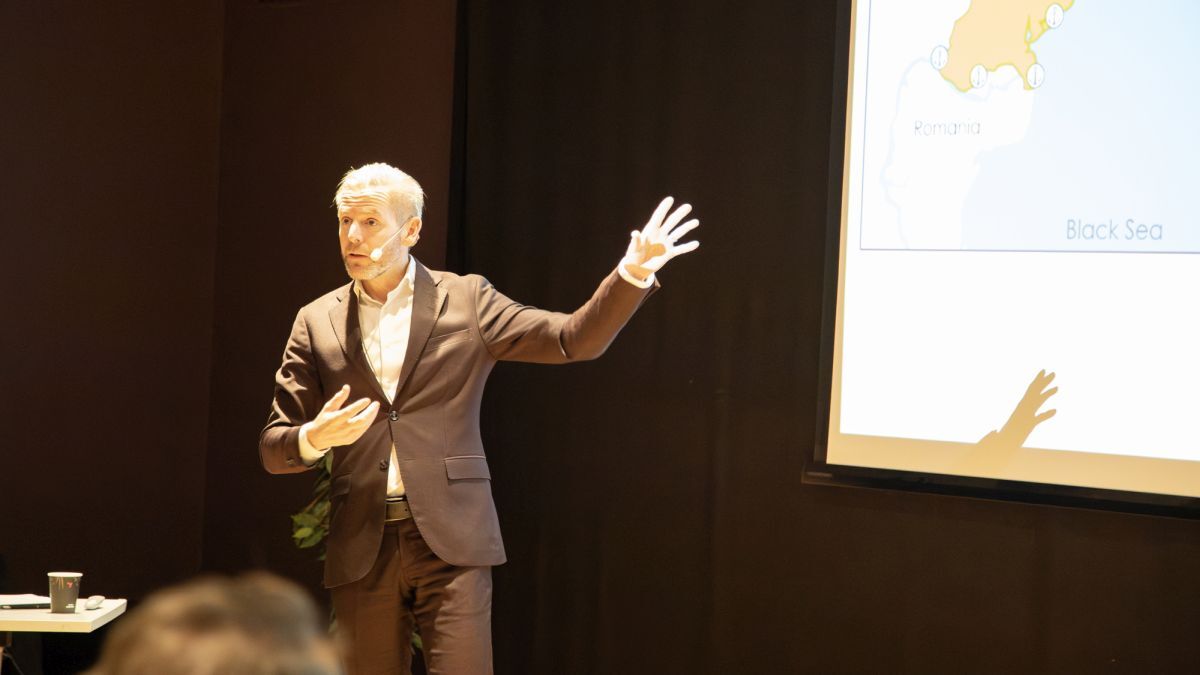
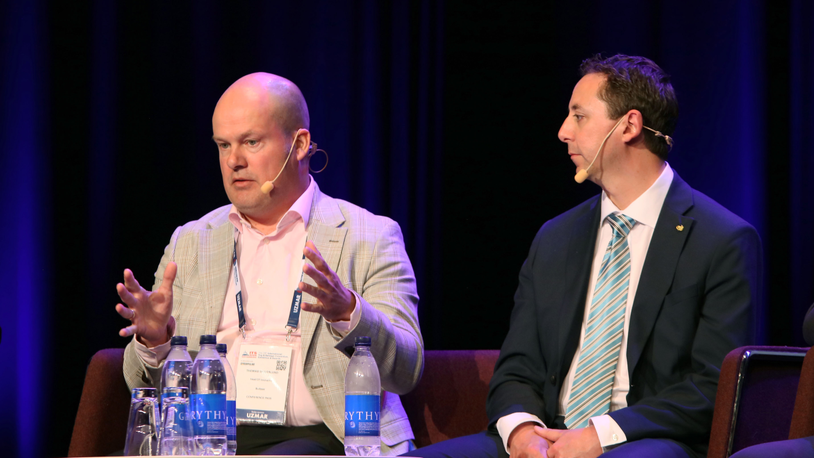
Speaking at maritime-intelligence’s Executive Meeting 2025 in Gothenburg, Erik Froste detailed how Ukrainian ports achieved a remarkable increase in grain exports from 32M to 85M tonnes annually, despite Russian attempts to blockade operations through systematic infrastructure attacks.
Mr Froste is the chief executive of Swedish Road Ferries and head of Trafikverket’s ferry operations. He was assigned by the European Union Advisory Mission Ukraine to support Ukraine’s maritime sector during the ongoing conflict. His role involved conducting maritime safety analyses, advising on reconstruction efforts, and helping Ukraine align its maritime infrastructure with EU standards.
His analysis at the conference highlighted Ukraine’s strategic adaptation after Russia’s withdrawal from the Black Sea Grain Initiative, developing alternative export corridors through Romanian and Bulgarian territorial waters while maintaining operations under continuous drone and missile threats. "Port operators had to replace office windows three times in four months due to blast damage, yet operations continued," he noted.
Testament to Ukraine’s continued resilience is its maritime sector maintains significant capacity despite war conditions, with 6,500 students still attending maritime universities compared with pre-war levels of 7,500, while maintaining a pool of 100,000 qualified seafarers.
The presentation revealed striking parallels between Black Sea and Baltic Sea maritime frameworks, although it did note the Black Sea’s significantly greater depth – averaging 1,250 m versus 60 m – has helped minimise environmental impact from conflict-related oil spills.
Analysis suggested potential long-term regional realignment, with Ukraine, Moldova and Georgia’s European Union aspirations potentially creating a NATO/EU-dominated Black Sea environment comparable with current Baltic Sea arrangements.
Port operations continue despite scheduled power outages requiring six-hour rotations, with facilities adapting through generator deployment, though creating significant urban noise pollution from backup power systems.
Mr Froste highlighted how Ukrainian ports developed novel air raid shelter systems directly adjacent to vessel loading operations, enabling continuous cargo handling despite frequent aerial attacks.
Despite war conditions, Odessa maintains regular commercial activity with restaurants and shops operating normally until 11 pm curfew, though visitors must restrict movement to paved areas due to mine risks.
Significant post-war environmental challenges await. Mr Froste highlighted an urgent need for oil collection equipment deployment across Black Sea nations once hostilities cease.
The presentation underlined Ukraine’s potential future role in European maritime operations, particularly focusing on its extensive inland waterway network. This network, including the Dnieper River, can accommodate vessels up to 200 m in length and allows navigation close to Kyiv.
Sign up for Riviera’s series of technical and operational webinars and conferences:
- Register to attend by visiting our events page.
- Watch recordings from all of our webinars in the webinar library.

Related to this Story
Events

Maritime Regulations Webinar Week
 16 Dec 2025
 GMT - ONLINE
Floating energy: successfully unlocking stranded gas using FLNGs and FSRUs
24 Feb 2026GMT - ONLINE
© 2026 Riviera Maritime Media Ltd.


