


Business Sectors
Events

Floating energy: successfully unlocking stranded gas using FLNGs and FSRUs
 24 Feb 2026
 GMT - ONLINE
Contents
Register to read more articles.
Hybrid thinking is shaping the cruise ships of the future
Maritime engineering and high-end hospitality come together in the interior design of MSC Group’s latest ships


When MSC Group launched the first vessel in its luxury lifestyle ocean travel brand in 2023, it threw out the traditional ship design rule book and went back to the drawing board.
As Explora Journeys continues to grow, passengers can expect to see more design evolution when Explora III – the third of six ships to enter service by 2028 – launches in 2026.
While keeping full details under wraps, MSC Cruises director, architecture and design, Antonio Di Nenno, tells Passenger Ship Interior & Refurbishment Review, “Explora III will introduce changes in materials, colours, and FF&E, along with some entirely new areas and concepts designed to further improve and evolve the guest experience. Our philosophy is continuous refinement, always raising the bar to make each new vessel feel even more special.”
He says from the outset, the interior design team adopted a different approach when they created the blueprint for 922-passenger, 63,900-gt Explora I.
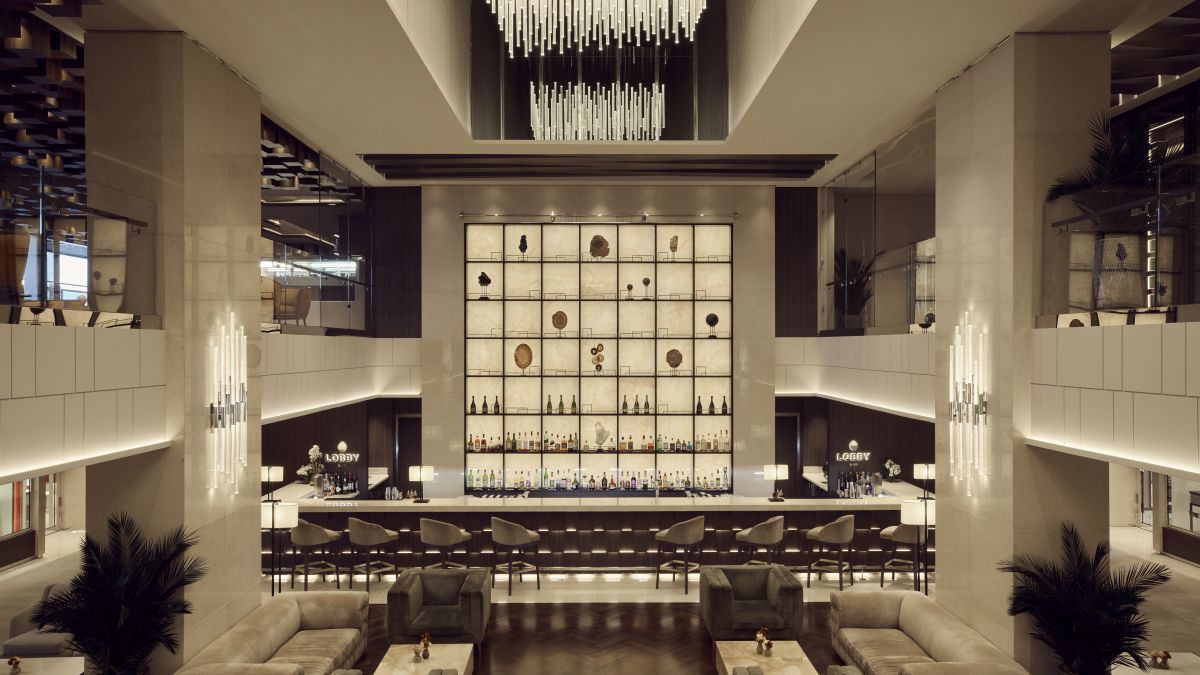
“At Explora Journeys, our interiors were conceived with a very different mindset, not to feel like a ship at sea, but like a refined five-star boutique hotel, whose address is the ocean and, above all, a home at sea,” he says.
“We wanted guests to walk on board and immediately recognise a familiar, welcoming atmosphere, with the same intimate feeling they associate with their own living spaces. That meant prioritising warmth, comfort and residential detailing over traditional maritime cues. We emphasised space, proportion, layered lighting and materials that convey intimacy and elegance. It’s telling that when the first brochures for Explora I appeared, many people assumed they were looking at images of a luxury hotel, not a cruise ship, which captured exactly what we intended.”
Mr Di Nenno says the greatest challenge was achieving an intimate, home-like feeling within the strict technical constraints of shipbuilding.
“Luxury hotel finishes and intimate proportions are not easily reconciled with safety rules, weight limits and the scale of a ship,” he continues. “We overcame this through bespoke joinery, material innovation and careful acoustic and colour strategies, ensuring spaces feel calm and familiar, with the ocean itself acting as a natural backdrop.”
Explaining how the family owned group collaborated with leading architectural studios and prestigious furniture designers, including Martin Francis, SMC Design, AD Associates, De Jorio Design International, Molteni&C and Manutti, Mr Di Nenno says MSC integrates their contributions into what he describes as a coherent whole.
“As the internal design department, we were heavily involved from the very beginning, in the drafting, definition, and particularly the interior design of the suites,” he says. “Our role is to ensure consistency across details, flow and guest experience, so that the different design inputs come together seamlessly. This careful integration is what makes the final product feel fluid, balanced, and to bring to life the brand vision as envisioned by the Aponte Vago family.”
He says Explora Journeys was designed to feel distinct from the group’s contemporary brand, and any aspects drawn from MSC Cruises was largely behind the scenes, such as maritime expertise, operational flow, service logistics, and safety integration.
“The look and feel was always meant to be different, emphasising intimacy and serenity,” continues Mr Di Nenno. “That’s why the design relies on neutral tones that calm the eye and frame the ocean views as the main colour of the experience. Unlike MSC Cruises’ spaces, such as the Yacht Club, Explora Journeys’ suites and lounges were curated to create a familiar, residential quality. Elegant, understated and centred on the homes at sea concept.”
The Explora Journeys’ fleet, constructed at Italy’s Fincantieri shipyard, represent a €3.5Bn (US$4.1Bn) investment and Mr Di Nenno says a key element of the design is creating ships that are both contemporary and ageless.
“When we begin designing a ship we have to consider future trends from the outset,” he explains. “Before starting, we carried out deep research to understand where the design was heading, and the choices we made for Explora I remain fully aligned with the evolution of design today and for the coming years. From the first sketches, sustainability was a key driver together with the idea of timelessness. Rather than chasing short-lived fashions, we focused on understanding the broader directions and framing them in a way that feels enduring. This approach allows our ships to stay relevant, elegant and responsible over time.”
Turning to MSC Cruises, the line’s third LNG-powered World-class vessel, 6,758-passenger, 215,863-gt MSC World Asia will launch in December 2026. When its sibling MSC World America debuted in 2025, it showcased design tweaks geared to the North American market, which differentiated it from its predecessor MSC World Europa.
MSC World Asia is being constructed in France at the Chantiers de l’Atlantique shipyard, and further changes are being made.
“While I can only speak in broad terms, World-class vessels typically emphasise larger, grandiose public spaces and distinctive feature elements that act as landmarks for guests,” says Mr Di Nenno. “Expect generous spaces and social hubs, carefully curated F&B options and new concepts, design references and artwork that speak to the ship’s intended market and itinerary. Attention to scale, bold material moments and clear zoning to help guests navigate will be defining features.
“Differences are usually driven by route, target guest profile and cultural programming. While the World-class siblings share a common architectural DNA and operational systems, each ship has bespoke interior expressions, from specific F&B concepts and localised artwork to variations in public space programming, so passengers get a sense of familiarity alongside unique touches tailored to the ship’s identity.”
While MSC’s interior design continues to evolve over both brands, one constant that is central to every decision is sustainability.
Mr Di Nenno says, “We’re moving toward materials with lower embodied carbon, circular design principles that favour repairability and modular replacement, and specifying low-VOC, recyclable finishes. Sustainability also influences operations, such as lightweight assemblies that reduce fuel consumption, and systems that extend the lifetime of furniture and fabrics. In short, sustainability isn’t an add-on, it’s embedded in the design brief from concept stage through procurement and maintenance planning.”
In terms of future design innovations, he says there is a continued push toward flexible, multi-use spaces that can adapt to different programming, smarter integration of wellness infrastructure and a growing use of digitally enabled design tools to simulate guest flows and acoustics earlier in the design process.
“We’re also experimenting with new fabrication methods, new materials and modular systems that speed and innovate construction while allowing higher levels of finish,” he adds.
Summing up, Mr Di Nenno says, “MSC’s approach is pragmatic and innovative, ambitious in scale but disciplined in execution. The cruise division values guest experience first, but pairs that with operational realism and a willingness to experiment, whether that’s new zones that simplify wayfinding or distinctive F&B districts. In short, design that serves both people and process, and evolves from lessons learned across the fleet.
“One important trend is the convergence between hospitality and maritime design. Guests now expect the quality, privacy and service models of boutique hotels while still wanting the social energy unique to ships. For operators and designers, this means hybrid thinking, combining durable maritime engineering with the nuance of luxury hospitality. Finally, design will continue to be a strategic differentiator for brands. Those who invest in thoughtful spaces that respect sustainability and human wellbeing will lead the next generation of cruising.”
Sign up for Riviera’s series of technical and operational webinars and conferences:
- Register to attend by visiting our events page.
- Watch recordings from all of our webinars in the webinar library.

Related to this Story

Events

Maritime Regulations Webinar Week
16 Dec 2025GMT - ONLINEFloating energy: successfully unlocking stranded gas using FLNGs and FSRUs
24 Feb 2026GMT - ONLINE
© 2024 Riviera Maritime Media Ltd.


