


Business Sectors
Business Sectors
Events
Contents

Improved safety can occur by accident


While regulation provides a template for a common approach to safety investigations, in practice, methods and approaches will often vary, says John Ramage, director of worldwide business operations for International Registries, Inc. (IRI), the US headquartered company that administers the ship registry of the Marshall Islands.
“IMO resolution A849(20), the Code for Investigation of Marine Casualties and Incidents was incorporated into resolution MSC.255(84), the Adoption of the Code of the International Standards and Recommended Practices for a Safety Investigation into a Marine Casualty or Marine Incident (Casualty Investigation Code) and entered into force on 1 January 2010 and has been incorporated into SOLAS Chapter I-21,” says Mr Ramage.
This code has been incorporated into the Marshall Islands Rules for Investigations and Hearings. The aim of the code is to promote a common approach to investigations and promote cooperation between states. Ideally marine casualty investigations should be separate from and independent of any other form of investigation, however in reality, this is not always possible to achieve.
Equally difficult in practice can be joint investigations. Joint investigations can be carried out with the coastal state or the flag state of the “other” vessel. In practice, this again can raise issues of liability and as a result is not always appropriate. This can be particularly sensitive if the legal processes of the other vessel can result in the conviction and incarceration of seafarers. Most flag states are very concerned about the arrest and criminalisation of seafarers. In such cases, one of the flag states may not wish to participate in such a joint investigation.
The object of the flag state investigation is not to apportion blame but to identify the root cause of the incident and to promote safety of life and property at sea as well as protection of the marine environment. Although investigations are a reactive function, it is the conclusion and recommendation that can save lives, save property and avoid pollution in the future. A thorough investigation and well considered recommendation can make a great contribution to safety at sea. The registry’s job is to try and conclude the investigations and submit them to IMO as fast as possible.
While accident investigation may be a reactive function, the registry, of course, seeks to be as pro-active in the safety sphere as possible. Applicant vessels are vetted by IRI’s vessel administration division in co-operation with the registry’s fleet operations division, which employs some 15 marine safety inspectors, who supervise an international network of approximately 300 contract surveyors.
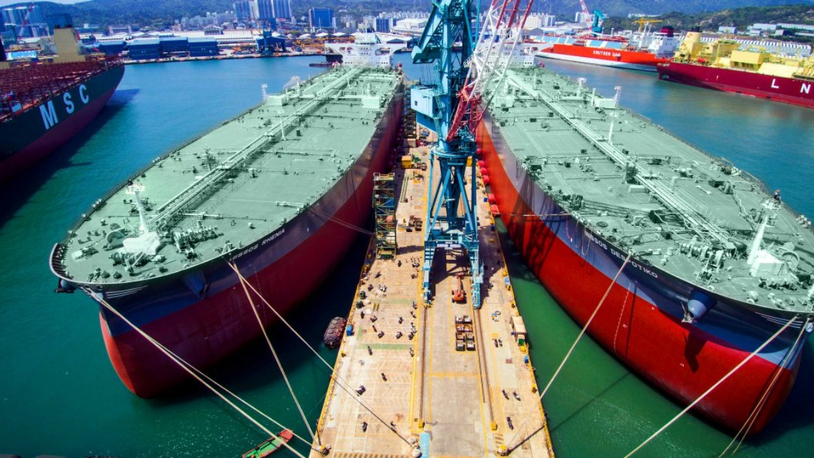
Approximately one-in-three applications are rejected. While this might imply commercial suicide, the registry has, in fact, enjoyed an average annual growth of 23 percent annually and is the world’s third largest open registry, with more than 54 million gt and 2,110 registered vessels. Tankers are the single largest constituency by vessel type. The Marshall Islands also remains the only major open registry to have been included on the US Coast Guard’s Qualship 21 roster for four years in succession.
To reinforce standards and appreciate how to balance commercial operations with regulatory requirements, the registry looks to its Marshall Islands Quality Council. The Council’s 42 members, which are representative of the total maritime chain and include shipowning, management, class, finance and legal interests, meets twice a year to review registry safety, environmental and security performance, as well as general input and overview.
To stay close to clients, a deliberate decision was taken to internationalise the registry several years ago, and this has seen a series of worldwide offices (currently 20) opened around the world. A technology platform has been adopted to enable each office to register a vessel, record a mortgage, incorporate a company and service clientele without having to consult headquarters. TST





Related to this Story


Events

Maritime Regulations Webinar Week
 16 Dec 2025
 GMT - ONLINE

Floating energy: successfully unlocking stranded gas using FLNGs and FSRUs
24 Feb 2026GMT - ONLINE
© 2026 Riviera Maritime Media Ltd.


