


Business Sectors
Business Sectors
Events
Contents

Register to read more articles.
Industry grapples with integration of new satellite systems and digital technologies
Maritime connectivity providers and technology experts have highlighted significant challenges in integrating emerging satellite systems and digital technologies on offshore support vessels, while debating the industry’s approach to cyber security and data management


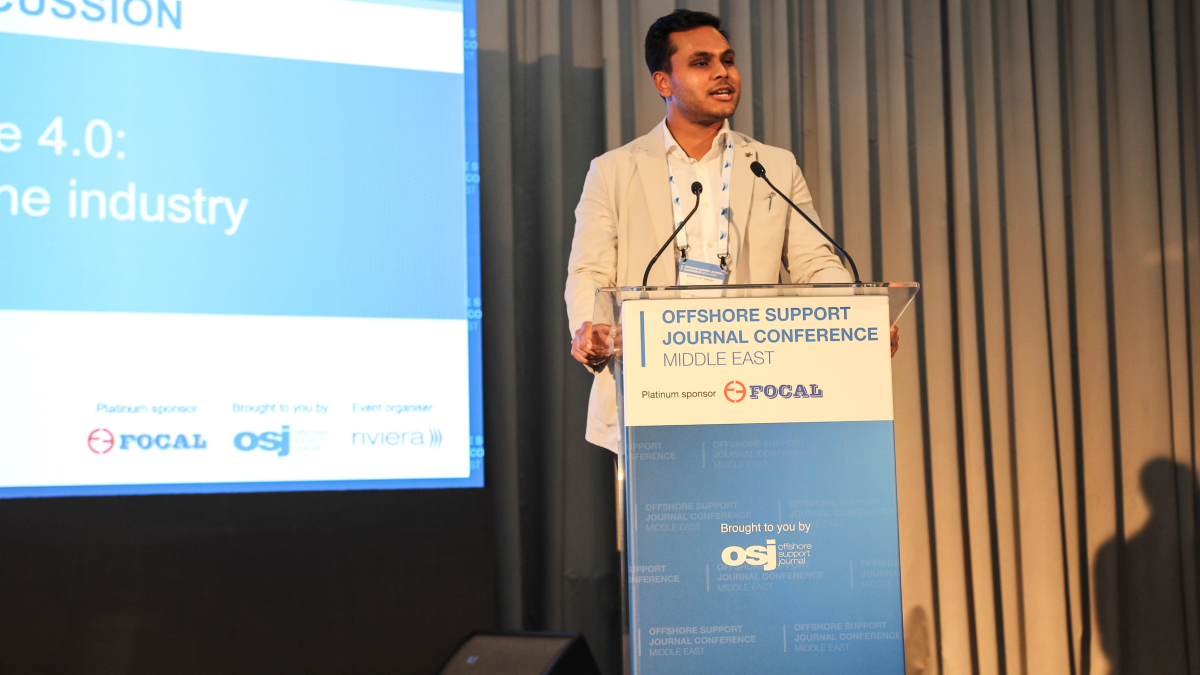
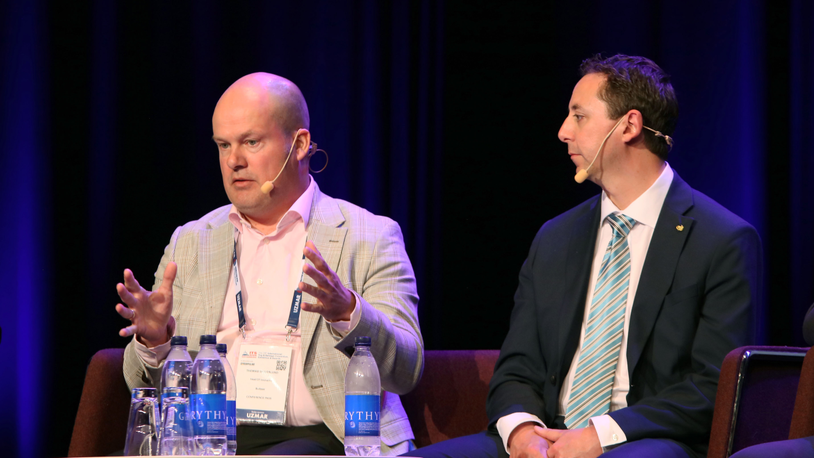
At Riviera’s Offshore Support Journal Conference Middle East, senior executives from leading maritime technology firms addressed critical issues surrounding the deployment of low earth orbit (LEO) satellite systems, network security and the evolution of vessel connectivity solutions.
Marlink’s Roger Harfouch emphasised that while LEO deployment is technically straightforward, bandwidth management and security pose significant challenges. "With nearly 4,000 customers on the network, service availability is robust, but bandwidth limitations require careful traffic management," he noted.
Inmarsat Maritime’s Audra Drablos highlighted the importance of understanding service limitations and differentiating between services designated for entertainment purposes versus operational use.
The discussion revealed critical insights about hybrid connectivity solutions.
Traditional geostationary (GEO) satellite services remain essential for maintaining consistent service quality, with providers maintaining full Ka-band capacity alongside newer LEO systems. This approach ensures seamless transitions between coverage areas while maintaining encrypted operational traffic.
Maritime Expertise’s Ranvijay Singh introduced blockchain technology as a potential solution for data security and transparency across stakeholder networks. "Blockchain ensures data cannot be corrupted, though complete transparency requires stakeholder buy-in," he explained, acknowledging potential industry resistance to full data visibility.
Cyber security emerged as a paramount concern, particularly regarding operational technology (OT) networks. "OT remains the most vulnerable point for attacks," Mr Harfouch warned, citing recent incidents where inadequate segregation between IT and OT networks created security breaches.
The discussion also addressed artificial intelligence’s role in maritime operations, with Caterpillar Marine’s Nathan Ankersen emphasising the importance of human oversight. "If you’re only trusting machine data or AI data, you are vulnerable" he cautioned, stressing the necessity of historical data and human validation in machine learning models.
Data management challenges received significant attention, particularly regarding AI implementation. Mr Singh revealed typical vessel operational data volumes range from 300 to 1,000 megabytes monthly, challenging assumptions about bandwidth requirements for digital transformation initiatives.
Also highlighted were industry tensions between rapid technological adoption and operational reliability requirements. Remote operations, including ROV control from OSVs, demand ultra-low latency connections, with LEO systems’ proximity to Earth (approximately 1,000 km versus GEO’s 36,000 km) offering significant advantages.
Sign up for Riviera’s series of technical and operational webinars and conferences:
- Register to attend by visiting our events page.
- Watch recordings from all of our webinars in the webinar library.

Related to this Story


Events

Maritime Regulations Webinar Week
 16 Dec 2025
 GMT - ONLINE
Floating energy: successfully unlocking stranded gas using FLNGs and FSRUs
24 Feb 2026GMT - ONLINE
© 2026 Riviera Maritime Media Ltd.


