


Business Sectors
Business Sectors
Events
Contents

Register to read more articles.

USVs and AI help protect subsea infrastructure
National governments can use unmanned vessels, underwater robots, artificial intelligence and other autonomous technologies to protect critical subsea infrastructure


Governments and offshore operators worldwide need to respond to the growing threats to subsea cables and critical national infrastructure by investing in autonomous underwater and unmanned surface vessels (USVs) for security.
Uncrewed vessels and subsea robotics can anticipate, detect and deter hostile activities to subsea cables, pipelines, offshore platforms and production infrastructure.
Artificial Intelligence (AI) can navigate USVs and AUVs and process huge volumes of data to speed up analytics – helping authorities to protect critical infrastructure.
Pipelines and cables are increasingly being threatened, with ship anchors and other cutting devices being deployed. This was evident when cables and pipelines in the Baltic were damaged in the final months of 2024, and a trunk gas pipeline between Russia and Germany was previously damaged.
MSubs subsidiary Zero USV founder and managing director Matthew Ratsey is calling on governments to use USVs, AUVs and AI to help protect subsea infrastructure. He says autonomy must be at the heart of their reaction to growing threats to subsea critical national infrastructure and offshore installations.
Mr Ratsey said adversaries have become more adept at exploiting weaknesses in existing systems, which means governments need to embrace cutting-edge technology.
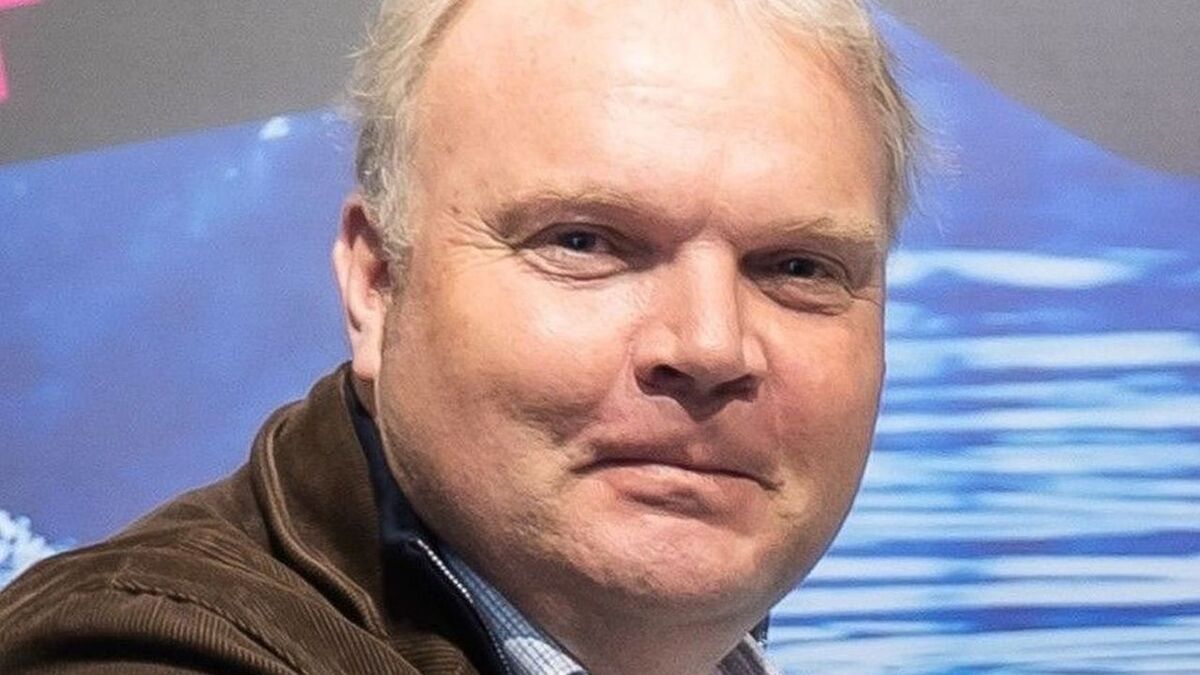

“We are dealing with a rapidly evolving threat landscape, in which adversaries are using advanced technologies to target national and international subsea infrastructure and to test subsea resilience,” said Mr Ratsey.
“From undersea cables and pipelines to offshore platforms, the range of vulnerabilities is expanding rapidly. To ensure we remain firmly on the front foot against these threats, we need to embrace the latest leading-edge technologies, not least autonomy and AI, which are force multipliers when resources are already desperately stretched.”
Other technologies are vital for operating USVs, AUVs and subsea robotics, including electric-powered propulsion, long-life marine batteries, satellite and coastal communications, and advanced sensor arrays.
“By harnessing real-world expertise from maritime operators and pairing it with cutting-edge innovations – particularly autonomous vessels and marine intelligence – we can anticipate, detect and deter hostile activities,” said Mr Ratsey.
“Working closely with governments, the maritime sector can help shape robust, future-proof defence strategies that do not leave us constantly reacting to new tactics.”
Surveillance needs to be increased, along with surveying offshore and subsea infrastructure, and AI used to rapidly process the resulting data to detect threats and issues quickly.
“This also means developing policies that encourage much more collaboration, ensuring the industry has access to advanced technology and training, and maintaining regular dialogue between all stakeholders,” said Mr Ratsey. “By building on this shared commitment, we can keep our seas safe and protect the infrastructure that underpins our economy and national wellbeing.”
USV and AI developments
Zero USV worked with another MSubs’ subsidiary, Marine AI, to design, manufacture and charter unmanned vessels for civil, commercial and military markets.
They jointly developed the Mayflower Autonomous Ship Programme, which successfully sailed an unmanned vessel across the Atlantic, from the UK to Canada, and the Oceanus series of USVs.
Zero USV’s Oceanus12 unmanned vessel is a 12-m, fully autonomous USV designed for over-the-horizon autonomous operations. It has twin, commercially rated, 40-kW electric drives linked to twin 21-kW lithium batteries and is powered by two 22-kW marine diesel generators powering a 400-V system.
Oceanus12 has an operational range of around 2,200 nautical miles with a cruising speed of 7 knots, or 3,500 nautical miles at a speed of 3-4 knots for surveys.
Marine AI uses artificial intelligence to optimise maritime capabilities by drawing on decades of experience in manned and unmanned marine vehicle design, manufacture and operations, coupled with experience in automation and autonomous systems, and software architecture.
Riviera’s Offshore Support Journal Subsea Conference 2025 will be held in London on 3 February 2025. The programme will address how the next generation of vessels are evolving to meet the changing demands of offshore operations. Use this link for more information and to get tickets to join this prestigious event.
Riviera’s Maritime Hybrid, Electric & Hydrogen Fuel Cells Conference & Exhibition returns to Bergen on 14-16 October 2025. Use this link to get more information and tickets to this international event. We’re now accepting abstract submissions for papers. Please submit your ideas to Sue Woolley at sue.woolley@rivieramm.com. For any enquiries about this event, please contact Indrit Kruja or Rob Gore.




Related to this Story

Events

Maritime Regulations Webinar Week
 16 Dec 2025
 GMT - ONLINE

Floating energy: successfully unlocking stranded gas using FLNGs and FSRUs
24 Feb 2026GMT - ONLINE
© 2026 Riviera Maritime Media Ltd.


