


Business Sectors
Business Sectors
Events
Contents

Latest generation tugs offer enhanced manoeuvrability
Advances in hullform, power and towline technology are providing escort tugs with superior performance and safety


Advances in hullform, power and towline technology are providing escort tugs with superior performance and safety
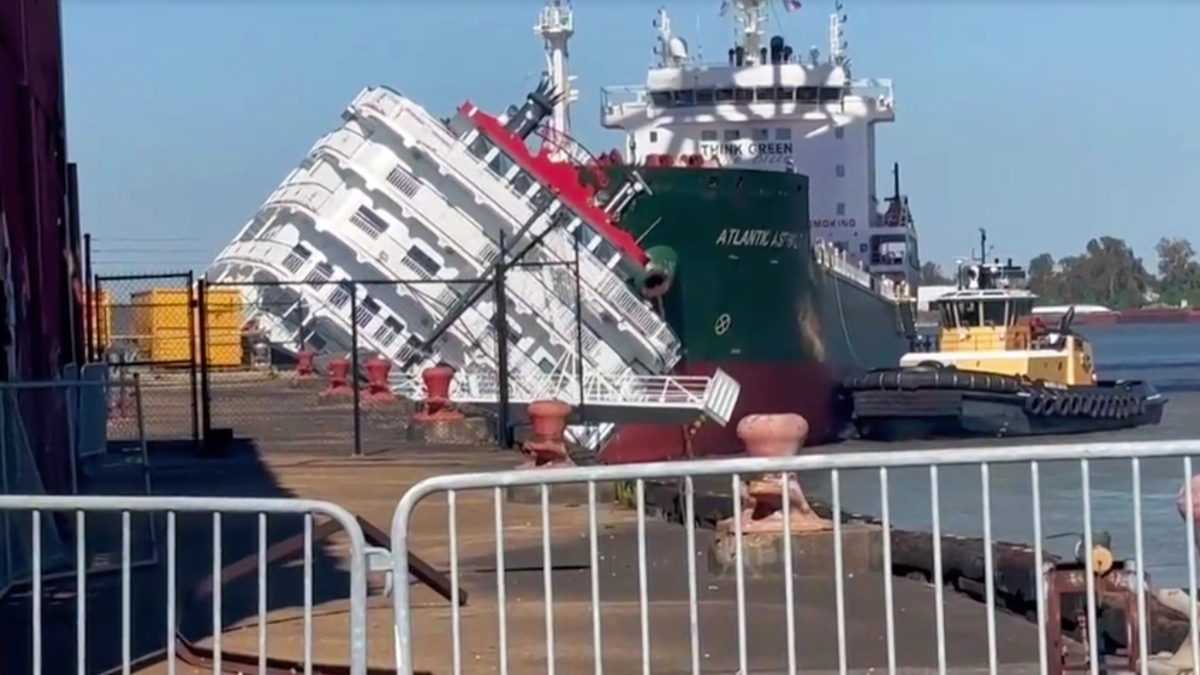
The traditional danger of ‘deck immersion as last warning before capsizing’ is claimed to have been designed out of the Carrousel tug, a new concept developed by Holland-based Novatug. Carrousel towing systems have been supplied for two Multraship Towage & Salvage vessels set for delivery later this year. “The Carrousel is nothing more than a rotating ring, which makes it possible to rotate a towing winch or towing hook 360 degrees around the accommodation without any restriction,” says Robert Rodenburg, naval architect at Novatug.
“This feature makes it possible to perform all kinds of manoeuvres with the tug that are not possible with conventional designs,” he says, “for example, full transverse braking behind an escorted vessel. During such manoeuvres, the tug uses its hull to slow down or steer the assisted vessel. Relative low engine power is required for such operations, far less than on conventional types. The tug is just kept in position and it functions as a floating anchor. Depending on the speed, dynamic forces may exceed the static bollard pull of the tug.”
Towing operations can be freely changed from bow to stern, and the new design’s operation is characterised by an ability to rotate the hull direction free from the towing wire rather than needing to keep the hull direction in line with the towing wire and rotating the thrust force around. The use of hydrodynamic forces instead of or in addition to propulsive power offers a significant reduction in operational costs due to lower fuel consumption and shorter running hours, says Novotug. This also results in less environmental pollution.
The new tugs will have a static bollard pull of 80 tonnes but the dynamic bollard pull is expected to be far above 100 tonnes. One retrofitted tug is already in operation in the Western Scheldt Area of the Netherlands where the new Multraship tugs will also operate. The Carrousel is independent of propulsion type and can therefore be applied to any tug design or to a wide variety of smaller workboats.
Canadian naval architect, Robert Allan, has taken a different approach to improving stability. The first RAstar class tug has entered service for Svitzer at the Dragon LNG terminal in Milford Haven, UK. Svitzer Lindsway was built by Freire Construcciones Navales of Spain in 2008 and has an ahead bollard pull of 107 tonnes, 105 tonnes astern and a free running speed of 13.7 knots. The hullform incorporates a sponson on the upper hull sides and when the tug is heeled over under the influence of the towline during escort operations, the ‘downhill’ side of the sponson is submerged and a large righting force is generated. This increases stability and therefore towline force, says Robert Allan.
Seakeeping ability has improved with the addition of the sponsons. The RAstar tug design provides significant reductions in roll amplitude and roll accelerations (approximately 60 per cent lower than traditional hull forms), making it safer and more comfortable for the crews who are now being asked to conduct docking operations in sea states of 3m significant wave height.
A larger, 39m Robert Allan design joined the Milford Haven operation in January. Svitzer Kilroom is a RAstar 3900 class tug with the same sponson design as the five smaller sister vessels, including Svitzer Lindsway, being built by Freire. Svitzer Kilroom has an ahead bollard pull of 117 tonnes maximum, 113 tonnes sustained, 113 tonnes maximum bollard pull astern, 107 tonnes sustained and a free running speed of 15.7 knots.
In January this year, a Foss Maritime hybrid tug commenced operations in the Los Angeles and Long Beach ports. The hybrid is similar to its sister, Dolphin-class tugs but runs on batteries coupled to diesel generators to provide quieter, cleaner and more fuel efficient operation. The engineroom has been modified to accommodate two 670hp battery packs and two 335 bhp (246kW) generators, and the power management system will meet the required power with the most efficient combination of batteries, generators and main engines.
The modular design allows for the upgrading of batteries and other advancements as they become available. This lengthens the lifespan of the vessel and the design can be adapted for retrofit. TST





Related to this Story


Events

Maritime Regulations Webinar Week
 16 Dec 2025
 GMT - ONLINE

Floating energy: successfully unlocking stranded gas using FLNGs and FSRUs
24 Feb 2026GMT - ONLINE
© 2026 Riviera Maritime Media Ltd.


