


Business Sectors
Business Sectors
Events
Contents

Register to read more articles.
Metocean data supports voyage-based stowage optimisation to prevent container losses
A classification society will use weather and ocean data to deliver advice to containership operators on safe onboard stowage to reduce risk of container accidents


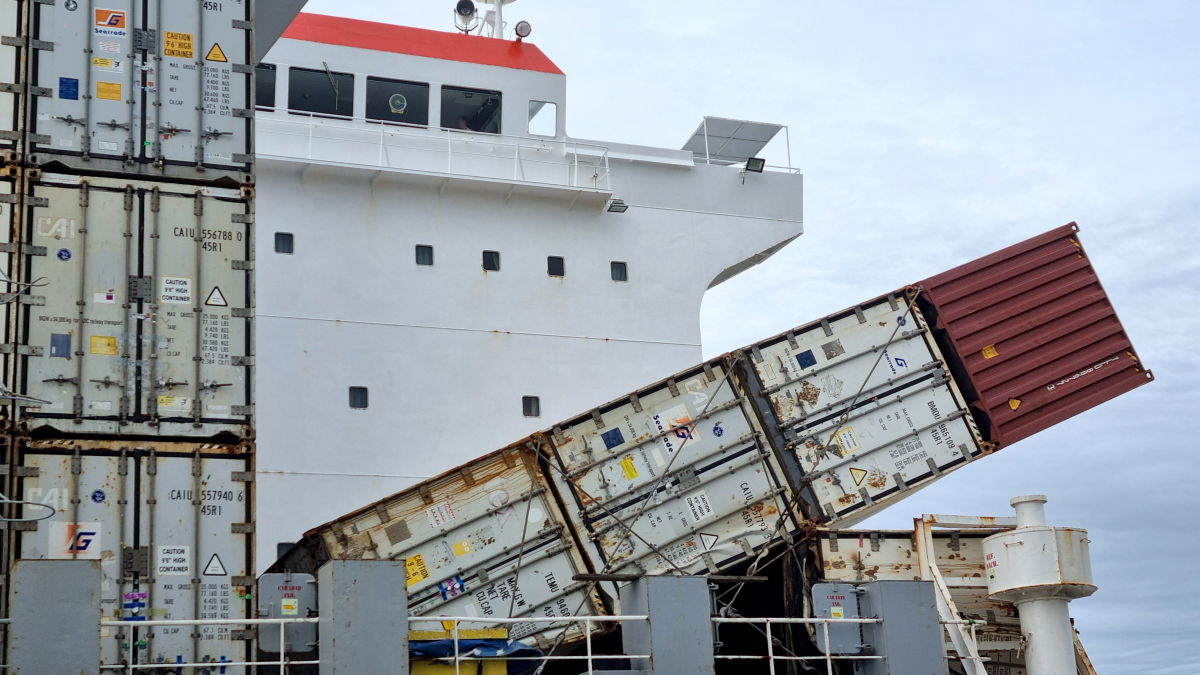
Extreme weather and sea conditions can result in loss of containers overboard and damage to ships if operators have not stowed cargo tightly enough or planned voyages better to avoid the risks.
Multiple factors can affect shipping routes and raise the risk of cargo losses, including weather disruption, geopolitical tensions, tightening environmental regulations and changing trading patterns.
Due to the growing operational uncertainty in container shipping, operators are challenged to maintain schedules and optimise container stowage, which in a few cases has led to cargo spilling overboard.
Lloyd’s Register (LR) is expecting to reduce these risks and improve container stowage with its RouteFlex application, which uses metocean data to provide stowage advice to containership operators.
“Optimal stowage is no longer just about maximising capacity,” said Lloyd’s Register director for global container shipping, Nick Gross.
“It is about flexibility, resilience and the ability to adapt safely when conditions change.”
He said building flexibility into stowage planning has become essential for modern fleet operations.
LR developed RouteFlex in response to growing operational uncertainty in container shipping, where weather disruption, geopolitical events, route diversions and changing trading patterns increasingly challenge traditional voyage planning.
It enables dynamic, route-based stowage optimisation by using metocean datasets across various trading regions, enabling operators to optimise stowage stack by stack and leg by leg for a voyage.
“In today’s operating environment, route changes can occur with little warning,” said Mr Gross.
“RouteFlex allows operators to understand the implications of those changes immediately, helping them make informed decisions while ensuring cargo remains within safe operational limits.”
It can be used as a stand-alone application, through LR’s LashRightUX software, or integrated directly into approved third-party lashing software.
RouteFlex supports both online and offline operation, ensuring crews and shore-based teams continue using it regardless of connectivity.
“Instead of relying on worst-case weather assumptions for an entire route, operators can optimise the stowage for each voyage leg, unlocking hidden cargo capacity and transforming unavoidable route diversions into a distinct operational advantage,” said Lloyd’s Register global head of hull-structures technology, Hasan Ocakli.





Related to this Story


Events

Maritime Regulations Webinar Week
 16 Dec 2025
 GMT - ONLINE

Floating energy: successfully unlocking stranded gas using FLNGs and FSRUs
24 Feb 2026GMT - ONLINE
© 2026 Riviera Maritime Media Ltd.


