


Business Sectors
Business Sectors
Events
Contents

Register to read more articles.
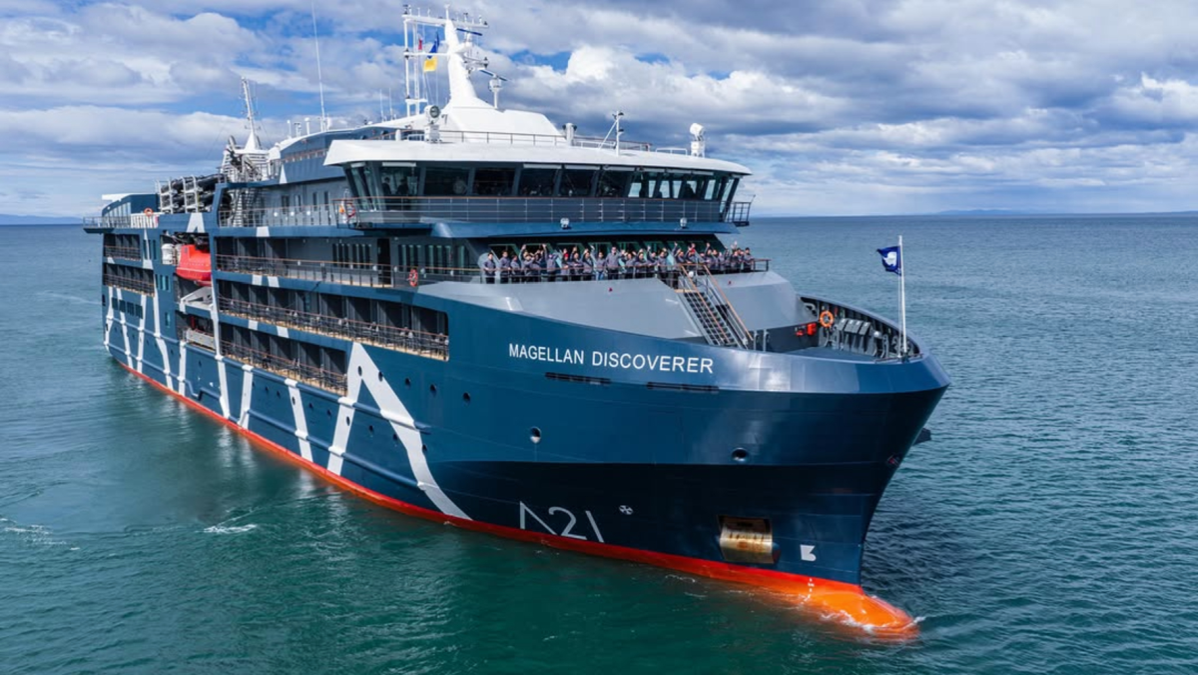
New luxury expedition Polar-class cruise ship immerses guests in cold comfort
Antarctica21’s new hybrid-electric Magellan Discoverer raises luxury tourism and sustainable cruising to a new level, backed by Chilean design and craftsmanship


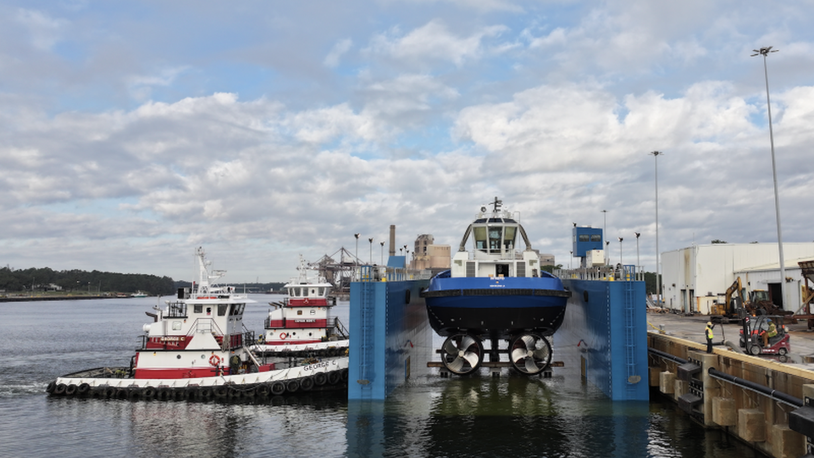
In November, Antarctica21 held a naming ceremony at Punta Arenas, Chile, for Magellan Discoverer, the first hybrid-electric polar-class luxury expedition cruise ship built in the Americas.
Built by ASENAV in Valdivia, Chile, for Antarctica21, a global leader in touristic operations focused on ‘fly & cruise’ expeditions to Antarctica, the vessel sets a new standard for both luxury tourism and sustainable cruising in environmentally sensitive areas.
Germán Schacht, ASENAV’s business development manager, called it “one of our most complex projects” the shipyard has built in its more than 50-year history. The Chilean shipyard has built seven expedition vessels, including Magellan Discoverer’s sister vessel, Magellan Explorer.
“Designed and built entirely in Valdivia for Antarctica21, it is the first hybrid-electric expedition cruise ship in the Americas and following 33 months of total work involving more than 500 people – including staff, contractors and suppliers– its delivery demonstrates that world-class naval projects can be carried out from Chile,” he said.
Mr Schacht said the delivery “cements a relationship of trust.”
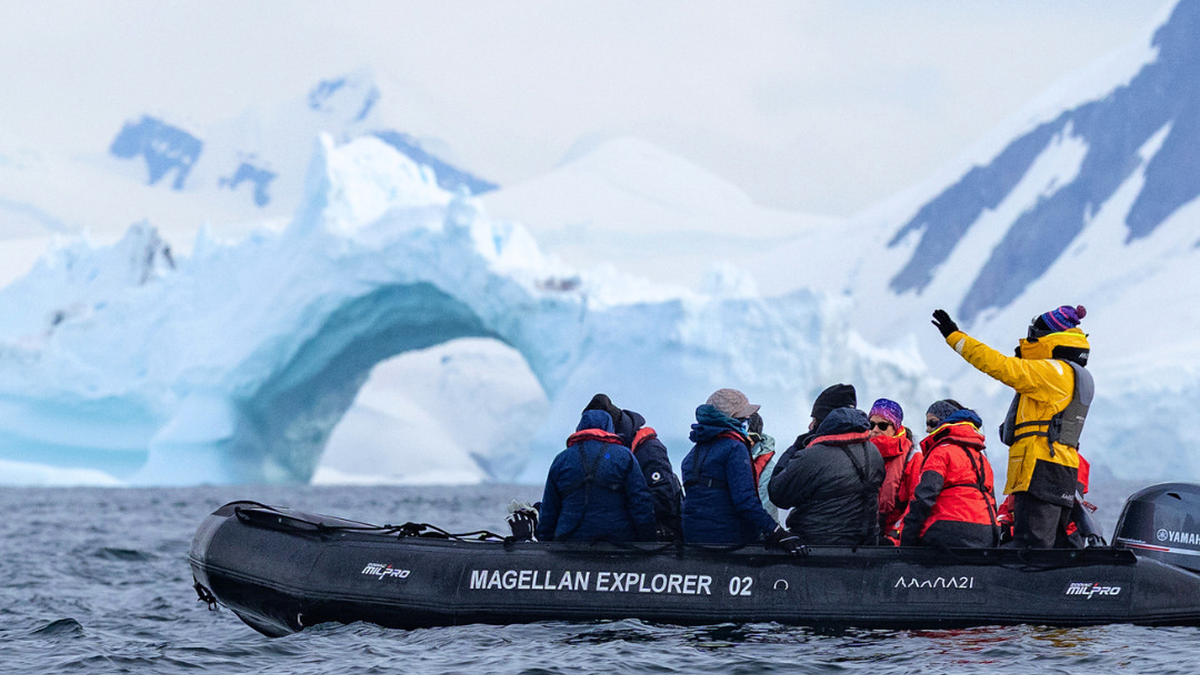
Unlike city-sized, mainstream cruise ships, the seven-deck Magellan Discoverer is designed to provide its passengers with a high level of exclusivity and hospitality. Passengers enjoy a personalised experience, thanks to a high staff-to-guest ratio: the ship accommodates a maximum of 76 guests on Antarctic air-cruises and 96 passengers on traditional sea voyages, and a crew of 67. Operating in the Antarctic Peninsula, South Georgia and the Falkland Islands, the limited passenger capacity adheres to strict Antarctic environmental protocols, allowing all guests to disembark simultaneously for Zodiac excursions and shore landings without waiting in shifts. The boutique cruise experience in the Antarctic is enhanced by the presence of at least 13 expert polar guides.
Tomas Tillberg Design created the interiors, led by managing partner and senior vice president of design, Nedgé Louis-Jacques, and project director David Tovar.
“The Antarctic landscape is never just outside; it is woven into every moment onboard,” said Scandar Jacob, business partner at Antarctica21.
The interior layout provides a sophisticated, yacht-like atmosphere across its decks. Every stateroom has its own private veranda balcony, allowing travellers to step directly into the crisp polar air to view passing icebergs. Each of the cabins is designed with high ceilings, spacious wardrobes, and en-suite bathrooms equipped with heated floors.
“The delivery cements a relationship of trust”
Public spaces allow guests to enjoy the beauty of the Arctic landscape. A glass-enclosed observation lounge offers panoramic views alongside an integrated bar and multimedia setup for expert-led polar lectures. Guests can also access a forward-facing open bow for uninhibited sightseeing, relax in a library filled with polar literature, or work out in a modern fitness gym.
Hybrid-electric technology
The heart of the 94 m, PC6 Polar ice class cruise ship is its hybrid-electric propulsion system. ASENAV worked with systems integrator ABB to provide the vessel’s power and propulsion system.
“This ship is born out of our unwavering commitment to meeting the rising expectations of our guests,” said Antarctica21 president Jaime Vásquez. “Equipped with the latest technology, Magellan Discoverer strengthens our dedication to sustainability while offering seamless comfort for our travellers.”
The complexity of the ship’s propulsion system was one of the biggest technical challenges in the project, Mr Schacht told Passenger Ship Technology.
“The vessel incorporates a diesel-electric propulsion system with two Azipods, generators and battery banks, managed by an advanced energy management system which, together, had to meet Polar Class 6 and IMO Tier III requirements. This demanded highly precise engineering and close coordination with the shipowner, international suppliers and the classification society.”
“The Antarctic landscape is woven into every moment onboard”
ABB supplied the Azipod propulsion system, a hybrid-electric power plant with an onboard DC grid power distribution system, and Corvus Energy battery system. Using stored energy, the vessel can sail on battery power alone for silent, zero-emissions operations in environmentally sensitive areas. Additionally, the onboard DC grid can integrate other energy sources, such as fuel cells, in the future.
The ship’s steerable podded propulsion units rotate 360 degrees, increasing manoeuvrability, safety and operating efficiency. An added benefit of the podded thruster is a 20% reduction in fuel consumption compared to conventional shaft line propulsion, according to ABB.
With underwater radiated noise coming under increasing regulatory scrutiny, the thrusters have the added benefit of reducing underwater noise and vibration. This quiet operation ensures minimum disturbance to the vulnerable polar wildlife it encounters. Built to strict Polar Class 6 (PC6) ice ratings, the double-hulled ship features ice-detecting radar and active retractable stabilisers, delivering exceptionally smooth sailing through ice-infested channels.
When not operating on battery power, the ship’s propulsion power is supplied by two 1,800-kW Everllence four-stroke 6L21/31 Mk2 PLO (Part-Load Optimised) gensets.
Each diesel genset integrates Everllence’s proprietary Low-Pressure Selective Catalytic Reduction (SCR) system to reduce NOx emissions and comply with IMO Tier III requirements.
The highly efficient gensets have a rated fuel consumption of 9 g/kWh at 75% maximum continuous rating. Each engine is equipped with the company’s TCR turbocharging system and the Safety and Control System (SaCoSone) engine control system.
Mr Schacht was understandably proud of what ASENAV had achieved in delivering a 100% Chilean-designed and built vessel of such complexity.
“Coordinating over 500 staff members from a wide range of disciplines, whilst maintaining the quality and safety standards required of a passenger ship set to operate in one of the world’s most demanding maritime environments, put our entire organisation to the test. The fact that we achieved this from Valdivia, on the banks of the Calle Calle River, is part of what makes this project so valuable.”
Many of the lessons learned in designing and building Magellan Discoverer are being applied to the hybrid-electric research vessel ASENAV is building for the Scripps Institute at the University of California, San Diego.
Mr Schacht also pointed to the role of people, a growing supply chain and a supportive government policy in the success of the project and future shipbuilding contracts.
“With this vessel, the shipyard demonstrates that it can design and build highly specialised passenger vessels, incorporating sustainable technology and polar-class capabilities, whilst meeting stringent international standards,” he concluded.




Related to this Story


Events

Maritime Regulations Webinar Week
 16 Dec 2025
 GMT - ONLINE

Floating energy: successfully unlocking stranded gas using FLNGs and FSRUs
24 Feb 2026GMT - ONLINE
© 2026 Riviera Maritime Media Ltd.


