


Business Sectors
Business Sectors
Events
Contents

Register to read more articles.
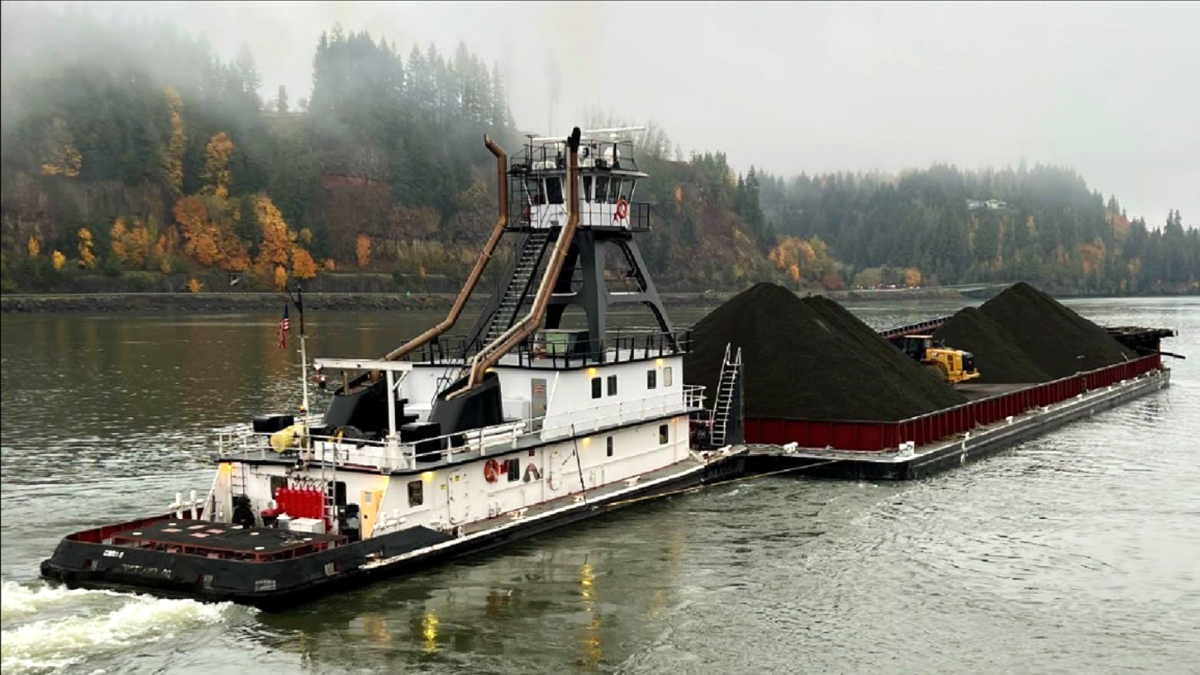
Asleep at the wheel: deckhand dozes, plows into dock
NTSB investigators report fatigued deckhand fell asleep at the helm of a towing vessel, resulting in tow veering off course and colliding with dock, resulting in US$6M in damages


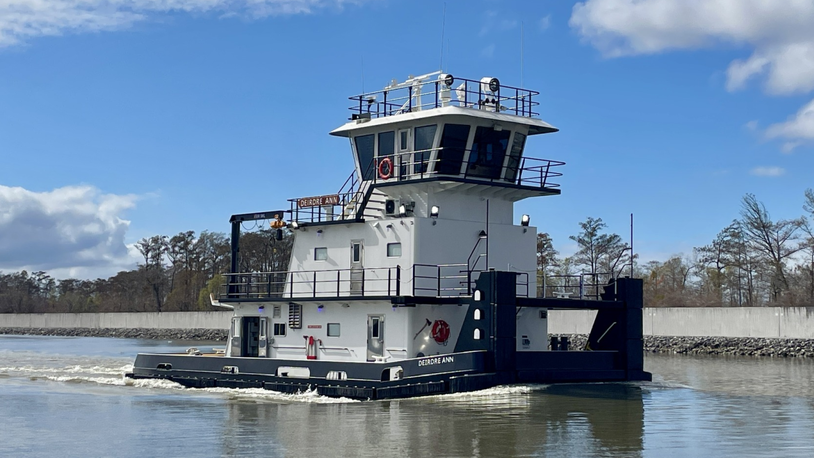
A deckhand steered a towing vessel and its loaded barge into a dock of the Columbia River, after falling asleep at the helm, according to a report issued by the US National Transportation Safety Board (NTSB).
The collision between the tow and Port Westward Beaver Dock caused an estimated US$6M to the dock, destroying about 30 m of the western causeway connecting the Beaver Dock’s main wharf to the shore. Piping, electrical lines, and navigation lights on the causeway and main wharf were also damaged. A pipe on the causeway used for transporting renewable diesel fuel to the main wharf was severely bent but did not rupture. NTSB reported an estimated 525 bbls of diesel were in the pipe at the time of the casualty. Most of the diesel was recovered from the pipe during clean-up and recovery operations. But about 8 litres of fuel spilled onto the dock, half of which entered the river.
The fuel was contained within booms that had been deployed after the casualty, and a portion of the spilled fuel was recovered using absorbent pads. The estimated cost of clean-up, recovery, and repairs to the Beaver Dock was $5,429,274.
At the time of the accident on 12 November 2023, there were three crew on board, two deckhands and one captain. None of the crew were injured.
The 31-m towboat Cindy B was unharmed, but the barge St. John suffered damage. Hull plating at the bow was inset in a relatively small area, and one of two vertical bars that allowed the barge to be pushed by its raked bow was slightly distorted. Additionally, plating on the wave wall at the forward end of the barge deck and on the starboard coaming that surrounded the deck was distorted. On the deck at the bow, a manual winch was pushed aft and its handwheel was damaged. A conveyor belt system on the barge, used for unloading cargo, was also damaged. The cost of repairs to St. John and its equipment totalled US$647,224.
Fatigue factor
At the time of the incident, the deckhand at the helm was experiencing the effects of fatigue, according to the NTSB. The towboat was pushing the loaded deck barge St. John up the Columbia River when the tow gradually veered out of the main channel and struck the Port Westward Beaver Dock.
The deckhand fell asleep during the end of his scheduled night watch, which started at midnight and ended at 6:00. In addition, he was at a low point in his circadian rhythm and had just transitioned from day to night watches, which changed his awake/sleep cycle.
Pilothouse alerter
The pilothouse alerter system in Cindy B did not alarm to wake the deckhand at the helm because a swinging VHF radio microphone was in the motion sensors’ field of view. The swinging microphone tripped the system’s motion detectors and reset the system’s timers.
Cindy B was required by Title 46 Code of Federal Regulations Subchapter M (Towing Vessels) to be fitted with a pilothouse alerter system (sometimes referred to as a watch alarm) to detect when an operator became incapacitated while underway. The pilothouse alerter on Cindy B consisted of two motion sensors, buzzer and horn alarms, indicator and strobe lights, and control circuitry. According to the crew, the system was on whenever the steering system was online. The towboat’s system was designed to activate successively louder audio and more salient visual alerts when movement was not detected in the wheelhouse for periods of three, six, and 10 minutes.
“The deckhand at the helm was experiencing the effects of fatigue”
“A pilothouse alerter, when used as intended, is an effective tool that can help ensure that a crewmember remains awake and vigilant while on duty,” NTSB investigators said. “Established procedures for the operation and use of the system, to include measures to ensure the system cannot be unintentionally reset, help ensure that it operates as designed.”
The NTSB report references studies of shift workers that have shown workers on the night shift, similar to mariners on night watches, have a loss of alertness and increased attentional lapses when compared to dayshift workers. In addition to the general increased risk of accidents during a night watch, research of shift workers has shown that there is a greater chance of incidents during the first two nights of a night shift period.
“Disturbances in awake/sleep cycles caused by transitioning from daytime to nighttime watches or shifts result in increased accidents and occupational mistakes,” investigators said. “Although the impacts of these awake/sleep cycle disturbances cannot be fully mitigated, they can be reduced by tools such as pilothouse alerter systems and by allowing longer downtime between watches/shifts.”
Fatigue is often a factor in marine casualties investigated by the NTSB. Mariners should understand the performance effects of sleep loss and recognise the dangers of working on board a vessel while fatigued.
Tight squeeze: tug damages drawbridge’s fendering system
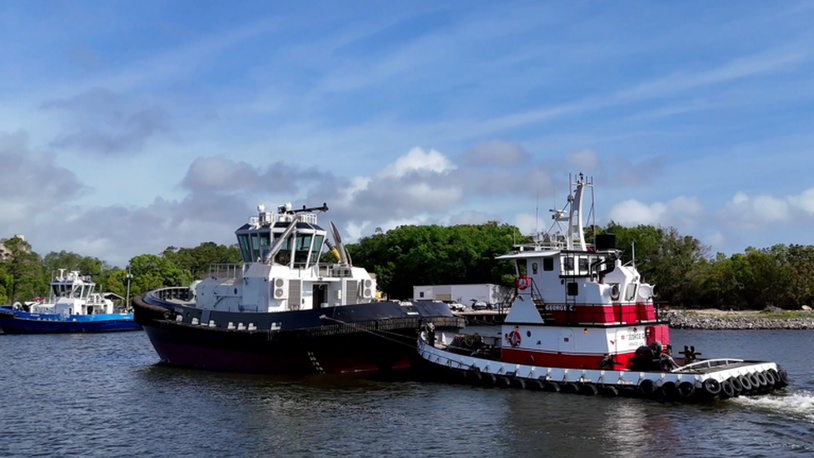
A deteriorated fendering system protecting the Hylebos Bridge in Tacoma, Washington, was damaged beyond repair after being struck by a tug assisting an articulated tug barge (ATB).
The accident, which occurred 12 October 2023, did not damage the bridge. NTSB investigators cited the probable cause of the accident was “the captain of the articulated tug and barge (ATB) Montlake/Sodo not stopping or slowing the ATB’s forward motion to correct the ATB’s lineup before attempting the bridge transit.”
At the time of the accident, the tug Olympic Scout was assisting the ATB transit the Hylebos Waterway in Tacoma. While waiting for the drawbridge to open, the ATB had to pause, and the bow drifted from the centre of the channel and moved farther to port. The ATB captain steered to starboard, attempting to line up for the bridge, but due to the drag from Olympic Scout on the port bow, he was unable to move the ATB to starboard.
Playing a role in the accident was the short distance to the bridge and the tight constraints of opening between the structures. According to investigators, the bow of the ATB was about 389 m from the bridge when it began the transit the waterway, and the channel width between the Hylebos Bridge fenders was 46 m. The combined breadth of the 24-m-wide ATB and 8-m-wide Olympic Scout left a maximum clearance of 7 m on either side of the combined unit.
“Because of the short distance to the bridge and the speed of the ATB, there was insufficient time to correct the lineup before Olympic Scout struck the fender,” investigators concluded. “Given the slim margin of error for making the bridge transit and the short distance to make the approach, slowing or fully stopping the ATB’s forward motion earlier would have provided the operators more time to correct the lineup and successfully transit through the opening between the bridge’s protective fendering.”
The Hylebos Bridge was undamaged following the contact, but the fender system had to be replaced.


Related to this Story

Events

Maritime Regulations Webinar Week
 16 Dec 2025
 GMT - ONLINE
Floating energy: successfully unlocking stranded gas using FLNGs and FSRUs
24 Feb 2026GMT - ONLINE
© 2026 Riviera Maritime Media Ltd.


