


Business Sectors
Business Sectors
Events
Contents
Opportunities and challenges for LNG shipping in 2016


Poten & Partners anticipates that around 30 million tonnes of new LNG liquefaction capacity will come on stream in 2016, requiring 35-40 LNG ships.
The current orderbook can meet the demand created by the new liquefaction projects as 35-40 LNG ships are due to be delivered this year. However, there are still large numbers of undedicated LNG ships in the market, indicating that the shipping supply surplus will continue through 2016.
Short-term charter rates are set by the market so, based on the shipping market supply-and-demand outlook for this year, it is possible that general shipping oversupply and reduced volumes of traded cargoes will keep spot charter rates relatively low. This presents a challenging environment for LNG shipowners with undedicated tonnage.
Some 40-50 LNG vessels are likely to be ordered this year – a significant number. This figure assumes a shipbuilding period of around 30 months, based on expected growth in LNG liquefaction capacity to 2019 and offset by ships already ordered for these projects.
This raises questions about the availability of experienced officers to operate these carriers – a challenge for the LNG shipping industry. An added complication arises for the ARC 7 ice-class ships under construction for Yamal LNG, which will need not only LNG-experienced officers but ice-experienced officers.
A number of smaller LNG ships may be sold for scrap or conversion this year, including some of the 17 vessels built in the 1970s, several of which are laid up. Four are more than 40 years old and are likely to be scrapped or converted over the next few years.
However, for floating storage and regasification units (FSRUs), there is a trend towards larger newbuildings that offer greater storage than converted vessels, even though the lower cost of a conversion can make it the more attractive option.
Speculative ordering for conventional LNG ships is expected to be minimal this year, until rates show signs of significant hardening. Around 20 ships in the current orderbook are undedicated.
New trades
The US’ first LNG-export project will start this year at Sabine Pass, whose location on the US Gulf coast means that the shortest route to Asian markets is via the expanded Panama Canal, due to open in the second quarter. The Panama Canal Authority (ACP) estimates that the enhanced waterway will accommodate around 90 per cent of the world’s LNG ships, whose sizes in the case of newbuildings are now largely dictated by the canal’s restrictions.
Several ships will be unable to transit due to excessive beam, however. The likely LNG traffic through the expanded canal is not yet known and the authorities may have underestimated it.
Recent reports from the Society of International Gas Tanker and Terminal Operators (SIGTTO) and ACP indicate 12 large ships a day in total, so that those carrying LNG will compete for slots with container ships, cruise ships, very large gas carriers and other vessels.
It is not clear whether bulk trades will use the expanded canal as many product and chemical carriers are already Panamax and average vessel sizes will only increase if demand requires newbuildings. Furthermore, LNG ships are likely only to be able to transit certain parts of the canal during daylight hours.
The year ahead also presents several other unknowns for LNG shipping.
One is the extent to which small-scale LNG will require tailor-made solutions in regions such as the Caribbean and Indonesia. Another is the impact of continued low oil prices on the LNG shipping environment.
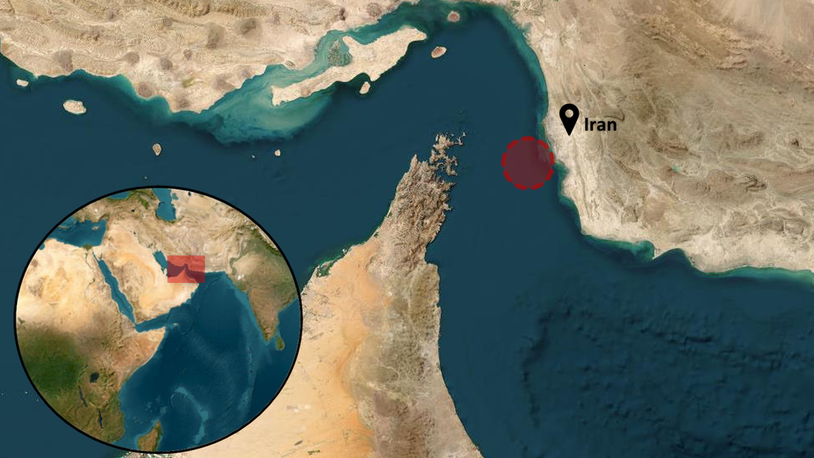
A third unknown is sanctions – and how the lifting of those against Iran and continued restrictions on trade with Russia will impact LNG shipping.
Technology
Traditionally, LNG ships have been propelled by steam turbines, a simple, reliable solution, rating highly in maintainability and fuel flexibility. However, this technology’s low efficiency of under 30 per cent, the increasing size of LNG ships and a greater commercial focus have prompted a move to alternatives.
Energy-saving demands led to diesel-electric propulsion systems for LNG ships. The first dual-fuel diesel-electric (DFDE) LNG ship was delivered in 2006 and tri-fuel diesel-electric (TFDE), with more fuel flexibility, has dominated since 2010.
However, there is now a clear trend towards higher-pressure propulsion systems for LNG ships. M-type electronically controlled gas injection (ME-GI) systems and Wärtsilä’s X Dual Fuel (X-DF) promise greater efficiencies than TFDE but are not yet proven for LNG as the first ships featuring both of these systems will be delivered only this year.
In terms of vessel size, the delivery of the largest conventional LNG ship, excluding the giant Qatari Q-flex and Q-max vessels, is expected this year — a 182,000m3 Moss ship, newly designed and developed by Kawasaki Heavy Industries in Japan.
The first Yamal LNG ship, a prototype Arctic ice-class vessel built to ARC 7, is also due to be delivered this year, the first of its kind among LNG carriers. ARC 7 ships will enable year-round loading and shipping from the Siberian project from 2018 and in summer will sail the northern sea route to the Far East.
Offshore
The world’s first floating liquefaction unit, PFLNG1, is being developed for the Kanowit gas field off Sarawak in Malaysia and is due to start in 2016, a year that will also be decisive for Golar’s floating LNG ships, now under conversion on a speculative basis. Ideally, these FLNG units will need firm employment by the end of the year.
Meanwhile, the FSRU market continues to grow and two new projects are due to start this year: Ain Sokhna 2 in Egypt, developed by EGAS, and a project in Colombia developed by SPEC. BW Gas will supply the FSRU newbuilding for the Egyptian project and Höegh LNG will be the provider for the South American scheme.
The key factors for FSRU success are a strong need for gas supply, an ability to pay the required LNG price and a strong counterparty or government presence and control.
Mergers
BG and Shell are to merge early this year. Shell operates its own LNGC fleet, mostly under long-term charter arrangements. Based on years of experience, BG commercially manages the fleet but uses the expertise of others to technically manage its vessels, and its chartering policy smartly uses optionality as a hedge to market and technology changes.
Shell may be eager to apply its Prelude floating liquefaction technology to BG’s deepwater assets in Brazil and Tanzania, where an onshore plant may be costly. An operation that combines the best of BG and the best of Shell represents a strong threat to the merged company’s LNG rivals.
However, the challenge, as for all acquisitions, will be to integrate the two companies’ individual strengths and business cultures. BG is known for its entrepreneurial marketing skills, Shell for a more consensual, structured approach.
Regulations
Finally, two key regulatory changes relating to LNG ship safety and emissions come into play this year. First, all LNG ships ordered from 1 January must comply with a revised International Code of the Construction and Equipment of Ships Carrying Liquefied Gases in Bulk (IGC Code), which also applies to LPG carriers.
For global trading, an LNG ship must be built in accordance with the code, which has been mandatory under the Safety of Life at Sea (Solas) IMO convention since July 1986.
As gas-carrier design technology is complex and evolving, the IGC Code is kept under review. The revision reflects the evolution of the industry over the past 20 years or so – the IGC Code was previously amended in 1993, and the new rules came into effect on 1 July 1994.
The changes include new and revised definitions of terms, a prohibition on cargo venting to maintain cargo temperature and pressure, and new requirements for analysis, construction and inspection of membrane tanks and the analysis of Type-B independent tanks.
The code also now has new provisions for the use of cargo vapour as fuel in boilers and for inert gas generators, internal combustion engines, gas combustion units and gas turbines. New requirements are also in place for automation systems for instrument control, and tougher ones than previously in the case of water-spray systems.
The revised IGC Code entered into force at the beginning of this year but it applies to gas carriers constructed on and after 1 July 2016. It is the shipyard’s duty to build vessels that meet all existing and anticipated future requirements at the time of contracting or keel laying.
Second, under the IMO Marpol (marine pollution) convention, a marine diesel engine installed on a ship constructed on or after 1 January and operating in the North American emission control area (ECA) and the US Caribbean Sea ECA must comply with the Tier III NOx standards.
Marine diesel engines installed on or after 1 January 1990 but before 1 January 2000 are required to comply with Tier I emission limits, and there is a Tier II emission limit for engines installed on or after 1 January 2011.
NOx Tier III controls are more stringent. They demand 80 per cent less NOx than Tier I regulations and apply only to the specified ships while operating in those ECAs established to limit NOx emissions, outside areas in which the Tier II controls apply.
This means that some LNG ships will require dedicated NOx emission-control technologies. To meet Tier III standards a vessel might have to employ some form of water induction in the combustion process, along with either the recirculation in-cylinder of fuel, scavenge air or exhaust gas, or selective catalytic reduction.
Amokeye Adede is an LNG and natural gas consultant at Poten & Partners’ London office



Related to this Story
Events

Maritime Regulations Webinar Week
 16 Dec 2025
 GMT - ONLINE
Floating energy: successfully unlocking stranded gas using FLNGs and FSRUs
24 Feb 2026GMT - ONLINE
© 2026 Riviera Maritime Media Ltd.


