


Business Sectors
Business Sectors
Events
Contents
Why energy efficiency is becoming shipping’s most important competitive advantage
How SMM 2026 in Hamburg will showcase solutions for efficiency, decarbonisation and resilience


Geopolitical tensions, rising energy costs and increasing decarbonisation pressure are forcing the maritime industry to rethink ships, ports and supply chains. Energy efficiency and operational resilience are no longer long-term ambitions, but immediate commercial necessities.
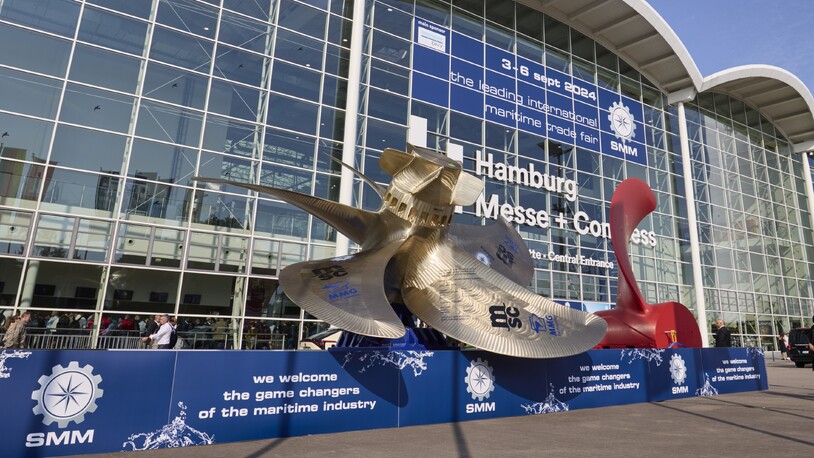
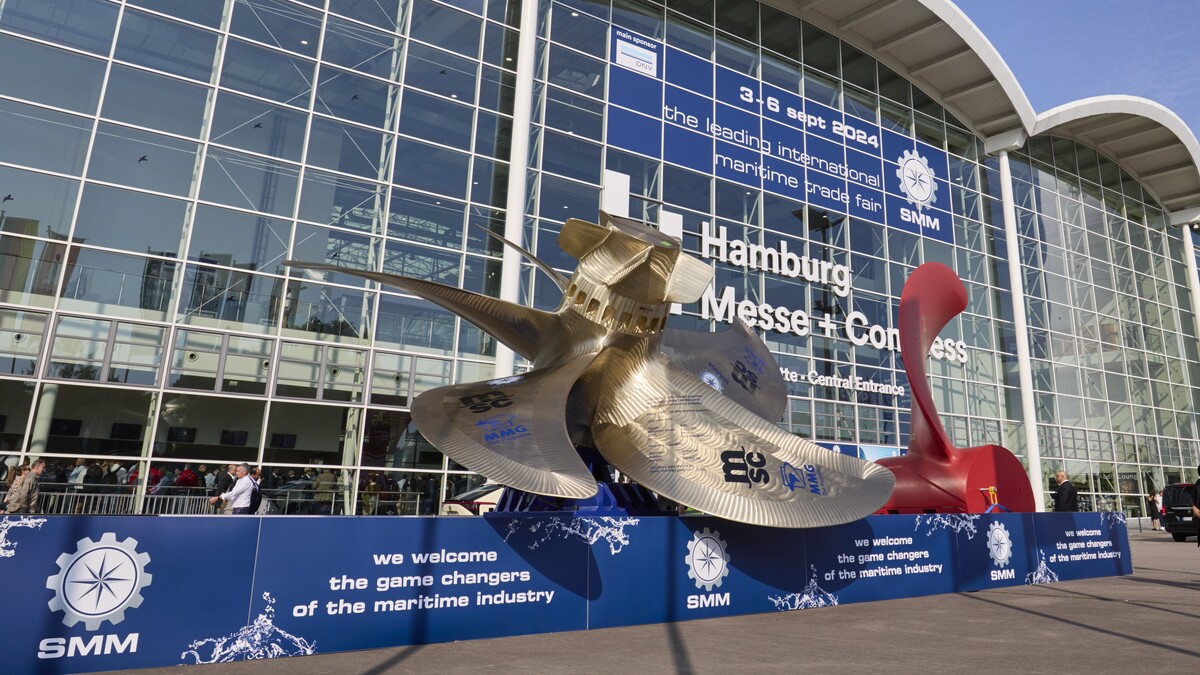
Against this backdrop, SMM – The world’s leading maritime industry event – will bring together global maritime stakeholders to showcase concrete concepts for efficiency, decarbonisation and resilience. Under the guiding theme “Driving the Maritime Transition”, more than 2,200 exhibitors from around 60 countries will present their technologies and concepts for the maritime transition from 1 to 4 September 2026 in Hamburg. Around 50,000 participants from up to 120 nations are expected in Hamburg. Covering approximately 90,000 square metres across twelve exhibition halls, SMM represents the entire maritime value chain.
Efficiency becomes a commercial factor
Energy efficiency is increasingly evolving from a sustainability issue into a commercial competitive factor. Rising fuel costs, regulatory pressure and geopolitical uncertainty are turning efficiency gains into a direct competitive advantage.
According to a recent study by the International Energy Agency (IEA), shipping’s energy intensity — measured as fuel consumption per tonne-kilometre — has already fallen by around 30 per cent since 2008. At the same time, the study highlights considerable additional potential through technologies that are already commercially available.
Hull design improvements, optimised propeller systems, innovative propulsion technologies and wind-assisted propulsion are no longer regarded as future concepts, but increasingly as commercially viable investments. In addition, the digitalisation of onboard and shoreside processes through intelligent fleet management and smart monitoring systems is creating further efficiency potential.
The IEA estimates that combining these measures on a typical container vessel could deliver energy savings of up to 15 per cent, potentially resulting in annual cost reductions worth several million US dollars. Many of these technologies can also be retrofitted to existing fleets — an important factor given tightening regulations and growing investment pressure.
The transformation also highlights the strategic importance of technologically advanced shipbuilding capabilities in Europe and beyond — because without shipbuilding, there can be no shipping.
At SMM, leading shipbuilding and supplier companies from around the world will showcase new technologies for more efficient vessel operations, while start-ups present innovative technological approaches.
Decarbonisation remains high on the agenda
At the same time, decarbonisation remains one of the maritime industry’s greatest strategic challenges.
The International Maritime Organization’s (IMO) net-zero targets are increasing pressure on shipowners, shipyards and suppliers to accelerate the market readiness of alternative propulsion technologies and fuels. According to classification society DNV, almost 40 per cent of newbuild tonnage ordered in 2025 was already prepared for alternative fuels such as LNG or methanol — a sign that the industry’s transformation continues to gain momentum despite ongoing regulatory uncertainty.
“We are bringing together the key stakeholders from politics, industry and science to jointly address the maritime transition,” says Claus Ulrich Selbach, Vice President Exhibitions at Hamburg Messe und Congress.
According to Selbach, the discussions will focus not only on regulatory frameworks, but also on suitable propulsion technologies, the ramp-up of alternative fuels and their safe handling onboard.
Resilience becomes a strategic necessity
Alongside decarbonisation, resilience is becoming increasingly important for the maritime sector. Attacks on trade routes, geopolitical conflicts and the vulnerability of global supply chains have highlighted how dependent the global economy remains on stable maritime infrastructure.
The disruptions of recent years have once again demonstrated the central importance of shipping for economic stability and security of supply — or, as the industry often puts it: “No shipping – no shopping.”
As a result, the security of sea routes, ports and digital systems is becoming a key stability and competitiveness factor for the industry. Maritime security, cyber security and the protection of critical infrastructure are therefore moving further into focus for shipowners, shipyards, port operators and maritime technology companies.
Maritime security is increasingly regarded as a prerequisite for free trade, stable supply chains and long-term investment security.
Particularly relevant are so-called dual-use technologies, which can be deployed in both civilian and military applications — including digital surveillance systems, autonomous technologies and solutions designed to protect critical infrastructure from cyber attacks. At the same time, the ongoing digitalisation of maritime operations is increasing efficiency while also exposing the industry to new digital threats. Consequently, demand for resilient and secure technologies is growing across the entire maritime value chain.
Against this backdrop, SMM 2026 will place particular emphasis on maritime security and defence. A dedicated exhibition area will focus on naval shipbuilding — a market segment gaining importance amid rising global defence investment.
“SMM reflects not only the industry’s technological capabilities, but also its strategic direction,” says Claus Ulrich Selbach.
The event is increasingly evolving into a platform for strategic dialogue on the future of global supply chains, energy systems and maritime infrastructure. Hamburg will once again become a central meeting point for the international maritime community in September 2026.
Alongside shipping, port logistics is also moving further into focus. Efficient and resilient ports are increasingly regarded as essential for stable global supply chains and the reliable supply of industry and commerce. These topics will be addressed by the new “all about ports” event, which will take place alongside SMM.
“This combination of high-quality events at one of the world’s leading maritime locations is unique,” says Claus Ulrich Selbach.
Industry platform and catalyst
The maritime transition is no longer a future scenario — it is already shaping investment decisions, fleet strategies and global supply chains today.
SMM 2026 aims not only to provide a platform for discussion, but also to make concrete technological and commercial approaches visible. With its international reach and its focus on the industry’s central future topics, the event underlines Hamburg’s role as one of the world’s leading maritime centres.
More information: www.smm-hamburg.com


Related to this Story

Events

© 2026 Riviera Maritime Media Ltd.


