


Business Sectors
Business Sectors
Events
Contents

Register to read more articles.
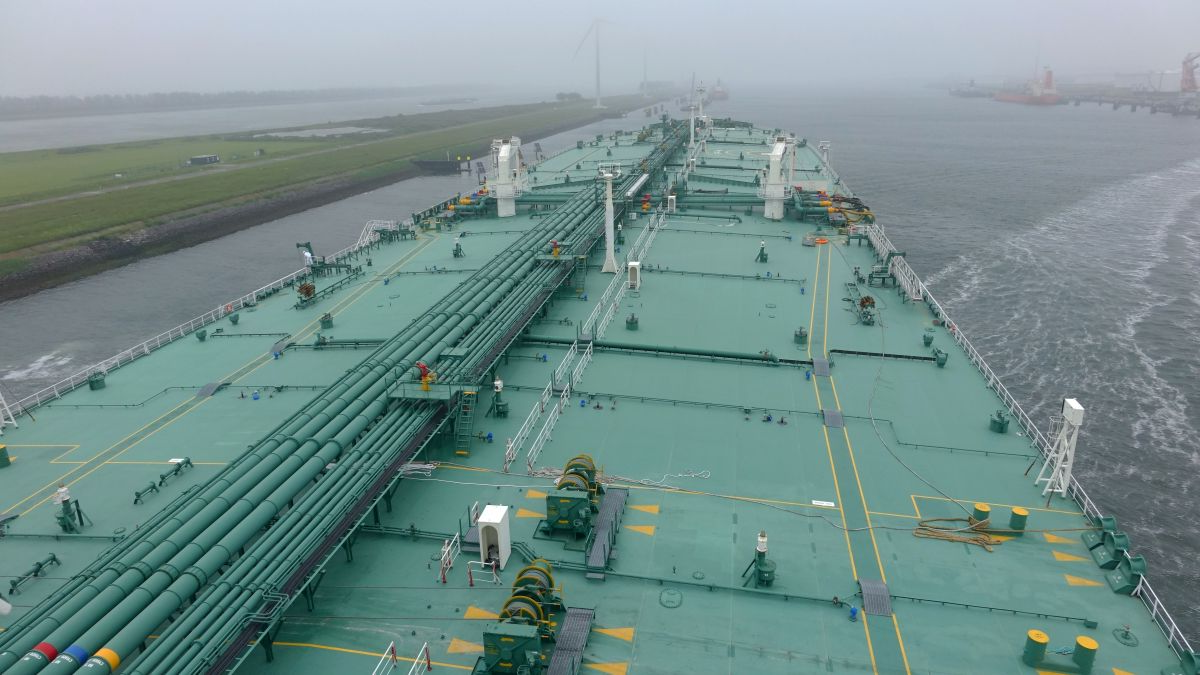
Recent Hormuz tanker traffic limited to Iranian-linked vessels, plus one Greek-owned ship
Maritime traffic through the Strait of Hormuz remains limited, with only three tankers transiting the critical shipping passage since Friday, two of which appear to be linked to Iran


Analysts believe commercial movements through the Strait are likely to remain near a standstill, while floating storage may rise, despite comments from US officials that traffic could soon resume at a more regular pace.
According to Kpler data shared with Riviera, 2009-built, 159,021-dwt Suezmax tanker Shenlong crossed the Strait eastbound on 6 March while loaded with cargo. Equasis lists the vessel as being operated by George Prokopiou-led Dynacom Tankers. Kpler has also reported that at least five more Dynacom Tankers vessels entered the Middle East Gulf as of early last week.
Meanwhile, on 7 March, 2005-built, 12,887-dwt chemical and oil products tanker Parimal also crossed the Strait from west to east while loaded. Equasis data shows that Parimal, which sails under the Palau flag, is owned by UAE-based Prime Chartering FZ LLC, a company that has two additional asphalt/bitumen tankers.
Kpler senior risk and compliance analyst Dimitris Ampatzidis told Riviera that while Parimal has not been officially sanctioned, the vessel has historically been linked to fuel oil shipments from Iran.
Kpler data also indicates that on 7 March, 2018-built 49,000-dwt MR tanker Dalia, sailing under the Iranian flag, crossed Hormuz westbound in ballast. Equasis lists Mosakhar Darya Shipping – an entity affiliated with Iran-based Rahbaran Omid Darya Ship Management – as the vessel’s owner. The latter appears to control a fleet of 62 vessels, including tankers, bulk carriers and container ships.
Dalia has been sanctioned by the US Department of the Treasury’s Office of Foreign Assets Control.
Marine insurers have clarified that war-risk cover remains available for owners and operators who wish to take it, according to statements from the International Union of Marine Insurers and the Lloyd’s Market Association (LMA).
LMA chief executive Sheila Cameron has noted that, since 1 March, at least 40 vessels have transited the Strait of Hormuz.
Floating storage expected to rise
“Recent AIS data now indicates that commercial tanker traffic has reached a near standstill, with most vessels remaining anchored in the Gulf while operators assess security and insurance risks,” Signal Ocean said in an analysis published on 9 March.
MB Shipbrokers reported on 6 March that around 122 crude tankers and 292 product tankers were waiting in the Middle East Gulf.
“We’re not too long, I think, before you will see more regular resumption of ship traffic through the Strait of Hormuz,” US Energy Secretary Chris Wright told CNN on 8 March.
However, analysts remain more cautious.
Assessing potential scenarios related to disruptions in the Strait of Hormuz, Signal Ocean said the most likely development already taking shape appears to be a near standstill in commercial tanker movements rather than a complete halt in traffic.
“Shipowners and charterers are assessing operational risks more carefully, and some departures are being delayed until freight economics justify the voyage,” the platform noted.
In this scenario, floating storage could become part of the market adjustment.
“Tankers that would normally depart shortly after loading are, in some cases, remaining offshore while operators evaluate routeing options and market conditions,” Signal Ocean said, adding that several vessels have already been damaged or threatened by drone and missile activity in the region.
“Navigation through the corridor remains open, but activity may continue at reduced levels as shipping companies adapt to the prevailing security and insurance environment,” Signal Ocean highlighted.
Sign up for Riviera’s series of technical and operational webinars and conferences:
- Register to attend by visiting our events page.
- Watch recordings from all of our webinars in the webinar library.




Related to this Story
Events

Maritime Regulations Webinar Week
 16 Dec 2025
 GMT - ONLINE
Floating energy: successfully unlocking stranded gas using FLNGs and FSRUs
24 Feb 2026GMT - ONLINE
© 2026 Riviera Maritime Media Ltd.


