


Business Sectors
Business Sectors
Events
Contents
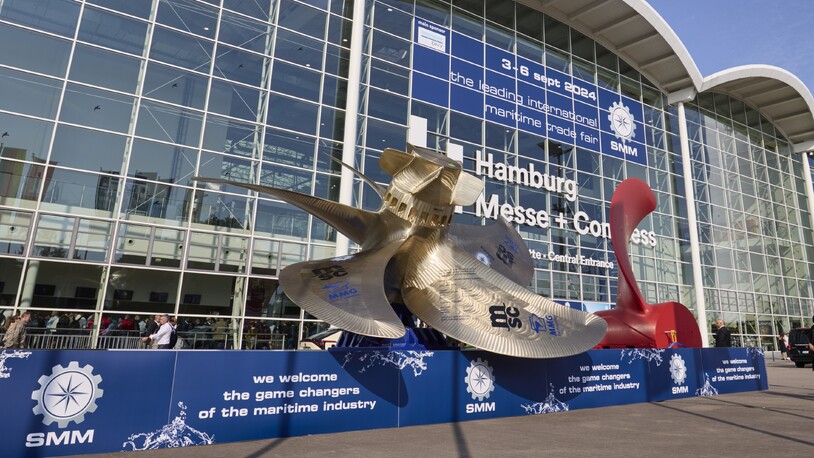
Tankers must be loaded for the correct stability


Loading computers are a mandatory part of tanker cargo control systems, providing information on the correct loading conditions. The computer calculates the correct cargo and ballast loading for tankers prior to berth departure, ensuring that the load does not exceed the vessel’s damage stability, and longitudinal and local strength requirements.
Damage stability is calculated based on the hullform and inner structure of the ship, using the lost buoyancy method. Whenever the levels of cargo or ballast and bunker tanks have been changed, the required stability conditions, as laid down by the classification society, also change. The calculation results are checked against the appropriate damage stability criteria, such as Solas or the IBC Code.
The rules relating to requirements are changing. IMO is acting to tighten the requirements for verifying that tankers do not exceed the damage stability requirements in response to recent issues identified by the Paris Memorandum of Understanding (MoU) on port state control. A concentrated inspection campaign in 2010 targeting tankers found that 77 oil tankers and 84 chemical carriers could not demonstrate that they were loaded in accordance with the Stability Information Booklet (SIB). Paris MoU members were concerned that in some cases tankers were not being loaded in compliance with IMO damage stability rules, which means that in the case of a collision or grounding the ship may not survive, resulting in possible pollution or even loss of life.
At the February 2013 meeting of IMO’s sub-committee on vessel stability (SLF) there was agreement over the mandatory carriage requirements for stability instruments on board tankers. The sub-committee agreed to draft amendments to Marpol Annex 1 regulation 28 (concerning damage stability), with a new paragraph to require oil tankers to be fitted with a stability instrument capable of verifying compliance with intact and damage stability requirements. These amendments will be forwarded to IMO’s Marine Environment Protection Committee (MEPC 65) and the Maritime Safety Committee (MSC 92) for approval with a view to subsequent adoption. There will also be changes to the IBC Code.
Classification societies provide a lengthy list of requirements for type-approved loading computers, which are regarded as supplementary to the loading manual and stability booklet. According to Det Norske Veritas, the results from a loading computer are only applicable to specific ships. They should be capable of producing print-outs of these results in both graphical and numerical form, also showing percentage of allowable values. Class should approve both the hardware and the software, which should present relevant parameters of each loading condition, such as:
• deadweight definition
• light ship data
• displacement and centre of gravity
• draughts at the forward and aft perpendiculars and at midship
• draughts at the ship’s forward, midship and aft draught marks
• ship trim
• free surface moments listed for each tank and for the vessel
• free surface corrections
• external heeling moments
The software should also show the stability limitations, listing and descriptions of all relevant stability criteria, the limit values, and the obtained values compared with the limit values – including the shear forces and bending moments for seagoing and harbour conditions. As DNV says, calculation of damage stability should be done either with control against approved limit curves, or with direct calculation and control against a predefined group of all relevant damage cases.
Kongsberg Maritime supplies a complete tank management system including the cargo control room automation and monitoring network. The K-Chief 600 operating system includes displays for cargo and ballast tank level control, load calculation and tank monitoring. It is linked by a local area network to tank gauges and sensors and the loading computer. There are also options to provide displays on the bridge and in onshore offices.
The system is linked to various radar tank gauges and pressure and temperature sensors, including Kongsberg’s GL-300 sensor range. There are sensors for measuring cargo and vapour line and ballast pump pressure. These can be linked to the K-Gauge operating system. K-Chief 600 visualises the real-time status of tank levels, the trim and any listing of the tanker. The tank monitoring view also displays the tanker’s draught and cargo tank layout. For each cargo tank it shows the ullage, level and volume, the cargo temperature and density, inert gas pressure and vapour pressure. The cargo control view includes an overview of the cargo and ballast control system, including the status of valves and pumps, and tank levels.
Integrated with K-Chief is the GL-7 alarm system. This monitors high levels and overfilling in cargo tanks and acts as a certified protection system. It can be networked with Kongsberg’s K-Gauge operating system, and has a dedicated operator panel with buttons for stand-alone configurations. GL-7 is also linked to audible and visible alarm devices.
Part of Kongsberg’s system is the K-Load loading calculator. Calculations of the floating position, intact stability, damage stability and longitudinal strength are done on the 3D model of the vessel. K-Load is capable of running multiple conditions, so planning and simulation can be done while the system is online evaluating the current conditions. The computer remains online, constantly evaluating the current status and sending calculated data to the tank gauging system. It is able to simulate ballast water exchange and do automatic ballasting for tanker operators.
A set of defined reports are generated in K-Load, and can be distributed through the Ship@Web application to other onboard systems or onshore bases via the ship’s satellite link. The loading report contains information about the loading condition, and needs to be approved by port authorities before departure. The ullage report has data about the types of cargo loaded on the ship and should be signed by the ship master and terminal operator before departure. There are also reports on what remains in the tanks after unloading for the cargo officer, as well as a ballast document. K-Load also produces a load plan containing a graphical listing of tank contents, floating position and cargo summary.
Interschalt Maritime Systems has continued developing its Seacos MACS3 cargo management system. The software controls cargo segregation, provides damage stability calculations and ullage reports, says Interschalt’s software manager Torben Mons. It also delivers longitudinal strength calculation, and has automatic ballast tank optimisation and a graphic user interface.
The program displays loading conditions and calculations, and enables tanker operators to optimise the vessel’s trim, heel, stability and stresses by changing ballast tank volumes. The ullage report corrects the density and weight of the cargo in tanks in relation to the temperature, providing precise volume data for billing processes. When the hydrostatic curve tables with vessel trim and heel are available, tank volumes can also be corrected. To use the system properly, ship operators are expected to maintain product databases with the appropriate density and temperature correction factors.
Another part of MACS3 is the Dastyman program. This automatically calculates the damage stability, based on the hullform and inner structure of the ship, whenever the cargo or ballast levels are changed. It then checks these calculations against the appropriate IMO criteria. The damage optimisation function produces an intact condition that fulfils the requirements of the current damage condition.
Mr Mons says additional modules for tankers include the Loadman and Dago programs. Loadman optimises the total cargo distributions with respect to certain criteria, such as trim, stability and stress on the vessel. Dago helps operators to manage the carriage of dangerous oils and chemicals because the program checks the fulfilment of the stowage and segregation requirements set in various safety and fire prevention codes and compliance documents.
Interschalt has recently added new modules to MACS3, says Mr Mons. One of these calculates the residual strength of a damaged ship, taking into account the location and extent of hull damage. Another module calculates the effect on tanker safety from groundings, considering three different environments. The new Trop module optimises a tanker’s trim according to a current loading condition with respect to the main engine power and safety requirements for stability and hull strength.
API Marine has developed the TSS/Cargo control system for remote monitoring and controlling of cargo and ballast systems. This monitors cargo levels, temperatures and pressures, as well as inert gas and pressures at manifolds. TSS/Cargo includes remote valve control and draught, heel and trim monitoring. The measurement accuracy is based on the use of high-precision level temperature and pressure measurement instruments combined with a digital output. Information from the sensors is transmitted to the cargo computer, such as API’s MasterLoad, where loading, strength, and stability are calculated. It is also where safety of operation parameters in the current loading condition is controlled, enabling officers to prepare the cargo plan for the tanker. TSS/Control is connected to the ship’s automation through a ring main network. It is an open system, so it can integrate other manufacturers’ equipment.
API Marine also manufactures sets of sensors and switches. Its latest development, the TSS/BMS4 sensors, received DNV type approval certification at the end of 2012. TSS/BMS4 is the next-generation electro-pneumatic system for cargo tank levels and cargo density, as well as vessel draught measurements. The sensors and gauges are linked to API’s TSS/Alarm system for level control in cargo and slop tanks. When a critical filling level is reached, an alarm is actuated, sending signals to the alarm devices and display panel. This can be switched off, but if the emergency level is reached again, the process is repeated. The level switches are located in explosion hazard zones, so spark-proof circuits and spark protection barriers are included. API also has an alarm system for cargo temperature measurements. This consists of the UTT temperature sensors, local stations and an alarm panel.
Kockum Sonics and Karismar Marine Services have together developed the Shipmaster cargo and ballast automation and control system for tankers. The system is based on standard PC components and graphical user interfaces, so it can be installed as part of a new system, or linked to the existing automation.
Shipmaster provides an overview and control of the loading and discharging of cargo tanks. It enables operators to control pumps, valves and other equipment from a dedicated display screen and keyboard, while displaying the status of gauges and sensors. It can be integrated with Kockum’s Loadmaster and Levelmaster software. Shipmaster has optional modules including Seaware Enroute, which combines cargo information with advanced route planning. It enables tanker operators to plan voyages to minimise the risk of ships entering critical situations, based on a specific ship’s seakeeping characteristics. Levelmaster is a level gauging system that works with any pressure, level or temperature transmitter, as well as with any automation system. The latest generation, H8, incorporates level gauges using the electro-pneumatic principle, as well as sensors and microprocessors.
Kockum also recently introduced its Loadmaster X5 loading computer to enable tanker operators to meet the latest IMO requirements, says the company’s sales director Martin Bladh. The loading computer has an online connection to the ship’s tank gauging system. Loadmaster automatically uses the level and temperature information from cargo and ballast tanks to produce reports on ullage and onboard cargo quantities that are required by class, oil companies and regulatory organisation.
There is also a graphical program that simulates tank loading and discharge, as well as a damage stability calculator. “Oil majors require not only that the actual loading/discharging operation is logged and reported safe, but that it should be determined in advance that the intended procedure is actually safe and in compliance with all limits,” says Capt Bladh. “The user has a blank timesheet and can, from the initial condition, drag and drop any tank into the simulation timesheet. When the entire simulation sequence is done he can run the program and see in tabular and graphical mode what will happen. This way he would get a good overview of the status of the vessel during the entire operation. If something is not acceptable, he can adjust the tanks in the timesheet and rerun the calculations.” Another part of Loadmaster is the automatic pump log, which records loading and discharging of cargo tanks, says Capt Bladh. “It is quite remarkable that this document frequently ends up as evidence in a dispute regarding demurrage,” he adds.
Techmarine’s loading computer solution, Ship Manager 88, enables operators to verify a tanker’s stability, trim and draught, and the deflection of the hull. It automatically calculates stability and strength for the current loading condition. Techmarine says its software has an open architecture and is modular. The software is loaded on to Hewlett-Packard computers that can be networked with other onboard systems.
Ship Manager 88 has functions for trim and heel adjustment, weather criteria calculation, loading and dischanging sequencing, and bending moment calculation. It can calculate damage stability through 3D modelling, including correction factors for different draughts and displacements. Included in the program is information on the allowable draught range at every port worldwide. Techmarine says it regularly supplies software updates, which normally include the implementation of new functions, options and modifications designed to improve system performance.
Napa’s loading computer covers a wide range of calculations related to hydrostatics, intact stability and the ship’s longitudinal strength. The tanker version of the Napa loading computer uses real-time 3D models of the ship to provide damage stability calculations. It can display the layout and tank plans and can be linked to the shipowner’s office applications. It has tools for stowage planning, cargo operation monitoring and damage calculations. One of the key benefits is that the loading computer is compatible with Napa ship design software and the emergency response tool. The program helps the officers on board make well informed decisions about possible courses of action in distress situations.
SAM Electronics has the MCS 2200 range of cargo automated monitoring, control and alarm systems, developed by its Danish subsidiary, Lyngsø Marine. These feature ship-specific control algorithms and common hardware platforms. MCS has high levels of redundancy and an open architecture network. It covers outstation, reporting, duty alarm and operator workstation functions that are supported by advanced diagnostic facilities.
Intelligent outstations act as fully independent data processors and are linked by a redundant system network for data exchange. MCS configurations enable cargo control for tankers inclusive of the loading calculation. The high-resolution panel displays can be sited around a ship according to specific requirements, while any type of custom-made reports and journals as well as alarm and event logs can be generated via standard printers. Process input/output modules and controllers can be integrated into switchboards and/or bridge consoles.
Maritime computers, such as Moxa’s new MC-7130-MP, are an integral part of a cargo control system. The MC-7130-MP is an embedded marine computing platform built around an Intel i3 Ivy bridge processor, giving ample computational power for diverse multi-tasking of data-intensive applications, such as data acquisition, device control, and communications. Its modularised design supports flexible connections over eight National Marine Electronics Association protocol 0813 ports, and interfaces for eight terminals and three independent displays. The computer provides system security alongside Moxa’s own smart recovery utility, which protects operating system software during any downtime due to data corruption. TST




Related to this Story

Events

Maritime Regulations Webinar Week
 16 Dec 2025
 GMT - ONLINE
Floating energy: successfully unlocking stranded gas using FLNGs and FSRUs
24 Feb 2026GMT - ONLINE
© 2026 Riviera Maritime Media Ltd.


