


Business Sectors
Business Sectors
Events
Contents

Register to read more articles.

Trade, fleet and regulation shape tanker shipping’s future
Tanker companies are weighing ageing fleets, new regulations, and evolving trade patterns as they chart a cautious course through 2025 and beyond


The prevailing sentiment across tanker operators is one of careful planning, rather than exuberance. While 2024 was a profitable year for many, the focus now is on navigating a market landscape shaped by regulatory change, political instability, and limited fleet growth. “Underlying tanker supply and demand fundamentals continue to be supportive of tanker market strength over the medium term,” stated Teekay Tankers in its 2024 annual report, encapsulating a widely held view among listed operators.
For most companies, the tanker market of 2025 will be influenced less by the turbulence of the past year and more by long-term constraints and structural shifts. With global orderbooks remaining historically low, and limited availability at major yards until 2028, there is broad consensus that supply-side discipline will remain a defining factor. Scorpio Tankers noted that “the orderbook for MR tankers stands at just 7.2% of the existing fleet,” calling it “the lowest in recent history”. Teekay Tankers added that the global fleet “is ageing, and replacement levels are well below trend,” indicating further tightening of available tonnage in the years ahead.
Alongside the limited inflow of newbuilds, vessel ageing continues to affect fleet profiles. SFL Corporation highlighted that “as vessels age, they become less efficient and more costly to insure and maintain,” pointing out that charterers increasingly avoid older tonnage, particularly under new environmental standards. Older tonnage must be in class and require up-to-date Special Surveys which takes the vessel off-hire and not earning revenue.
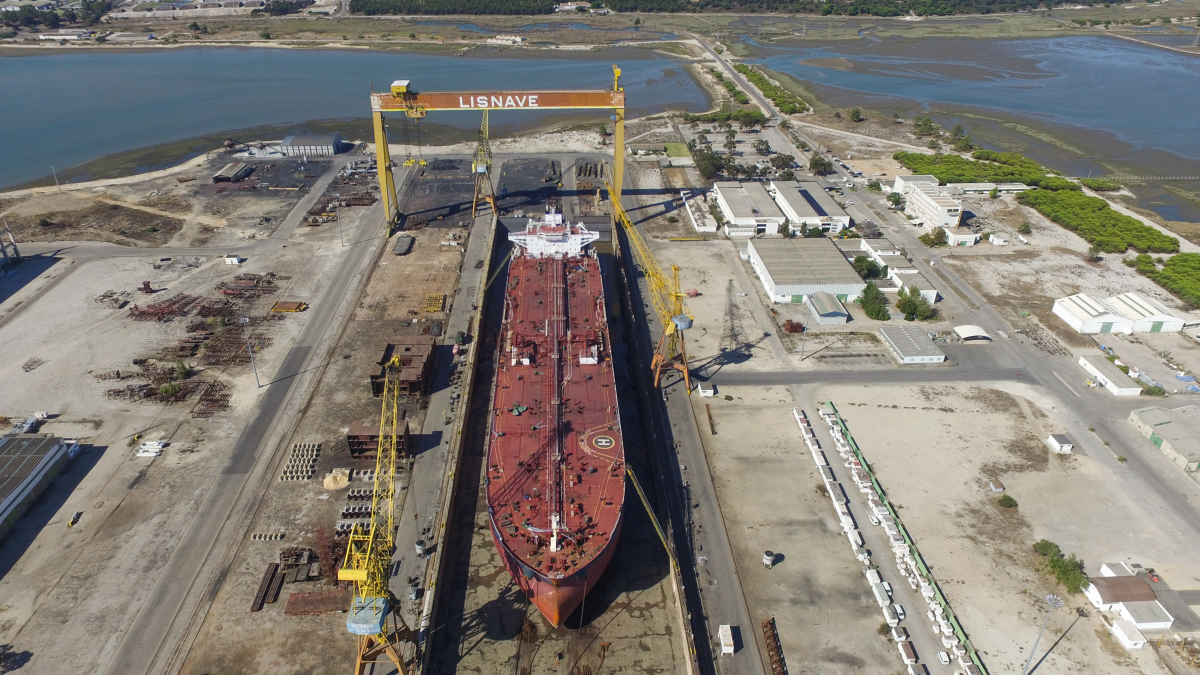
To a certain extent, this is an element controlled by the owner/operator who can decide when and where to dry dock the tanker to conduct the Special Survey. Teekay Tankers had 13 vessels dry docked in 2024, compared to seven vessels in 2023 and nine vessels in 2022, producing a number of non-revenue days relating to dry dockings and BWTS installations of 478 off-hire days, 304 off-hire days and 561 off-hire days, respectively. Teekay Tankers plans another 11 vessels scheduled to dry dock in 2025.
The pressure is not just technical. Scorpio Tankers, which owns a relatively modern fleet, observed that “elevated fuel prices might lead to a decrease in the economic viability of older vessels,” especially those without scrubbers or with poorer fuel consumption profiles.
The introduction of regional and global decarbonisation measures has become a central part of fleet planning and risk management. Companies are no longer only addressing existing regulations but anticipating further restrictions. Okeanis Eco Tankers reported that its emissions monitoring system is used to inform “real-time commercial decisions and long-term strategy,” ensuring alignment with CII, EEXI, and EU ETS developments. The company also noted that uncertainty around fuel and propulsion regulations continues to deter speculative ordering, reinforcing the low newbuilding volume.
Scorpio Tankers underlined its support for the Call to Action for Shipping Decarbonisation and declared its intention to offer net-zero emissions transport services by 2030. However, the company stressed that its ability to meet such targets will depend on “technological availability and commercial viability.” In the meantime, efficiency and flexibility are being treated as prerequisites for competitiveness. As Teekay Tankers stated, “customers are incorporating ESG metrics into charter decisions, including emissions performance and operational transparency.”
“Supply-side discipline will remain a defining factor”
Against this regulatory backdrop, shifts in cargo flows and trading routes are redefining tanker employment strategies. With Russian oil displaced from traditional European destinations and redirected toward Asia, tonne-mile demand remains elevated, albeit with some volatility. Okeanis Eco Tankers noted that “changes to the trade patterns of crude oil or refined oil products may have a material impact on ton-miles,” adding that emerging inefficiencies and detours have supported freight rates, even as cargo volumes have remained broadly stable.
Teekay Tankers pointed to geopolitical disruption as both a risk and a market driver. “Until the Russia-Ukraine war ends, sanctions against Russia and the fleet of ships transporting Russian oil may continue to increase … potentially leading to reduced Russian oil exports,” the company warned. Such developments, it said, have the potential to dislocate trade flows further, creating arbitrage opportunities but also compounding risk.
This environment has also led to the continued expansion of the so-called ‘shadow fleet’. Scorpio Tankers reported that “21.5% of the uncoated fleet now operates outside regulatory frameworks or is subject to sanctions,” up from 15% a year earlier. This opaque segment of the fleet complicates assessments of available tonnage and compliance exposure. In response, some flag states have moved to tighten controls. Panama removed more than 100 vessels associated with sanctioned trade. “We do not support vessels engaged in illicit or sanctioned trade,” an official from the Panama Maritime Authority said.
Operators with exposure to the clean and product segments are also watching trade rebalancing closely. European bans on Russian diesel, for instance, have prompted refiners in the Middle East and India to increase output for western markets, while West African product exports have shifted east. Scorpio Tankers said this pattern reflects “a new map of movements … driven by necessity rather than commercial preference.”
On the political front, there is a degree of cautious optimism around de-escalation, at least in some theatres. In late 2024, the US announced a safe navigation arrangement in the Black Sea, co-ordinated with Ukraine and Russia. The system, designed to reduce the risk of misidentification and vessel interference, was seen as a stabilising measure. A US official described it as a “limited but meaningful step toward lowering operational risk for commercial shipping.”
Even so, the consensus remains that geopolitical tension will remain a feature of tanker trade in 2025. Operators expect continued disruption around the Red Sea and a further tightening of sanctions enforcement. Teekay Tankers remarked that its outlook assumes “ongoing volatility in trading lanes, especially those involving Russian and Middle Eastern crude.”
The possibility of longer-term demand shifts has also entered strategic planning. Okeanis Eco Tankers cited the International Energy Agency’s projection that oil demand from road transport may peak around 2025. “We are factoring transition risk into our long-term asset strategy,” the company said, adding that regional refining balances and transport electrification will continue to alter flow patterns in subtle but cumulative ways.
For now, however, the fundamental picture is one of a fleet constrained by age, a cautious orderbook, and emerging environmental compliance costs. Scorpio Tankers summed it up in its 2024 report: “Low supply growth, inefficient trading patterns, and a disciplined market suggest the ingredients for continued support of freight rates into 2025.”
Teekay Tankers reached a similar conclusion. “While we expect short-term volatility to persist,” the company said, “we believe the supply side constraints, combined with stable demand, point to a positive medium-term environment.”

Related to this Story

Events

Maritime Regulations Webinar Week
 16 Dec 2025
 GMT - ONLINE
Floating energy: successfully unlocking stranded gas using FLNGs and FSRUs
24 Feb 2026GMT - ONLINE
© 2026 Riviera Maritime Media Ltd.


