


Business Sectors
Business Sectors
Events
Contents

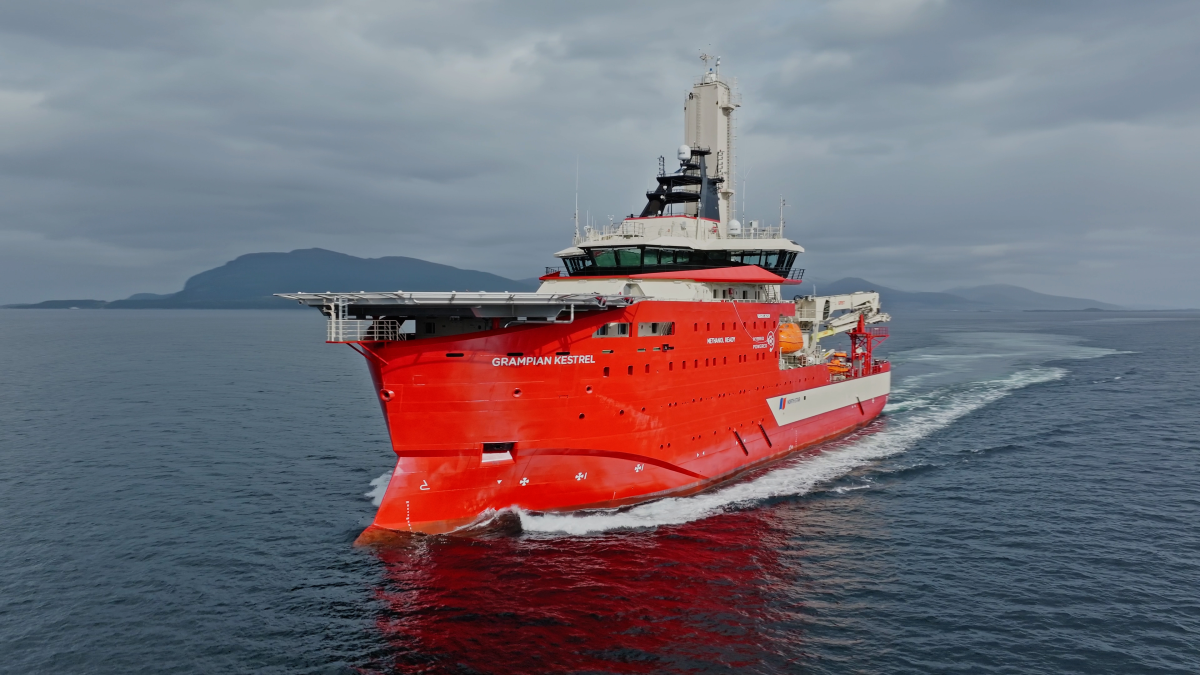
North Star invests in multi-network communications for growing offshore fleet
One of the largest owners of offshore service ships in the UK has LEO and GEO satellite communications on its increasing fleet of windfarm support vessels for crew welfare, operational and client connectivity


North Star Shipping has hardware on its offshore support vessels to communicate with low Earth orbit (LEO) and geostationary orbit (GEO) satellites, providing its crews with high-speed communications to meet increasing operational requirements.
The Aberdeen, UK-headquartered owner of windfarm commissioning and service ships, plus standby and safety vessels, uses SpaceX’s Starlink LEO connectivity and very small aperture terminals (VSATs) to communicate with GEO satellites using Ku-band and Ka-band.
Clarus Networks provides LEO services, particularly Starlink, while Marlink delivers VSAT hardware and Ku-band connectivity and AST Networks supplies Ka-band regional VSAT using Space Norway’s coverage.
“Starlink has changed everything for us,” said North Star head of IT, Bruce Catto. “It is the biggest difference in communications in the last 15 years. Starlink has been transformational to our operations.”
Prior to Starlink deployment, North Star vessels had bandwidth of 1 Mbps over VSAT which, according to Mr Catto, was a “costly and limited connection” where crew welfare only involved emails, voice calls and basic internet services.
“We had to watch data consumption and had bandwidth restrictions,” he said, adding that there were line-of-sight issues between the VSAT and a GEO satellite if a vessel was close to an offshore production platform or wind turbines.
Starlink has changed all that. “Starlink enables our 36 vessels to become extensions to our offices,” said Mr Catto.
“Crews and clients expect connectivity, live video calls and media services,” he explained. “You cannot underestimate the crew welfare benefits of connectivity.”
North Star provides data and connectivity to its crews for free, while it uses Starlink and VSAT for operational communications, keeping L-band for emergency calls and critical services.
VSAT has become the primary backup to Starlink. But there are challenges with communications in northern seas where a VSAT struggles to secure satellite connections and there is less Starlink coverage. This is why North Star maintains Ka-band VSAT on Space Norway’s Thor 5 services.
In the future, North Star will install Starlink and consider other LEO services, such as Eutelsat OneWeb and Amazon Leo, and deploy VSAT and onboard wifi on its newbuild vessels.
The Scottish owner will also increase its use of artificial intelligence (AI) and cloud computing on its vessels, which Mr Catto expects will lead to “exponential growth in data consumption” and subsequent rises in bandwidth demand.
“AI is becoming important for us in analysing data,” said Mr Catto. “Data is fed into AI models in the cloud to get better ideas for improving efficiency and planning vessel maintenance.”
North Star tracks its vessels and uses environmental data, such as wave heights and weather to make its windfarm support vessels more efficient in their voyages from the UK to the Dogger Bank installations.
“We can also use data to improve safety and performance of our vessels,” said Mr Catto. “We get information from masters and chief engineers to analyse to improve our knowledge base.”
Retaining knowledge of senior crew members is important for training the next generation of seafarers and for retaining people for longer.
Having Starlink on vessels is helping North Star retain its seafarers and maintain its long-term contracts, but North Star is expecting its costs to become higher in 2027 as SpaceX has indicated there would be a 50% jump in prices, which will be challenging for next year’s budget.
Amazon Leo will not be ready in time to become a viable alternative, but OneWeb could be an option for North Star.





Related to this Story

Events

Maritime Regulations Webinar Week
 16 Dec 2025
 GMT - ONLINE

Floating energy: successfully unlocking stranded gas using FLNGs and FSRUs
24 Feb 2026GMT - ONLINE
© 2026 Riviera Maritime Media Ltd.


