


Business Sectors
Events
Contents

Register to read more articles.
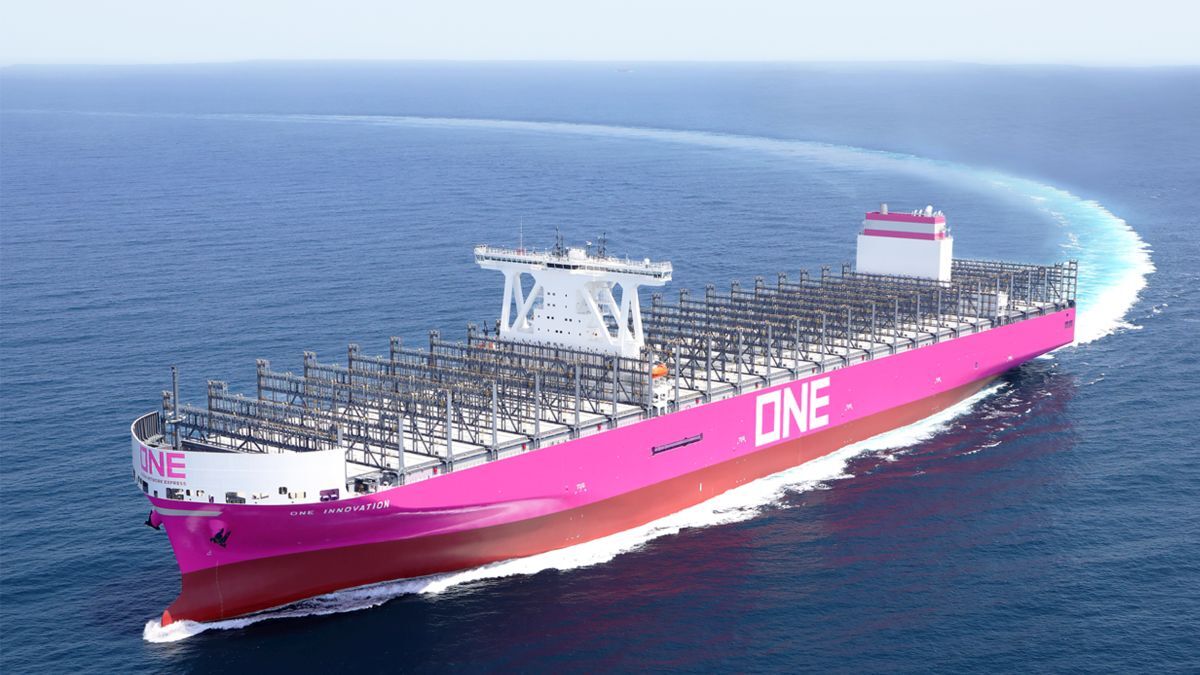
ONE projects year-on-year profits to drop by US$14Bn
Japanese container shipping alliance Ocean Network Express (ONE) reported a whopping 97% decline in net profit for Q2 2023


Profits for the quarter stood at US$187M compared with US$5.5Bn for the same period last year as short-term freight rates failed to sustain the upward trend.
ONE said cargo movements from Asia-North America during July-September fell by 7.5% year-on-year. And while trade picked up temporarily in the peak season, the speed of the inventory adjustment was slow and sales of general consumer goods stagnated which resulted in sluggish growth.
Trade from Asia-Europe during July and August increased by 6.1%. Although demand continued to recover moderately from the decline in the second half of the previous fiscal year, the recovery in consumption remained lacklustre owing to inflation and high interest rates.
For the six-month period, ONE recorded a net profit of US$700M, down 96% year-on-year and expects to record an operating loss in the next two quarters. Still, the Alliance expects a full-year profit after tax of US$851M (compared with US$15Bn in 2022).
The lack of demand was cited as the main reason for this drop in revenue.
“Despite the start of the peak season, there was no strong recovery in cargo movement,” said ONE, adding, “The supply-demand balance softened due to an increase of newly built vessels, and short-term freight levels did not sustain their upward trend.”
In August, market analysts pointed out overcapacity was inevitable even if volumes did increase, irrespective of demand, because a record number of ships are being delivered this year.
Two vessels, out of six long-term-chartered 24,000-TEU vessels from Shoei Kisen Kaisha, were delivered to ONE and deployed on the Asia-Europe trade. In Q2, ONE also took possession of the first of four long-term-chartered 15,000-TEU vessel from Seaspan Corp.
ONE said its response to the weak demand is to continue blank sailings. Last week, THE Alliance partners ONE, Hapag-Lloyd, Yang Ming and HMM announced they were suspending an Asia-North Europe loop and a Transpacific Asia-US East Coast service from mid-November.
ONE also said it would focus on returning surplus leased containers to drive down costs. Other moves will include increasing special cargo shipments and expanding service in growing markets such as Latin America East Coast-North Europe.
Beginning in 2024, container shipping is set to get more expensive: The industry will lose its decades old block exemption from antitrust rules. Consortia will not be banned but operators will now have to review the legitimacy of their co-operation agreements, which can now be broken up and fined by the relevant authorities.
2024 will see shipping added to the EU Emissions Trading Scheme (EU ETS) and a more stringent application of IMO’s Carbon Intensity Indicator (CII), both of which will require ocean liner companies to pay for their emissions.
Sign up for Riviera’s series of technical and operational webinars and conferences in 2023:
- Register to attend by visiting our events page.
- Watch recordings from all of our webinars in the webinar library.

Related to this Story

Events

Maritime Regulations Webinar Week
 16 Dec 2025
 GMT - ONLINE
Floating energy: successfully unlocking stranded gas using FLNGs and FSRUs
24 Feb 2026GMT - ONLINE
© 2024 Riviera Maritime Media Ltd.


