


Business Sectors
Business Sectors
Events
Contents

OSV communications need to be planned upfront, not 'last minute'
Early collaboration with satcom providers in the OSV design process helps optimise onboard networks to meet growing demands for high-speed, low-latency, robust communications, says leading sat com executive


Communications installations should be planned at the start of an OSV’s design process, not at the “last minute after the vessel has been built”, said a leading satcom executive.
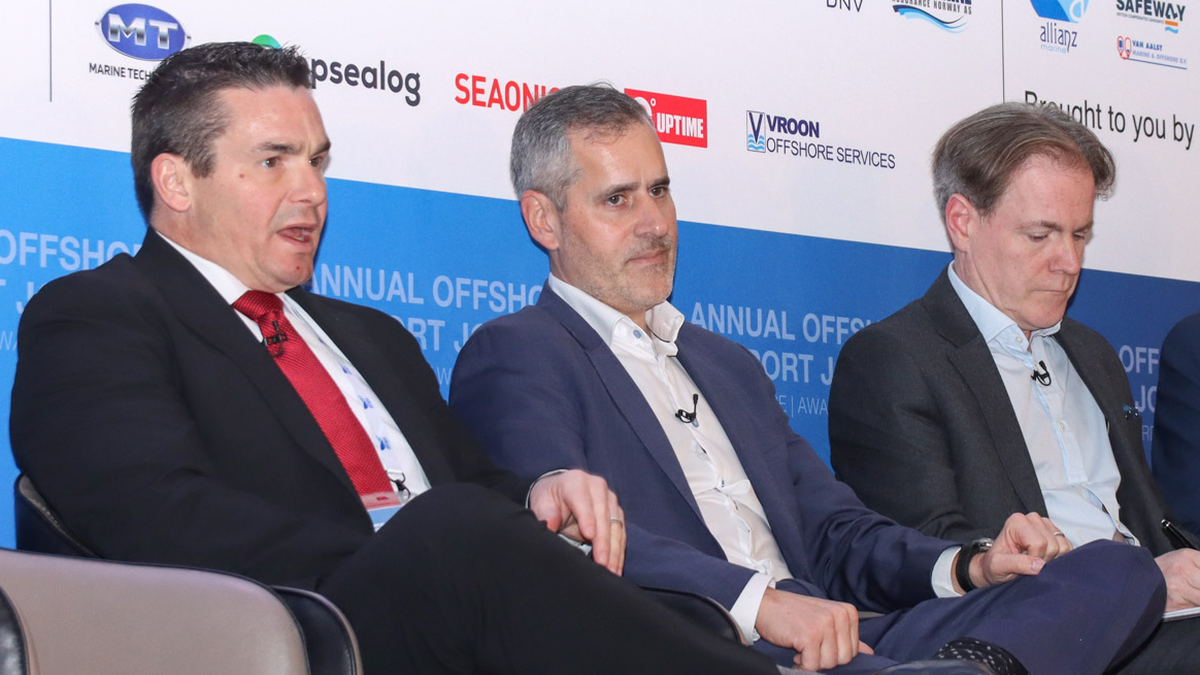
According to ViaSat subsidiary Inmarsat Maritime vice president for offshore, Eric Griffin, naval architects should collaborate earlier in the vessel design with satellite communications providers to ensure that networks are optimised for crews.
“From my experience, when a vessel is built, communications is one of the last things thought about in the design and implementation,” said Mr Griffin. He noted that this is inefficient, limits the available communications networks and leads to higher retrofit costs.
"Crews want to be online all the time"
Bringing in communications providers at the front end allows them to provide advice on the design, he said. They can explain how connectivity can be provided to all crew rooms and operational areas and advise on the type of network needed to support owner, operator and crewing requirements.
“Crews want to be online all the time,” Mr Griffin told delegates at the Annual Offshore Support Journal Conference in London in early February. “I have seen a shift of owners now wanting to give them internet access, but with limitations, so they are not on their devices all the time.”
Inmarsat has introduced NexusWave, a hybrid bonded satellite communications service, which offers a combination of Ka-band connectivity over geostationary orbiting (GEO) satellites from Global Xpress and Viasat constellations with Eutelsat OneWeb low Earth orbiting (LEO) satellites.
“We have about 2,700 vessels in the orderbook. About 1,000 of those have been installed and about 10% of that overall number is in the OSV space,” Mr Griffin said.
“We are providing high-speed connectivity that includes a LEO component, and it also gives owners the ability to control what the crew can use and the amount of time they can have access.”
SmartSea chief executive Kris Vedat agreed that LEO constellations have brought “massive improvements in bandwidth, latency and the global reach of communications” and need to be incorporated in vessels earlier in their construction.
“When you start looking at the prerequisites around that infrastructure on board, you should accommodate low latency and high bandwidths,” said Mr Vedat.
“We need to be sure that we put better infrastructure on board and improve network intelligence. LEO is great, but LEO alone will not be enough. We need to have hybrid solutions.”
These need to be cyber secure to prevent incidents, and seafarers need training to use this connectivity and data-driven applications.
“Applications on board vessels are designed to accommodate these higher speeds and lower latencies, so we can take advantage of the real-time communications,” said Mr Vedat.
“But we need stronger cyber security as we are now opening vessels to higher bandwidths. Vessels are floating offices, so we need to make sure cyber security is in place.”
“They have to work with these applications, and if they do not work, they get frustrated”
Speedcast executive vice president for global sales, James Trevelyan, said LEO and GEO connectivity enable digital applications on OSVs and are becoming almost mandatory for vessels operating in some jurisdictions, such as Brazil.
“Connectivity is a digital enabler, and in some markets, operators need it for applications,” he said.
“Most applications are cloud native. So, owners and operators need a platform to manage those applications, and that must also be cloud native.”
Speedcast developed its Sigma connectivity platform to include edge computing and cloud-based infrastructure to help run these cloud-native applications.
“This makes a big difference. Owners can almost automatically provision, configure, update and patch [software and applications], whatever it might be, across an entire fleet, with a single keystroke,” said Mr Trevelyan.
“That makes a big difference to the way the apps function for the end users, the people working on these vessels. “They have to work with these applications, and if they do not work, they get frustrated.”
Mr Trevelyan also thinks cyber security is vital for OSV connectivity as developments in LEO communications by SpaceX, Amazon, Telesat, Eutelsat, and OneWeb bring massively increased bandwidth to vessels.
“The speed that these links are offering brings numerous applications to many appliances and devices,” he said.
“It is a security red flag, and the attack service is massive. So, it is not a question of when the upgrade will be breached, but how much is it going to cost you.”
Speedcast and Inmarsat have included highly secure connections and cyber-security applications in their network and platform offerings.
Riviera’s Offshore Support Journal Conference, Asia will be held in Singapore on 8-9 September 2026. Use this link for more information and to register for the event.


Related to this Story

Events

Maritime Regulations Webinar Week
 16 Dec 2025
 GMT - ONLINE
Floating energy: successfully unlocking stranded gas using FLNGs and FSRUs
24 Feb 2026GMT - ONLINE
© 2026 Riviera Maritime Media Ltd.


